
Cost to build refers to the total investment of time, materials, labor, and compliance needed to deliver a project from planning through handover. In Galveston, Texas, Tip Top Builders manages these variables end to end—so your schedule, quality, safety, and compliance goals stay aligned without surprise overruns.
By Aftab Ali — Manager, Tip Top Builders
Last updated: 2026-06-14
Above-Fold: Cost to Build at a Glance
The cost to build is shaped by scope, site conditions, codes, utilities, and delivery method. Projects stay on budget when preconstruction planning, permits, environmental checks, and sequencing are handled early and tightly managed. Tip Top Builders integrates planning, excavation, and construction management to prevent scope drift and delays across Texas.
Here’s what you’ll learn in this guide and how to use it right away:
- What “cost to build” means and why it rises or falls
- How phases flow from site selection to opening (and where waste hides)
- Delivery models that influence timeline and risk
- Best practices our team uses across Texas fuel, retail, and residential builds
- Actionable checklists for planning, permits, site prep, and QA
Tip Top Builders specializes in gas station and C-store developments, commercial build-outs, and residential homes—delivering planning and design, site preparation and excavation, and construction management as one coordinated process.
What Is the Cost to Build?
Cost to build is the complete set of resources required to deliver a new construction project—from due diligence and permits to foundations, structure, MEP systems, finishes, inspections, and closeout. It’s driven by scope, site conditions, regulations, material choices, labor availability, and project controls.
When we say “cost to build,” we’re talking about the full journey, not just bricks and concrete. Planning decisions, sequencing, and local approvals often swing outcomes more than any single line item. That’s why our Galveston-based team engages early—before land is purchased—to flag red flags and keep your plan buildable.
Core drivers you can control
- Scope clarity: Lock performance criteria, adjacencies, and must-haves up front.
- Site readiness: Verify utilities, soils, access, and drainage before design freezes.
- Permitting path: Map approvals and inspectors to avoid midstream rework.
- Delivery method: Choose design-build or CM to align speed, flexibility, and risk.
- QA and safety: Tight field controls reduce punch lists and redo work.
For Tip Top Builders clients, “cost to build” becomes a predictability framework. We use planning and design services, site preparation and excavation, and construction management to compress uncertainty and protect your opening date.
Why “Cost to Build” Matters (Beyond Dollars)
Managing cost to build is really about managing risk. The right plan reduces schedule slips, redesign cycles, change orders, and compliance issues. Tighter control means earlier operations, steadier cash flow, and fewer post-opening fixes—value that outlasts the build itself.
Here’s the thing: cost overages often trace back to decisions made months earlier. A utility conflict found during excavation, a late code interpretation, or weather without contingency can push a schedule weeks. We design for constructability, pre-clear code paths, and sequence work to absorb real-world conditions across Texas.
Results that matter on day one
- Faster opening: Clear permits and shovel-ready sites trim idle time between phases.
- Fewer surprises: Early environmental checks reduce redesign and scope creep.
- Quality-first delivery: Field QA lowers warranty calls and rework.
- Operator-centric layouts: Efficient adjacencies boost throughput and safety.
- Sustainable practices: Durable materials and smart drainage protect assets.
In our experience, the most reliable builds are those that treat planning and construction management as a single system—exactly how we run fuel retail, commercial, and residential projects from Galveston to Austin.
How the Cost to Build Works: From Land to Opening
A predictable build follows a phased path: site selection, due diligence, permits, design, site preparation and excavation, foundations and structure, MEP rough-in, envelope and interiors, inspections, and handover. Each phase has risks that can be mitigated through early decisions, sequencing, and oversight.
Below is a process map we use across gas station/C-store, commercial, and residential work. It emphasizes front-loaded clarity and field discipline.
| Phase | Primary Focus | Typical Risks | Control Actions |
|---|---|---|---|
| 1) Site Selection & Due Diligence | Traffic, access, utilities, soils, drainage, zoning fit | Unbuildable lots; hidden utility/service costs | Utility locates; geotech review; zoning pre-checks |
| 2) Permits & Environmental | Permitting roadmap and environmental assessments | Late clarifications; mitigation requirements | Early authority meetings; document completeness checks |
| 3) Planning & Design | Constructability, code compliance, operator flow | Rework from unclear scope | Design freeze discipline; target value design |
| 4) Site Prep & Excavation | Clearing, grading, drainage, subgrade prep | Weather delays; unforeseen soils | Stormwater plans; soil treatment allowances |
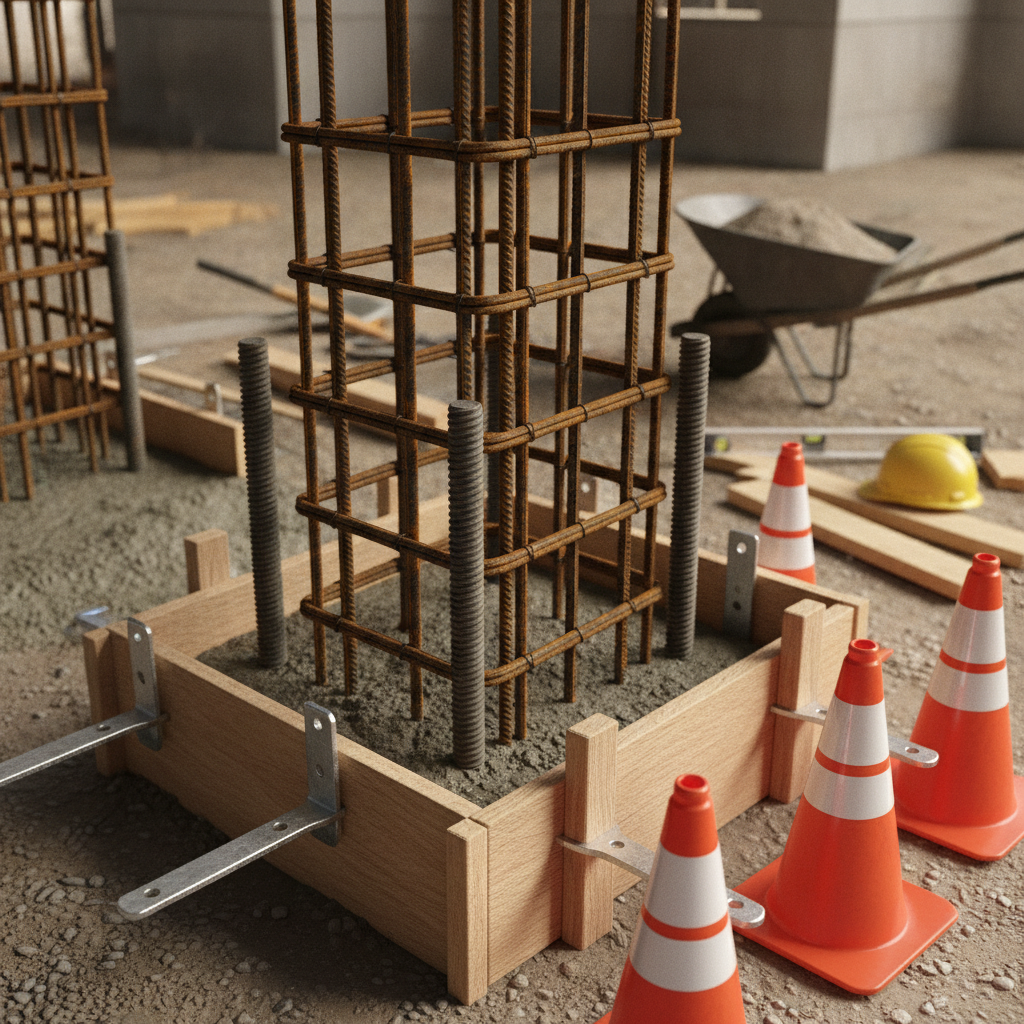
| 5) Foundations & Structure | Footings, slabs, steel, canopy (fuel retail) | Anchor misalignments; cure-time pressure | Layout verification; cure-time scheduling |
| 6) MEP Rough-In | Power, water, sewer, HVAC, fuel systems (as applicable) | Coordination clashes; inspection delays | MEP coordination drawings; pre-inspection checklists |
| 7) Envelope & Interiors | Shell, weatherproofing, drywall, millwork, equipment | Moisture intrusion; lead time gaps | Mock-up testing; long-lead tracking |
| 8) Inspections & Handover | Final inspections, punch, closeout documents | Lingering defects; documentation gaps | Rolling punch; closeout logs |
Concrete commonly reaches design strength over roughly 28 days, which is why we plan canopy footings and slab pours with realistic cure buffers. Likewise, trench safety and utility coordination reduce downtime when moving from excavation to MEP. Tight sequencing protects the entire schedule.
For a deeper permitting playbook, see our Texas building permits guide. It pairs well with our planning and design framework to keep your cost to build aligned from day one.
Types/Methods: Delivery Models and Budget Impact
Your delivery model sets the tone for risk, speed, and flexibility. Design-build streamlines decisions with one team. Construction management emphasizes transparency and collaboration. Design–bid–build separates design and build but can extend timelines if coordination lags.
Common delivery paths (and how they affect your cost to build)
- Design-Build (Tip Top Builders integrates planning, site prep, and build):
- Faster decisions; constructability built into design.
- Great fit for fuel retail and C-stores with tight openings.
- Single-point accountability reduces finger-pointing and change cycles.
- Construction Management (owner + CM + trade partners):
- High transparency and continuous value engineering.
- Adaptable to market shifts and lead times.
- Works well for complex commercial and municipal builds.
- Design–Bid–Build (traditional, sequential):
- Clear competitive bidding.
- Coordination gaps can extend schedule if discoverables surface late.
- Best for projects with very stable scope and long horizons.
We often blend practices—early constructability reviews, target value design, and rolling procurement—so owners get speed without sacrificing control. For fuel retail, integrated planning helps position underground tanks, canopy footings, and store adjacencies so trades stay synchronized.
| Model | Speed | Change Agility | Best For |
|---|---|---|---|
| Design-Build | Fast | High | Fuel retail, C-stores, time-sensitive programs |
| CM (Agency/At-Risk) | Fast–Moderate | High | Complex commercial, municipal, multi-phase |
| Design–Bid–Build | Moderate | Low–Moderate | Stable-scope, longer timeline projects |
Curious how delivery ties to scope? Explore our gas station building insights and this C-store planning guide for Texas operators.
Best Practices to Stay on Budget
Budget control is a discipline: clarify scope, validate the site, front-load permits, lock long-leads, and inspect relentlessly. A clear RACI matrix, rolling look-ahead schedules, and on-site QA reduce rework and help your project stay on schedule and within scope.
Our on-the-ground playbook
- Define scope with performance criteria: State capacity targets (e.g., fuel positions, parking, fixtures) to avoid late adds.
- Pre-qualify the site: Confirm power, water, sewer, storm, and access; design grading to manage coastal rain events.
- Map permits early: Sequence submittals; schedule inspections into the master plan to keep trades moving.
- Lock long-lead items: Equipment, storefronts, switchgear, and specialty items can govern critical path.
- Use 3–6 week look-aheads: Align crews, inspections, and deliveries; publish updates weekly.
- Run field QA checklists: Verify embeds, sleeves, and anchor bolts before pours or coverings.
- Closeout during the job: Keep O&M data rooms current to compress handover.
Local considerations for Galveston
- Plan for coastal weather windows: Schedule slab pours and canopy work with contingency around heavy rain and wind.
- Design stormwater and drainage early: Site grading and durable materials reduce maintenance after Gulf storms.
- Coordinate utility locates and inspections ahead of crews: Keep trenching, MEP rough-ins, and backfill moving.
Permitting intelligence pays off. Our planning and zoning overview explains how to prevent mid-design changes, while our planning and design guide shows how we convert owner goals into buildable drawings without costly detours.
Tools and Resources for Predictable Builds
Use an integrated toolkit: a permitting roadmap, constructability reviews, coordinated MEP drawings, rolling procurement, and field QA checklists. When planning, draw on proven guides and checklists to standardize decisions and keep documentation inspection-ready.
Templates and checklists we recommend
- Permitting roadmap: Jurisdiction contacts, submittal calendars, required drawings, inspection sequences.
- Constructability review log: Document code paths, clearances, access, and durability decisions.
- Long-lead tracker: Watch items that can slip critical path (switchgear, storefronts, canopies, equipment).
- Field QA checklists: Pre-pour and pre-cover inspections for embeds, sleeves, waterproofing, and firestopping.
- Closeout matrix: Submittals, testing, inspections, warranties, O&M manuals, and training schedules.
For practical planning context, see these general checklists and explainer articles our team has reviewed for process ideas: a switchgear planning explainer, a permit-and-scope checklist example, and a roadmapping article that illustrates phased decision-making (different industry, same logic). Use them for structure, not pricing.
If you’re building a C-store or fuel retail site, bookmark our convenience store construction guide and this page on gas station building to align procurement and canopy scheduling with inspections.
Case Studies: Texas Scenarios Without Pricing
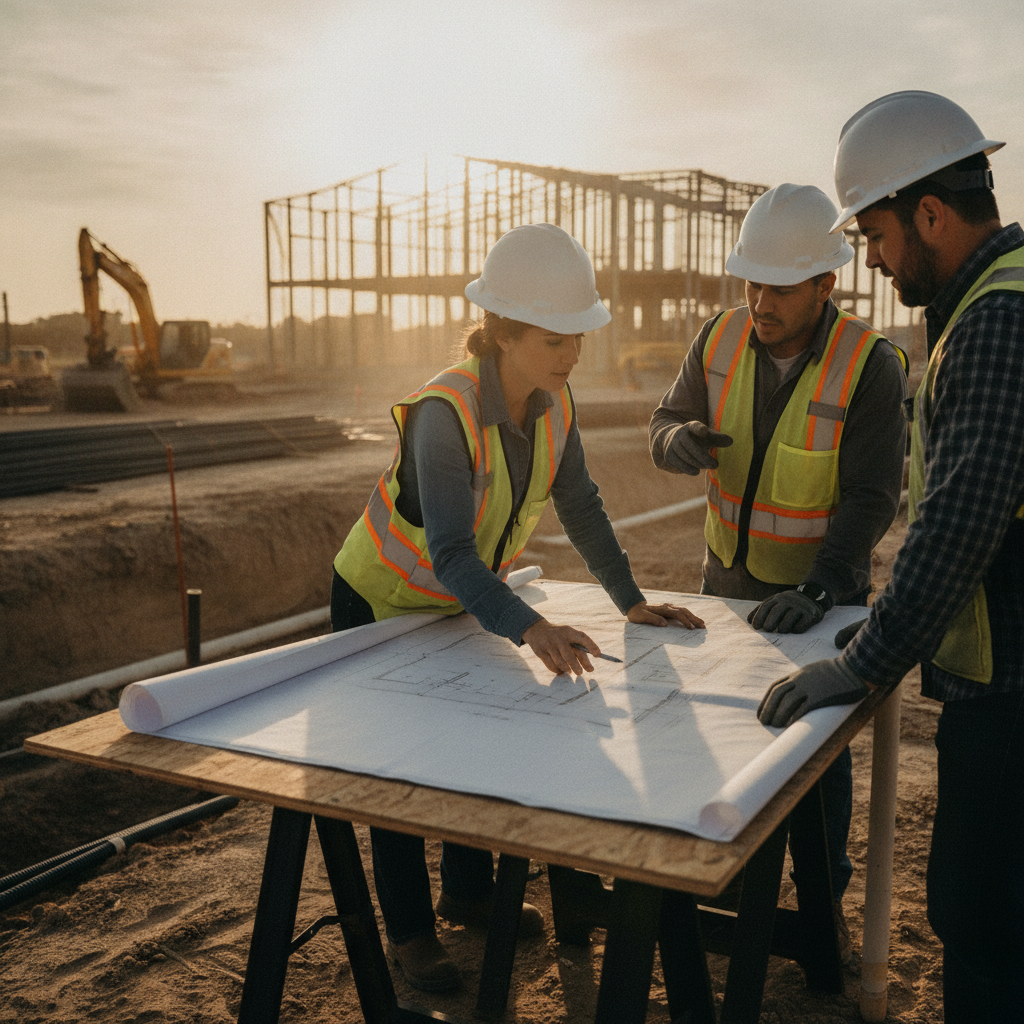
Real Texas projects show how early planning, site prep, and construction management stabilize outcomes. These short scenarios highlight risks we controlled and the practices that kept schedules and quality on track—without sharing confidential pricing.
Fuel + C-store near Beaumont
- Challenge: Tight opening window and heavy rain season.
- Action: Sequenced grading and subgrade stabilization first; locked canopy steel and storefronts early.
- Outcome: Maintained pour schedule with weather buffers; inspections cleared in sequence.
Retail build-out in Austin
- Challenge: Compressed tenant improvement timeline with long-lead finishes.
- Action: Fast-tracked submittals, verified clearances, and pre-ordered specialty items.
- Outcome: Shell and MEP rough-in closed on plan; tenant opening protected.
Custom home near College Station
- Challenge: Soils variability and drainage around outdoor living areas.
- Action: Geotech-informed footings, upgraded waterproofing, and landscape drainage.
- Outcome: Dry interiors and durable exterior finishes through storm events.
Want more residential planning help? Visit our Texas residential construction overview for scope and sequencing tips you can use immediately.
Frequently Asked Questions
These quick answers address scope, timing, and process questions we hear from Texas owners and operators. Each response is concise and action-focused so you can move forward with clarity.
What does “cost to build” include?
It includes due diligence, permits, design, site preparation and excavation, foundations and structure, MEP systems, envelope and interiors, inspections, and handover. We manage all phases as one plan so scope, schedule, safety, and compliance stay aligned.
How do I keep my project on schedule?
Front-load permits, lock long-lead materials, and run weekly look-aheads. Coordinate inspections within the master schedule and verify field conditions (like embeds and sleeves) before pours or coverings to avoid rework.
Which delivery method is best?
Design-build accelerates decisions with one accountable team. Construction management offers high transparency and agility. Traditional design–bid–build can work for stable-scope projects with longer schedules. We’ll help you choose based on goals and risk tolerance.
Do you handle permits and inspections?
Yes. We build the permitting roadmap, prepare submittals, coordinate with authorities, and schedule inspections so trades keep moving. This reduces redesign cycles and protects opening dates for fuel, retail, and residential projects.
Conclusion and Next Steps
Cost to build becomes predictable when planning, permits, site prep, and construction management operate as one system. Define scope early, verify the site, map approvals, and inspect relentlessly. That’s how we deliver Texas projects on time and to a high standard.
Key takeaways
- Cost to build is a process, not a number—plan it like one.
- Front-load permits and environmental to prevent midstream redesign.
- Choose a delivery model that matches your speed and risk goals.
- Use look-aheads and QA to avoid rework and protect dates.
- Coordinate long-lead items against the critical path.
Ready to build in Texas?
Tip Top Builders serves gas stations/C-stores, commercial properties, and residential homes across Texas from our Galveston base. For a no-obligation blueprint review and planning consult, call 409-225-1137. We’ll translate your goals into a buildable, inspection-ready plan.