
Gas station building is the end-to-end process of planning, permitting, designing, and constructing a fuel station with a convenience store. In Galveston and across Texas, developers prioritize traffic access, environmental compliance, and safety. Tip Top Builders guides projects from site selection through opening, ensuring timelines, quality, and regulatory approvals stay on track.
By Aftab Ali — Manager, Tip Top Builders
Last updated: 2026-05-16
Overview
This guide explains how to plan and deliver a modern gas station in Texas—fast and compliant. You’ll learn site criteria, permitting checkpoints, UST and canopy specs, C-store design essentials, construction sequencing, and quality controls Tip Top Builders uses to keep schedules predictable and openings smooth.
Here’s what you’ll get from this complete guide to gas station building in Texas:
- Clear, step-by-step roadmap from raw land to grand opening
- Regulatory checkpoints and documentation to prepare at each stage
- Practical design rules for canopies, USTs, and C-store layouts
- Construction sequencing, inspections, and turnover best practices
- Local insights for coastal Texas conditions and busy travel corridors
Local considerations for Galveston
- Account for coastal weather and wind exposure with robust canopy connections and corrosion-resistant materials that hold up to salt air.
- Plan schedule buffers around holiday and summer travel peaks when traffic volumes and supplier lead times often surge.
- Design efficient in/out traffic patterns suited to island corridors, prioritizing safe fuel tanker access and clear pedestrian routes to the C-store.
Use the table of contents to jump to each stage:
- What is gas station building?
- Why it matters in Texas
- How the process works
- Delivery approaches and design choices
- Best practices that prevent delays
- Tools, checklists, and resources
- Texas examples and mini case studies
- FAQ
- Conclusion and next steps
- Related topics
What is gas station building?
Gas station building is the integrated planning, permitting, design, and construction of a fuel retail site and convenience store. It coordinates site selection, environmental requirements, underground storage tanks, canopies, utilities, civil works, architecture, and inspections to open safely and on schedule.
At Tip Top Builders, gas station building starts with feasibility and ends with a ready-to-open site. We combine planning and design, site preparation and excavation, and construction management so owners have a single accountable partner from day one.
Core elements you’ll coordinate
- Site feasibility: traffic counts, access/egress, zoning, and utilities readiness.
- Permitting path: environmental, zoning, building, signage, and fuel-related approvals.
- Engineering: civil, structural, MEP, and UST system design aligned to code.
- Construction: earthwork, UST install, slab and canopy, shell, interiors, and siteworks.
- Commissioning: testing, inspections, training, and turnover documents.
Because fuel systems, ADA access, and life safety interact, a coordinated plan reduces revisions. Our planning and design services align stakeholders early and prevent late-stage redesigns.
Why gas station building matters in Texas
In Texas, successful fuel retail combines great access, safety-first engineering, and reliable construction management. A streamlined plan lowers schedule risk, protects compliance, and maximizes revenue days—critical in high-traffic corridors and fast-growing communities.
Texas corridors move millions of vehicles annually, so access, turning radii, and canopy placement are business-critical. Well-planned sites can handle more vehicles per hour, improve safety, and increase in-store conversion. Even minor layout improvements can add several daily fueling transactions and convenience purchases.
- Access and visibility: Corner lots and right-in/right-out patterns often boost capture rates.
- Throughput: Additional fueling positions and smart lane design reduce dwell times.
- Co-tenancy: Pairing with QSR or car wash increases trip purpose and basket size; see a Texas fuel retail example from this co-located site.
For program confidence, an experienced construction management team provides schedule control, risk logs, and quality checkpoints that keep inspections and utility turn-ons predictable.
How the process works
A proven sequence reduces friction: validate the site, secure entitlements, finalize engineering, build in defined phases, and commission systematically. Clear deliverables and checklists at each gate keep your project moving without rework.
End-to-end stages (land to opening)
- Feasibility & site selection: traffic, demographics, access, utilities, and zoning review. Engage early with our urban planning team to align with local plans.
- Entitlements & permitting: submit zoning, environmental, and building packages. Our planning and development guidance streamlines submittals.
- Design development: civil, structural, and MEP; canopy, UST system, and store layout optimization. See our planning and design guide for scope clarity.
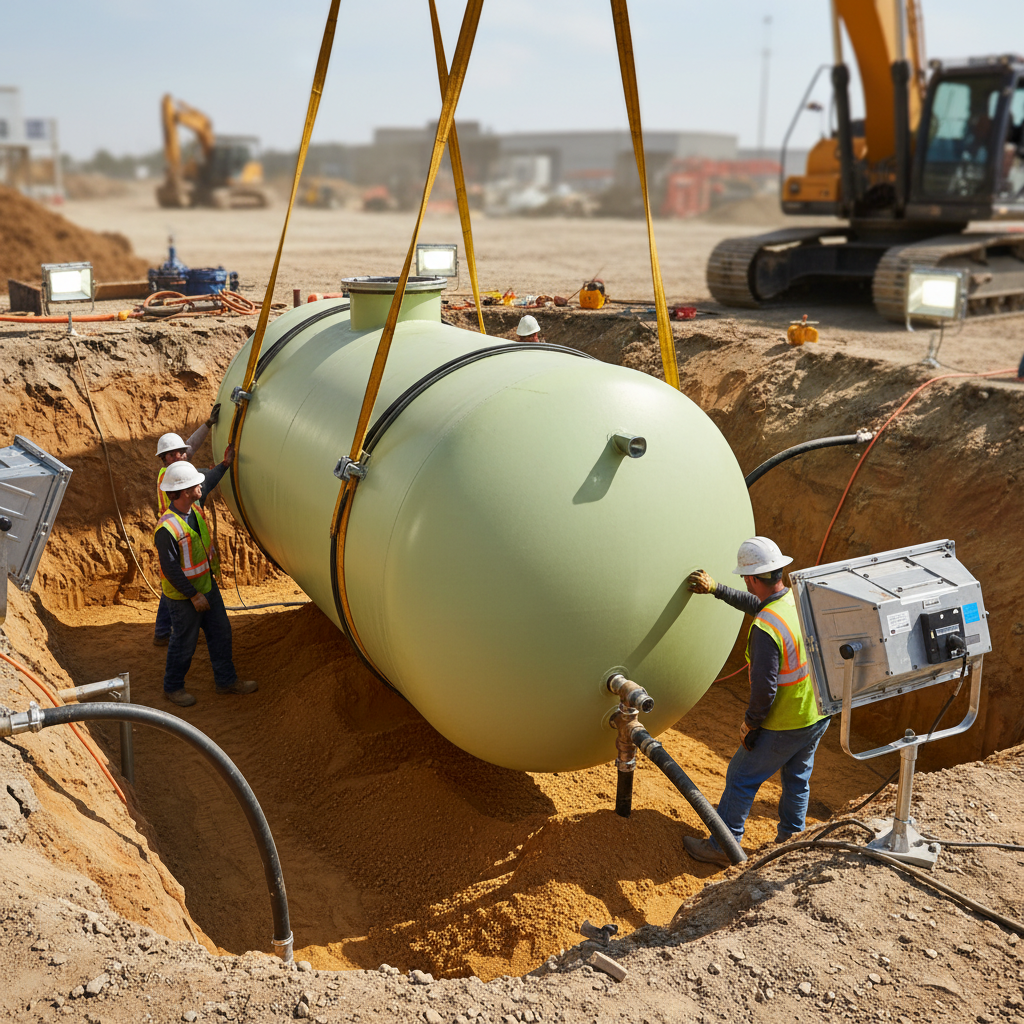
- Site prep & earthwork: clearing, grading, utilities, and UST excavation led by our site preparation and excavation crews.
- Core build: UST placement, piping, tank pad, concrete, building shell, canopy structure, and paving.
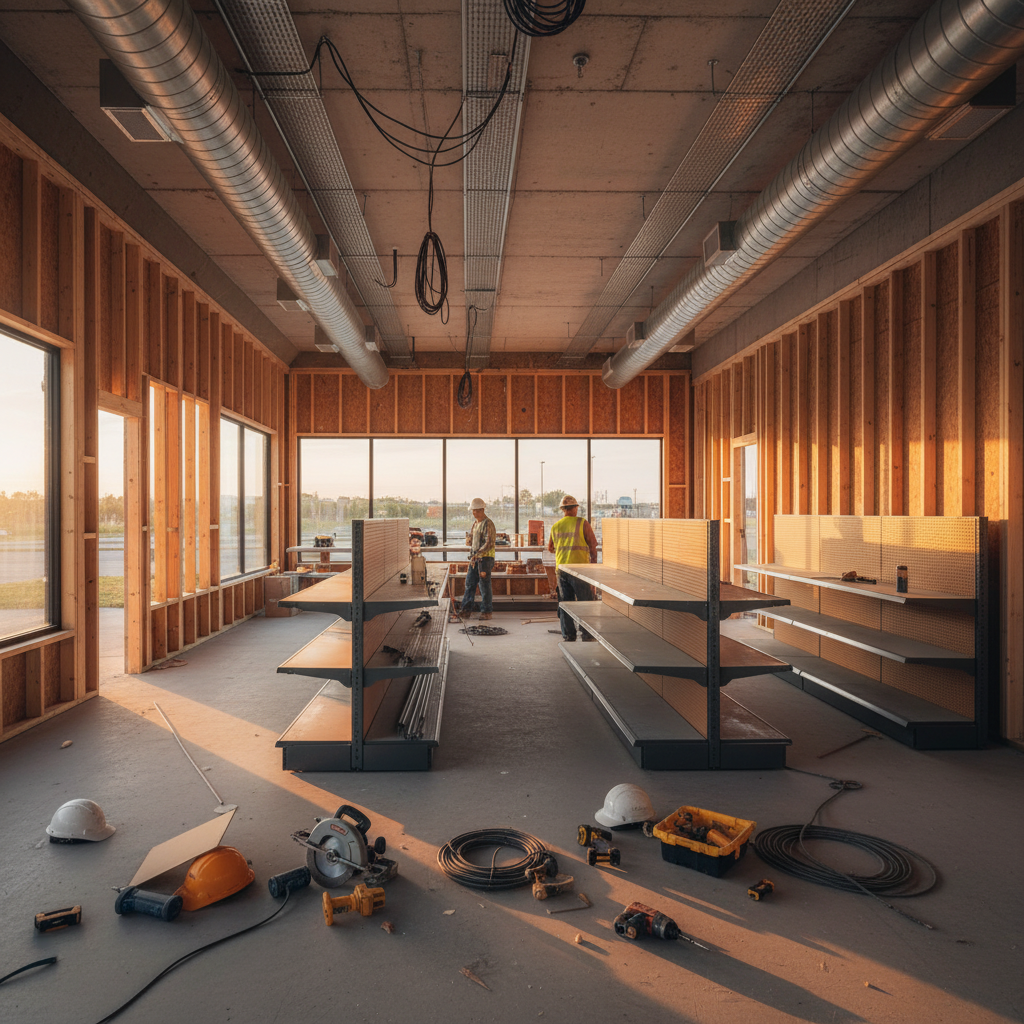
- Interiors & MEP: HVAC, electrical, refrigeration, shelving, counters, and POS integration; see our commercial construction capabilities.
- Commissioning & turnover: line tightness tests, dispenser calibration, safety checks, staff training, and closeout documents coordinated by construction management.
Typical documentation bundle
- Land surveys, geotech report, and traffic analysis
- Environmental review and tank specs
- Stamped civil/structural/MEP plans and canopy details
- Stormwater plan, erosion control notes, and SWPPP logs
- Inspection checklists, testing certificates, and as-builts
Delivery approaches and design choices
Select a delivery model that fits your risk tolerance and speed: Design-Build for a single point of accountability, CM-at-Risk for preconstruction value engineering, or Design-Bid-Build for strict separation of design and construction.
Tip Top Builders frequently delivers Design-Build for fuel retail because a single team aligns plans, permits, procurement, and construction. Where owners want early trade input, we also support Construction Management with preconstruction services.
Compare delivery models
| Model | Best for | Speed | Change control | Owner effort |
|---|---|---|---|---|
| Design-Build | One accountable partner | Fastest procurement | Streamlined, fewer hand-offs | Lowest |
| CM-at-Risk | Early VE and phasing | Fast-track options | Collaborative, cost-transparent | Moderate |
| Design-Bid-Build | Separate design/GC roles | Longest overall | Formal, slower adjustments | Highest |
Design choices that move the needle
- Canopy geometry: bay count, clear heights, column placement, and drainage.
- UST strategy: double-wall tanks, spill containment, overfill protection, and monitoring.
- C-store layout: front-of-house sightlines, queue space, and refrigeration adjacency.
- Siteworks: tanker turn radii, ADA routes, bollards, and lighting for safety.
Our team brings fuel-retail specialization to these decisions so your design performs day one and adapts as traffic grows.
Best practices that prevent delays
Front-load feasibility, lock the permitting path, and manage quality with checklists. Early decisions on USTs, canopy loads, utilities, and ADA routes eliminate avoidable redesigns and inspection fails that waste weeks.
Planning and preconstruction
- Start with a written risk register and add mitigation owners for each item.
- Hold an interdisciplinary design kickoff that includes civil, MEP, fuel systems, and operations.
- Define long-lead items early (tanks, dispensers, walk-ins, switchgear) and pre-release when practical.
- Sequence submittals so site/grading and utilities can mobilize while interiors finalize.
Our planning team standardizes these steps so entitlements, engineering, and procurement stay in sync.
Site preparation and safety
- Verify soils and compaction targets before pouring pads and canopy foundations.
- Maintain trench safety protocols and daily logs throughout UST work.
- Stage erosion and sediment controls prior to disturbance and maintain a clean site.
- Schedule inspections early and build in 24–48 hour buffers around milestones.
See how our site preparation & excavation crews coordinate with inspectors to keep utility tie-ins and pours moving.
Quality control and turnover
- Use hold points for tank tightness, line testing, dispenser calibration, and emergency shutoffs.
- Collect warranties, O&M manuals, and as-builts as you go—not at the end.
- Walk the site with store operations and tanker drivers to confirm real-world flow.
- Prepare a day-one checklist: lighting focus, signage illumination, POS go-live, and stocking sequence.
Our construction management playbook keeps these tasks visible with owners, AHJs, and vendors.
Tools, checklists, and resources
Use structured checklists, discipline-specific submittal logs, and simple phasing diagrams. Centralize documents and decisions so every stakeholder stays aligned during design, permitting, procurement, and build-out.
Owner-ready checklists
- Site validation: access, utilities, zoning, setbacks, and floodplain notes
- Permitting bundle: environmental notes, civil set, tank specs, canopy details
- Long-lead matrix: USTs, dispensers, walk-ins, RTUs, switchgear, POS
- Inspection tracker: footing, rough-in, UST tests, finals, and fire/life safety
Useful references for context
To visualize QSR co-tenancy strategies that lift convenience sales, review Texas fuel retail examples such as this site configuration. For reinforcement detailing trends, browse industry rebar showcases to inform canopy and slab discussions with your engineer.
For deeper preconstruction alignment across disciplines, our Tip Top approach outlines how we coordinate stakeholders from first sketch to opening week.
Texas examples and mini case studies
Across Texas—from Beaumont to Austin—successful stations share patterns: strong access, right-sized canopies, disciplined UST installs, and proactive inspections. These factors shorten schedules and make opening weeks smoother.
Coastal corridor site (Galveston)
- Challenge: design for wind and salt exposure without overbuilding canopy structure.
- Approach: galvanized and coated components, robust anchor patterns, and sealed conduit runs.
- Outcome: fewer corrosion touch-ups during warranty period and consistent canopy lighting.
High-throughput commuter route (Beaumont/Port Neches)
- Challenge: reduce queuing during peak 7–9 a.m. and 4–6 p.m. windows.
- Approach: add a fueling position per aisle, re-angle approaches, and widen exit lanes.
- Outcome: smoother flow, shorter dwell times, and steadier in-store traffic during peaks.
College town adjacency (College Station)
- Challenge: variable demand tied to academic calendar and game days.
- Approach: flexible merchandising with mobile displays and expanded grab-and-go refrigeration.
- Outcome: stronger weekend baskets and better conversion from traveler traffic.
Growth corridor with QSR partner (Austin)
- Challenge: synchronize C-store build-out with food partner equipment and inspections.
- Approach: shared submittal tracker for hoods, grease interceptors, and electrical loads.
- Outcome: coordinated finals and earlier opening date for both operations.
Frequently Asked Questions
Most owners ask about timeline, permitting steps, and inspections. Plan your sequence, assemble a complete submittal package, and use a disciplined QC process to pass inspections the first time and protect opening dates.
What permits do I need to build a gas station in Texas?
You’ll typically submit zoning and site plan approvals, building permits, environmental notes, and fuel system documentation. Include civil, structural, MEP, canopy details, and UST specifications. A complete package reduces questions from authorities and shortens turnaround times.
How long does a modern gas station project take?
Timelines vary with entitlements, utilities, and weather. Many projects run in distinct phases: preconstruction and permitting, site and UST work, vertical construction, interiors, and commissioning. Clear hold points and early long-lead ordering help maintain steady progress.
What design choices have the biggest business impact?
Access/egress geometry, bay count under the canopy, UST capacity and redundancy, C-store sightlines, and lighting. These elements drive throughput, safety, and shopper conversion. Pairing with a QSR or car wash can also increase trip purpose and average basket size.
Do you coordinate inspections and closeout documents?
Yes. We plan inspections in advance, manage testing (including UST tightness and dispenser checks), and organize closeout documents such as warranties, O&M manuals, and as-builts. This makes handover and staff training smoother.
Conclusion and next steps
Winning fuel retail projects in Texas follow a disciplined plan. Align access and engineering early, package permits completely, lock long-leads, and manage quality with hold points. A single accountable partner speeds decisions and protects your opening date.
Ready to move from concept to construction? Partner with Tip Top Builders for a turnkey path—planning and design, site preparation and excavation, and construction management—delivered by one Texas-focused team.
Key takeaways
- Gas station building relies on early access planning and a clear permitting path.
- Design-Build or CM-at-Risk compresses schedules with fewer hand-offs.
- Long-lead visibility (tanks, dispensers, equipment) keeps field crews productive.
- Quality hold points reduce rework and protect opening dates.
Soft CTA: Have a Texas site in mind? Let’s review access, utilities, and permitting together. Explore our planning & design services or connect with our construction management team.
Related topics
If you’re mapping a multi-site program, go deeper on planning, site prep, and construction management techniques. These disciplines create the speed and predictability your network strategy needs.
- Advanced site preparation sequencing for coastal markets
- Design coordination techniques for fuel, QSR, and retail co-tenancy
- Commissioning checklists that speed staff training and opening week