
Convenience store construction is the end-to-end process of planning, permitting, and building a retail C-store—often paired with fuel—optimized for safety, compliance, and sales. In Galveston and across Texas, Tip Top Builders delivers this as a turnkey service, from site selection and design through site preparation, build-out, and final inspections.
By Tip Top Builders — Texas planning, design, and construction management specialists. Last updated: 2026-05-26.
Above-Fold Section: Hook + Table of Contents
Build a high-performing C-store by aligning location strategy, code compliance, sitework, and construction sequencing. This guide walks Texas developers through each phase—planning, permitting, environmental safeguards, construction management, interiors, and commissioning—so you can open predictably and operate safely.
Here’s what you’ll learn and how to use this guide.
- What convenience store construction involves from land to opening
- How Texas permitting, environmental, and accessibility rules shape designs
- A step-by-step process with checklists, pitfalls, and quality controls
- Delivery models, scheduling tactics, and risk controls we use in Texas
- Actionable templates: site-readiness, inspection, and turnover checklists
Overview
Convenience store construction in Texas integrates market-driven design with strict safety and environmental requirements. Success hinges on site access, traffic flow, UST controls, ADA accessibility, and disciplined construction management. Coordinating these early reduces delays and supports a smooth opening day.
Tip Top Builders delivers land-to-opening C-store builds statewide. We plan, design, permit, excavate, and manage construction with a focus on safety, schedule, and sustainability. Our work spans Galveston and cities like Beaumont, Port Neches, Nederland, College Station, Austin, Sugar Land, and Port Arthur.
Local considerations for Galveston
- Account for coastal wind and rain when detailing canopies, cladding, and drainage. Durable finishes and secure connections improve uptime.
- Plan schedules around storm season and holiday travel peaks. Maintain contingency days and rapid-restart procedures.
- Design for efficient ingress/egress on busy corridors. Thoughtful traffic flow and signage reduce congestion and improve safety.
What Is Convenience Store Construction?
Convenience store construction is the coordinated delivery of a retail facility—often with fuel—covering site selection, permitting, environmental controls, civil works, building shells, interiors, MEP systems, and commissioning. It emphasizes safety, code compliance, and reliable operations.
In our experience, clarity at the start prevents costly redesigns. We begin with site selection and planning, then align traffic patterns, canopy placement, turning radii, parking counts, dumpster screening, and pedestrian routes. For fuel sites, we integrate underground storage tank (UST) layouts, venting, and spill control with the building plan from day one.
- Scope integration: Market study, layout options, branding, foodservice, coolers/freezers, and back-of-house workflows.
- Regulatory focus: Zoning, accessibility, fire protection, and environmental safeguards built into drawings.
- Construction readiness: Geotech, utilities, paving sections, and procurement lead times sequenced into the schedule.
This approach helps first-time developers and seasoned operators avoid late-stage changes and open on time.
Why Convenience Store Construction Matters
A disciplined approach reduces permitting friction, change orders, and downtime. Done right, your store opens faster, operates safer, and converts more customers through smart layouts, durable materials, and resilient systems.
Here’s why it matters to Texas owners and operators we support.
- Predictable openings: Aligned permits, drawings, and inspections cut rework and compress timelines.
- Safety first: Proper fuel systems, ventilation, and fire protection lower risk and support insurance requirements.
- Higher revenue per visit: Sightlines, queue design, and foodservice zones boost basket size.
- Lower lifecycle maintenance: Durable finishes and right-sized MEP reduce unplanned shutdowns.
We’ve found that stores that model peak-hour traffic and back-of-house flow during design are faster to staff and run more consistently under pressure.
How the Process Works (Step-by-Step)
The C-store build process follows a proven path: site due diligence, schematic design, permits and approvals, site preparation and utilities, vertical construction, interiors and MEP, inspections, commissioning, and turnover. Each phase has defined deliverables and gates.
Eight-phase roadmap
- Due diligence: Site selection, access, utilities, title, boundaries, preliminary geotech, and traffic considerations.
- Schematic design: Concept layouts, canopy positioning, parking, circulation, and initial UST positioning.
- Entitlements & permits: Zoning confirmation, submissions, agency reviews, and revisions.
- Site preparation & utilities: Clearing, grading, excavation, stormwater controls, and utility tie-ins.
- Structural & shell: Foundations, slab, steel, roof, and envelope.
- Interiors & MEP: Walls, ceilings, casework, refrigeration, electrical, HVAC, and plumbing.
- Inspections & testing: Fuel systems, life safety, accessibility, refrigeration performance, and energy.
- Commissioning & turnover: Punch list, O&M handoff, training, and soft opening.
For deeper scheduling tactics and approvals paths, see our construction management approach and our companion Texas fuel-site guide.
Delivery Models and When to Use Them
Choose a delivery model that matches speed, control, and risk appetite. Design-Bid-Build offers competitive bidding; Design-Build compresses timelines with single-point accountability; CM at Risk balances collaboration with guaranteed delivery parameters.
| Model | Best For | Pros | Watch Outs |
|---|---|---|---|
| Design-Bid-Build | Clear scope; competitive pricing | Market pricing; defined roles | Longer timeline; potential gaps between design and build |
| Design-Build | Speed; single-point accountability | Faster decisions; fewer change orders | Owner must define performance specs early |
| CM at Risk | Complex sites; early contractor input | Collaborative; schedule certainty | Requires engaged owner team |
We often recommend Design-Build for fast-track C-store programs and CM at Risk for fuel-intensive or high-constraint sites. For a deeper dive on roles, see our note on EPCM vs. CM.
Planning and Design Essentials
Early planning sets your store’s performance ceiling. Lock the right site, validate access and utilities, and design for throughput, safety, and merchandising. Documentation must anticipate regulator and inspector expectations to minimize resubmittals.
Design priorities we align
- Access & circulation: Separate fuel, delivery, and customer paths; design turning radii for fuel trucks.
- Parking & counts: Right-size stalls and ADA spaces; keep ADA routes short and clear.
- Canopy & forecourt: Column spacing, height, lighting, drainage, and wind exposure.
- Foodservice & merchandising: Line-of-sight to hot case, coffee, and coolers; queue design to boost add-ons.
- Back-of-house: Dry/cold storage, prep, janitorial, and receiving layouts that reduce steps.
For municipal and community outcomes, our urban design guidance ensures the site complements nearby uses and long-term plans.
Site Preparation and Excavation
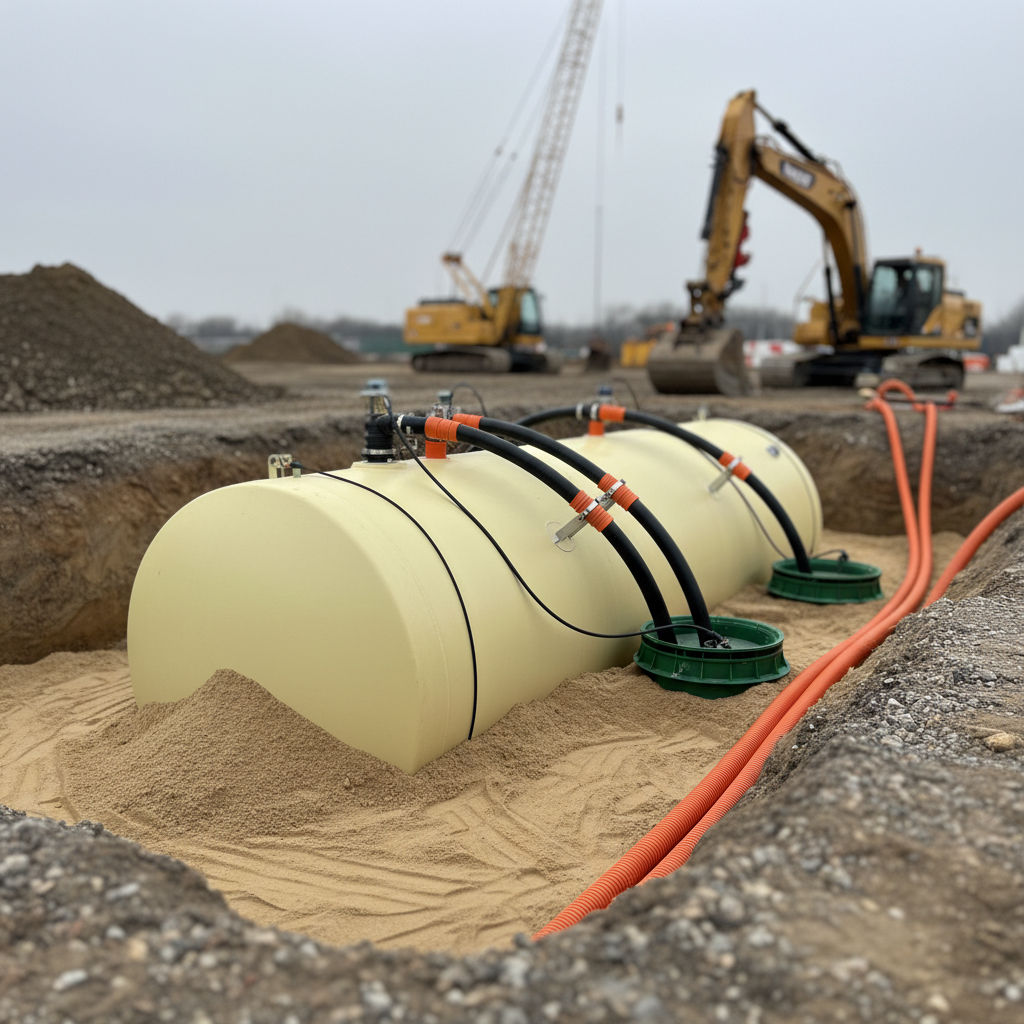
Sitework builds the foundation for safety and longevity. Accurate grading, stable subgrades, and well-routed utilities prevent ponding, pavement failure, and service disruptions. Fuel sites require precise UST excavation, bedding, anchoring, and leak detection installation.
- Clearing & grading: Balance cuts/fills; protect adjacent properties; establish drainage early.
- Excavation & utilities: Trenching with shoring as needed; coordinate sleeves and elevations.
- UST systems: Bedding media, deadmen anchors, venting, sumps, and interstitial monitoring.
- Pavement sections: Design for heavy truck loads at delivery and fuel zones.
Our site preparation & excavation team sequences stormwater controls with utility work to keep the pad dry and on schedule.
Permitting, Zoning, and Approvals in Texas
Permitting success comes from complete, code-aligned submittals and responsive revisions. We coordinate zoning, signage, right-of-way, building, fire, health (for foodservice), and environmental filings, then track reviews to maintain momentum.
- Zoning & land use: Confirm fuel allowances, setbacks, height, parking ratios, and loading.
- Submittal packages: Civil, architectural, structural, MEP, fuel systems, and accessibility sheets.
- Agency reviews: Building, fire marshal, health department, and public works coordination.
For practical steps on entitlements and hearings, scan our planning and zoning overview.
Environmental and Safety Controls
Environmental controls protect people and groundwater. Modern USTs use double-wall components, sumps, spill containment, and leak detection. Safety systems include fire-rated separations, ventilation, emergency shutoffs, and life-safety alarms.
Fuel systems should integrate interstitial monitoring and spill containment at fill points. Forecourt drainage must direct runoff to approved systems. Interiors need clear egress, illuminated exit paths, and properly sized fire extinguishers. Refrigeration and HVAC should avoid short-cycling and maintain stable food-safe temps.
- UST integrity: Double-wall tanks, piping, sumps, and continuous monitoring.
- Life safety: Separation, ventilation, detection, and emergency controls.
- Accessible routes: Slopes, landings, counters, and restrooms that meet accessibility standards.
For an operator-focused discussion of merchandising and on-site retail channels, see this direct-to-consumer guide.
Construction Management and Scheduling
Strong construction management keeps crews coordinated, materials flowing, and inspections on pace. Look for transparent schedules, issue logs, QA/QC plans, and clear safety leadership that holds the site to consistent standards.
- Schedule control: Two-week lookaheads, procurement tracking, and crew sequencing to avoid stacking trades.
- Quality assurance: Hold-point inspections for slab, steel, MEP rough-in, insulation, and close-in.
- Safety: Daily tailboards, housekeeping, and incident reporting to protect teams and customers.
See how we structure oversight in our construction management service and our quality control framework.
Store Interiors, Refrigeration, and MEP Systems
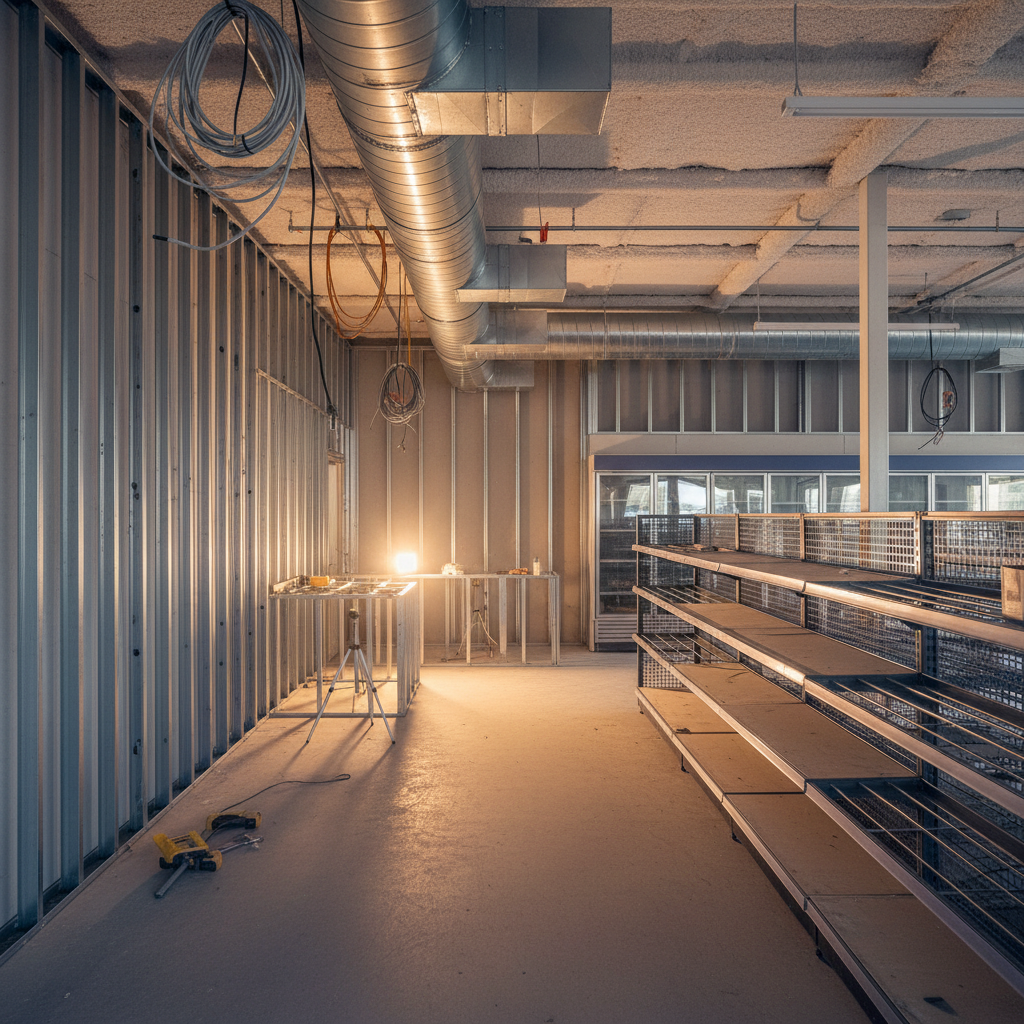
Interiors win or lose the basket. Position coffee, hot food, and grab-and-go near primary paths. Specify refrigeration, HVAC, and lighting for comfort, efficiency, and maintenance access. Durable floors and wall protection reduce downtime.
- Refrigeration: Allow for heat rejection, service clearances, and condensate routing.
- HVAC & ventilation: Balance makeup air with kitchen and restroom exhaust.
- Lighting: Bright, even illumination on merchandise; glare-free at POS.
- Durability: Impact protection at corners; slip-resistant floors in wet areas.
During build-out, we mock up key aisles and counters to validate reach ranges and sightlines before final anchoring.
Technology and Operations Readiness
Plan technology early to avoid late change orders. Coordinate POS, back-office, security cameras, network, menu screens, and forecourt dispensers on one low-voltage plan with labeled home runs and dedicated power.
- Low-voltage: Racks, patch panels, cable management, surge protection, and UPS where needed.
- Security: Camera coverage, exterior lighting, and tamper-resistant cable paths.
- Retail tech: POS lanes, loyalty beacons, and menu display rough-ins planned with casework.
As an example of tenant co-location that can enhance traffic, national food brands often tie into forecourt sites; see how one brand approaches travel center placements via their travel center example.
Budget Drivers, Scheduling, and “Pricing” Factors
While specific prices vary by scope and market, you can control outcomes by managing scope, schedule, materials, and approvals. The most reliable way to protect value is early coordination and disciplined change management.
- Scope & size: Store square footage, canopy count, and foodservice complexity drive material and labor quantities.
- Site conditions: Utilities at the lot line, soil bearing, and stormwater needs affect civil costs and duration.
- Specifications: Casework, refrigeration, finishes, and façade materials influence timelines and durability.
- Permits & reviews: Response speed to comments, inspection readiness, and clear redlines reduce schedule risk.
For electrical coordination considerations that often impact timelines, this electrical construction overview outlines common sequencing concepts.
Case Studies and Texas Examples
Texas projects succeed when teams integrate fuel systems, civil design, and operations early. Here are anonymized scenarios showing how specific decisions improved outcomes in schedule, safety, and store performance.
Galveston coastal C-store retrofit
- Challenge: High wind exposure and frequent rain threatened schedule and envelope performance.
- Action: Upgraded canopy connections, specified moisture-tolerant sheathing, and sequenced roofing before interior framing.
- Result: Fewer weather delays and a tighter building; interiors stayed on track despite storms.
Beaumont ground-up with heavy truck traffic
- Challenge: Delivery truck circulation conflicted with customer parking.
- Action: Separated truck paths, reinforced pavement sections at loading, and relocated dumpsters to a screened service court.
- Result: Safer forecourt, faster deliveries, and clearer customer wayfinding.
Austin food-forward C-store
- Challenge: Expanding hot food program without overwhelming HVAC and electrical.
- Action: Added dedicated makeup air, balanced exhaust, and provided extra electrical capacity and clearances for future equipment.
- Result: Stable temps, improved comfort, and smoother foodservice throughput.
For more fuel-centric considerations, our gas station building overview complements this guide.
Tools and Resources
Use structured checklists and templates to keep your build on track. Align deliverables by phase, document inspections, and prepare a clean turnover package with as-builts, warranties, and training logs.
- Preconstruction checklist: Surveys, geotech, utility confirmations, traffic notes, and initial layouts.
- Inspection matrix: Hold-points for slab, steel, rough-ins, insulation, close-in, and final.
- Turnover packet: As-builts, permits, manuals, warranties, and maintenance schedules.
If you’re planning a program across multiple Texas cities, our commercial construction team can standardize details to accelerate reviews and builds.
Free project readiness conversation: Share your concept and timeline. We’ll outline a practical path from planning to opening and flag any risk hotspots early.
Frequently Asked Questions
These are the questions Texas developers ask most about convenience store construction. The answers are brief, practical, and tailored to first-time and multi-site operators.
What permits are usually required for a new C-store with fuel?
Expect zoning or land-use confirmation; building, fire, and right-of-way permits; health approvals for foodservice; and environmental clearances for underground storage tanks. Your submittal set should include civil, architectural, structural, MEP, fuel systems, and accessibility drawings.
How do I reduce change orders during construction?
Front-load coordination. Lock equipment schedules, utilities, and casework early. Use hold-point inspections for slab, steel, and rough-ins. Keep a live issues log and require clear documentation for any scope change before work starts.
What’s the best delivery model for speed?
Design-Build typically moves faster because design and construction run in parallel under one accountable team. It works best when owners can define performance criteria upfront and engage in regular design reviews.
Do you help beyond Galveston?
Yes. We plan and build across Texas, including Beaumont, Port Neches, Nederland, College Station, Austin, Sugar Land, and Port Arthur. The same playbook—clear drawings, responsive revisions, and disciplined scheduling—travels well.
Key Takeaways and Next Steps
Success with convenience store construction comes from early alignment of design, permits, and sitework, then disciplined execution. If you’re planning a Texas C-store, engage an experienced team early to compress schedules and reduce risk.
- Plan deeply: Site access, UST, and circulation drive safety and sales.
- Document clearly: Complete, code-aligned submittals speed approvals.
- Build cleanly: QA/QC at hold-points prevents rework.
- Turn over right: Commissioning and training protect day-one performance.
Explore our sitework services and construction management to start aligning your project.
Where to Go Next
If you’re mapping a Texas C-store, review fuel-specific considerations, quality control frameworks, and commercial standards. These resources pair with this guide to reduce risk and organize delivery.
Continue with our Texas fuel-site guide, skim our construction quality control playbook, and align scopes with the commercial construction team.
Ready to build? Let’s talk about your timeline and approvals path. Book a discovery session in Galveston and we’ll outline the first 30, 60, and 90 days.