
Building permits are official approvals that authorize construction, renovation, or land development. They verify that plans meet safety codes, zoning, and environmental rules. For projects in Galveston and across Texas, permits protect residents and businesses, reduce liability, and keep schedules predictable—especially when a partner like Tip Top Builders manages submittals, revisions, and inspections end to end.
By Aftab Ali
Last updated: June 13, 2026
Above the Fold: Hook + Table of Contents
Use this table of contents to jump to precise answers on building permits in Texas. We cover what permits are, why they matter, how the process works, the approvals youll need, best practices, tools, and real project examplesall tailored to fuel retail, commercial sites, and homes.
Permits can feel like a maze. With a clear map, theyre manageable. This guide is designed for Texas developers, fuel retail operators, commercial owners, and homeowners who want fast, compliant approvals without rework.
- What are building permits?
- Why permits matter in Texas
- How the permit process works
- Types of permits and approvals
- Best practices for fast approvals
- Tools and resources
- Texas case studies and examples
- Frequently asked questions
- Key takeaways
- Next steps for your Texas project
Quick Summary
Building permits confirm your project meets code, zoning, and safety requirements. Submit complete stamped plans, respond quickly to comments, and schedule inspections at milestones. Partnering with Tip Top Builders reduces resubmittals, coordinates agencies, and keeps fuel retail, commercial, and residential projects moving on time.
Heres the nutshell version of how to avoid delays and keep momentum from day one.
- Define scope early: Align the entire team around the same drawings and specs.
- Pre-application meeting: Surface zoning, access, and utility questions before you file.
- Submit complete sets: Architectural, civil, MEP, and any fuel-system details for C-stores.
- Track comments: Respond within days, not weeks, and log changes.
- Book inspections: Tie inspections to schedule milestones to avoid idle time.
What Are Building Permits?
A building permit is a local authorization to construct, alter, or change land use. It ensures your plans comply with adopted building codes, zoning rules, and safety standards. In Texas, permit issuance precedes site work, utility taps, and most material deliveries to protect people and property.
At its core, a building permit is proof that your project meets code before work begins. That code-check protects life safety, property values, infrastructure capacity, and the public right of way. Without one, you risk stop-work orders, fines, and do-overs that derail timelines.
- Scope coverage: New builds, additions, remodels, change of use, sitework, fuel systems, signage, and utilities.
- Code basis: Typically the International Building Code (IBC), International Residential Code (IRC), and related fire, mechanical, electrical, and plumbing codes adopted by the authority having jurisdiction (AHJ).
- Trigger points: Excavation, foundation pours, structural framing, underground tanks, and MEP rough-ins almost always require permits and inspections.
Tip Top Builders streamlines submittals for C-stores, retail shells, and homes by coordinating architecture, civil, and specialty drawings into clean packages that reviewers can scan and approve.
Why Building Permits Matter in Texas
Permits safeguard safety, accessibility, and environmental compliance. In Texas, they also align with local zoning, floodplain, and stormwater rules. Securing permits prevents stop-work orders, unlocks utility connections, and proves due diligence to lenders, insurers, and future buyers.
Texas is diverse: coastal wind loads, inland floodplains, urban traffic counts, and rural fire access all shape approvals. Proper sequencing of submittals makes the difference between predictable schedules and compounding delays.
- Risk reduction: Clear approvals limit liability and reduce rework.
- Compliance proof: Lenders and insurers look for permits and inspection records before closing files.
- Future transactions: A documented permit history supports appraisals and resale value.
- Operational readiness: For gas station construction, approvals for underground storage tanks (USTs), canopies, dispensers, and fire systems must align to avoid downtime.
Weve seen strong results when owners align permitting with design milestones instead of treating it as a separate track. That one team, one plan approach prevents late surprises.
How the Building Permit Process Works
Plan your permit journey in five stages: pre-application research, design and document prep, official submittal, plan review and revisions, and inspections to close out. Each stage has defined outputs. Managing them as one workflow prevents idle time and rework.
Permitting is a process, not a single form. When we map it to your schedule, crews and deliveries stay moving.
- Pre-application research: Confirm zoning, setbacks, access, utilities, drainage, floodplain status, and any overlay districts. For C-stores, identify UST and fire review paths early.
- Design and documentation: Compile sealed architectural, civil, structural, and MEP plans. Add photometrics, landscape, traffic circulation, and fuel-system details where relevant.
- Official submittal: File through the AHJs portal with completed applications, plan sets, and any environmental or right-of-way documents.
- Plan review and comments: Track comments by discipline. Turn revisions fast and annotate plans so reviewers can verify updates in minutes.
- Inspections and closeout: Schedule footing, framing, MEP rough-in, fire suppression, UST installation, final site, and certificate of occupancy (CO) inspections as milestones are reached.
Small gaps compound delays: a missing sheet or unclear note can cascade into weeks of rescheduling. Our teams proactively check drawing indices, sheet numbering, and references to keep reviews tight and predictable.

Self-contained guide: core milestones
- Decision gate 1: Zoning confirmation plus preliminary site plan.
- Decision gate 2: Sealed plans and calculations ready to submit.
- Decision gate 3: All comments resolved; pre-construction meeting done.
- Decision gate 4: Inspections scheduled against a live, shared timeline.
These gates give owners, lenders, and inspectors clear checkpoints. We attach them to weekly construction management updates so every stakeholder sees the same truth.
Types of Permits and Approvals
Most Texas projects involve layered approvals: building, electrical, mechanical, plumbing, and fire; plus site, stormwater, and sometimes floodplain or environmental. Fuel retail adds underground storage tank, dispenser, canopy, and fire protection reviews that must be synchronized.
Heres a practical way to categorize approvals so you can plan design packages and schedule inspections with confidence.
Core building and trade permits
- Building permit: Architectural, structural, accessibility, and life safety compliance.
- Electrical, Mechanical, Plumbing (MEP): Trade-specific plans, load calcs, equipment schedules, and rough/final inspections.
- Fire protection: Fire alarm, sprinklers, extinguisher locations, and egress coordination.
Site and civil approvals
- Site development: Grading, drainage, utilities, driveways, and erosion controls.
- Stormwater: Construction stormwater best management practices (BMPs) and post-construction controls.
- Floodplain: Elevation certificates, dry floodproofing details, and tie-ins to base flood elevation where applicable.
Fuel retail (gas station/C-store) specifics
- Underground storage tanks (UST): Tank specs, secondary containment, leak detection, venting, and installer credentials.
- Dispensers and canopies: Electrical classification, emergency shutoffs, and canopy wind-load details.
- Fire and life safety: Fire lanes, hydrant flow data, foam systems (as required), and site access for apparatus.
| Project Type | Primary Permits | Extra Reviews | Key Inspections |
|---|---|---|---|
| Residential (new home) | Building + MEP | Site, floodplain (as applicable) | Footing, framing, MEP rough/final, final CO |
| Commercial shell | Building + MEP + Fire | Site, stormwater | Framing, fire systems, final CO |
| Gas station (C-store) | Building + MEP + Fire | UST, canopy/dispensers, site, stormwater | UST install, electrical classification, final CO |
If youre planning a fuel retail site, our gas station building guide explains how we coordinate UST, canopy, and fire reviews alongside core building permits to avoid conflicts.
Best Practices for Fast Approvals
Submit complete, legible, and coordinated plans. Hold a pre-application meeting, log every reviewer comment, and respond with clouded revisions. Align inspections with schedule milestones. Treat permitting like a managed workstreamnot a side taskto eliminate churn.
In our experience, speed comes from preparation and clarity. Heres what consistently works across Texas AHJs.
Permit packaging that reviewers love
- One clean index: A sheet index matching your PDF bookmarks saves reviewers minutes per setwhich adds up across departments.
- Clouded changes + response log: Call out every revision and reply inline to each comment.
- Discipline coordination: Synchronize architectural, structural, MEP, civil, and fuel-system notes to prevent contradictory details.
Communication that keeps momentum
- Weekly owner updates: Share review status, open comments, and next inspections.
- Single point of contact: Assign a permit lead who tracks submittals, resubmittals, and inspections against the master schedule.
- Prebook inspections: For predictable work, pencil in inspections aligned to framing or UST milestones.
Local considerations for Galveston
- Plan for wind and coastal exposure requirements; coordinate structural and canopy design with local wind-load criteria.
- Account for seasonal storms by protecting excavations and staging materials to avoid weather-related delays.
- Coordinate site drainage early, especially near low-lying areas where temporary BMPs and erosion controls must be robust.
Owners who follow this playbook see smoother plan reviews, fewer change orders during construction, and faster CO issuance. Our planning and zoning guide expands these tactics for site selection and entitlement.
Tools and Resources
Use a shared permit tracker, checklist-driven submittal templates, and discipline-specific drawing standards. Reference public checklists to validate completeness. Centralize all comments and responses so reviewers and trades see one coherent record.
Templates and tools help teams move faster with fewer errors. Heres a practical toolkit we share on Texas projects.
- Permit tracker: A single log for submittal dates, review status, comments, and inspection bookings.
- Submittal checklists: Discipline-specific lists for building, MEP, fire, site, and fuel retail items.
- Drawing standards: Consistent title blocks, sheet naming, and detail callouts reduce questions.
- Inspection planner: Ties required inspections to schedule milestones and trade availability.
- Reference guides: General checklists can spark internal QA. See this construction permit application guide and a sample licensing and permits checklist for ideas to adapt to Texas workflows.
When our construction management team leads permitting, we connect these tools to budget and schedule controls for real-time visibility. Explore how that integrates with design in our planning and design guide.
Texas Case Studies and Examples
Coordinated permitting shortens schedules. On recent Texas builds, early meetings, complete packages, and fast turnarounds on comments kept gas station, retail, and residential projects aligned with construction milestones and inspection availability.
Here are simplified, anonymized examples that mirror our portfolio across Beaumont, Port Neches, Nederland, College Station, Austin, Sugar Land, and Port Arthur.
Fuel retail: New C-store with canopy and USTs
- Challenge: Multiple simultaneous reviews for USTs, canopy, fire, and core building.
- Action: We staged submittals so site, civil, and UST packages moved first; building and MEP followed two weeks later with coordinated notes.
- Outcome: Inspections lined up with excavation, tank installation, and canopy erection without idle time.
Commercial shell: Retail corner suite build
- Challenge: Traffic circulation and delivery access required adjustments after initial review comments.
- Action: Our team clouded civil changes, attached a concise response log, and aligned photometric updates with revised landscape sheets.
- Outcome: Reviewers cleared final issues and issued approvals in line with framing and fire system scheduling.
Residential: Custom home on a coastal lot
- Challenge: Wind-load and floodplain considerations drove structural detailing and elevation coordination.
- Action: We verified flood data early, prepared sealed structural calcs, and mapped inspection milestones to framing and MEP rough-ins.
- Outcome: Approvals supported a steady build sequence to final inspection and CO.
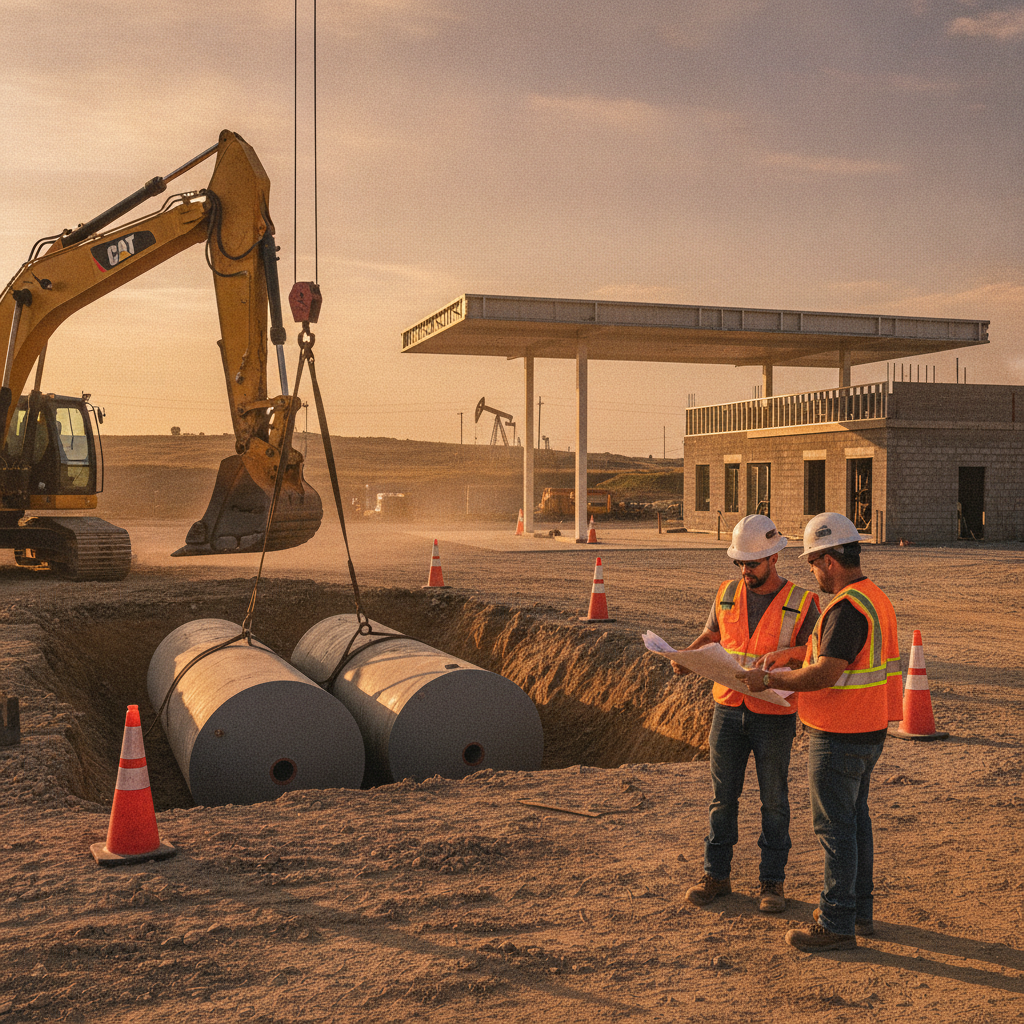
If youre exploring a fuel project, our convenience store building overview explains how store layout, photometrics, and canopy design connect to permitting.
How Tip Top Builders Helps (End-to-End)
We package plans, manage submittals, track comments, and schedule inspections so your project stays on time. From site selection through final walk-through, we align permitting with construction management and coordinate every stakeholder.
Our role is to anticipate issues and remove friction. Because we work statewide from Galveston, were familiar with Texas AHJ preferences and how to present clean, reviewer-friendly sets.
- Preconstruction: Site selection, zoning confirmation, entitlement strategy, and environmental considerations.
- Design management: Architecture, civil, structural, MEP, and specialty fuel-system coordination.
- Permitting: Submittal packaging, comment resolution, and inspector coordination.
- Construction management: Schedule control, quality assurance, and safety oversight from land clearing through CO.
To see how this integrates across disciplines, review our architecture and design services and residential construction guide.
Tools & Templates You Can Adapt Today
Start with a permit checklist, plan index template, and comment log. Use them to verify completeness before you hit Submit. A simple toolkit reduces resubmittals and keeps everyone aligned on next actions.
Permit readiness checklist (excerpt)
- AHJ application forms completed and signed
- Sealed architectural, civil, structural, MEP sheets
- Energy compliance documentation (as required)
- UST specs and details for fuel projects
- Traffic circulation and photometric plans (commercial)
- Drainage/stormwater notes and BMPs
- Accessibility details and life safety notes
Comment response log (simple structure)
- Reviewer name and department
- Comment ID and page reference
- Resolution note and drawing change made
- Date returned and confirmation of acceptance
For inspiration when building your internal templates, browse a general permit planning guide and adapt the format for Texas jurisdictions.
Frequently Asked Questions
Most permit delays come from incomplete plans, unclear scopes, or slow responses to comments. Define scope early, submit clean sets, and assign a permit lead to track reviews and inspections. This simple discipline prevents rework.
What is a building permit, and when do I need one?
A building permit is the local authoritys approval to construct, alter, or change land use. You typically need one for new builds, additions, remodeling, structural changes, fuel systems, and most utility work. Obtaining permits first helps you avoid stop-work orders and keeps inspections aligned with your schedule.
How long does the permit process take in Texas?
Timeframes vary by jurisdiction and project complexity. Reviews often include multiple departments (building, MEP, fire, site). Staying responsive to comments and submitting coordinated, sealed plans significantly shortens overall time. Pre-application meetings also help surface issues before you file.
What inspections should I expect after permits are issued?
Expect milestone inspections such as footing, framing, MEP rough-in, and final. Commercial and fuel retail projects add fire and specialized reviews (for example, underground tank installation and electrical classification). Scheduling inspections against a live construction timeline prevents idle crews.
Can Tip Top Builders manage the entire permitting process?
Yes. We coordinate drawings, prepare submittals, track reviews, and schedule inspections for gas stations, commercial sites, and homes. Our team aligns permitting with design and construction management so your project stays compliant and on schedule from first concept to certificate of occupancy.
Key Takeaways
Treat permitting like a managed workflow. Align scope, submit complete sets, resolve comments fast, and schedule inspections to your build plan. When one team coordinates permits and construction management, projects move faster with fewer surprises.
- Define scope and verify zoning before design sprints.
- Package coordinated, sealed plans with a clean index.
- Use comment logs and clouded revisions to close reviews quickly.
- Plan inspections as schedule milestonesnot afterthoughts.
- Leverage an experienced Texas general contractor to lead the process.
Next Steps for Your Texas Project
If you want predictable approvals, bring permitting into preconstruction now. We integrate site selection, design coordination, and permit packaging so your Texas project reaches inspections and opening day on schedule.
Ready to move from concept to permits? Explore how permitting connects to land development in our planning and development overview, or see how we coordinate fuel retail scopes in the convenience store construction guide. When youre set, contact Tip Top Builders in Galveston to align permitting with your build plan.