
Architecture and urban planning align design, engineering, and permitting to turn land into safe, functional places. In Galveston, Texas, Tip Top Builders applies this integrated approach from site selection through construction management so gas stations, retail pads, and homes open on time, meet code, and perform for years.
By Aftab Ali • Manager, Tip Top Builders
Last updated: 2026-06-17
Above the Fold: Start Here (Hook + TOC)
This guide shows how architecture and urban planning work together to move a Texas project from raw land to opening. You’ll get definitions, steps, checklists, and examples tailored to gas stations, commercial sites, and residential builds—so you can plan confidently, reduce risk, and keep schedules predictable.
A practical, plain‑English playbook from a Texas construction team that delivers land‑to‑completion projects statewide. Jump to what you need most using this quick table of contents.
- What is architecture and urban planning?
- Why integrated planning matters in Texas
- How the end‑to‑end process actually works
- Approaches and site planning types
- Best practices to reduce risk
- Tools and resources we rely on
- Case studies and examples across Texas
- FAQ and next steps
Overview
Architecture focuses on buildings; urban planning organizes land use, access, utilities, and community fit. Together, they create site plans and building documents that clear approvals faster, prevent rework, and keep construction predictable. The result is safer operations, smoother inspections, and on‑time openings.
Tip Top Builders operates from Galveston and manages projects across Texas. We specialize in fuel retail (gas stations and C‑stores), commercial pads, and residential builds—delivering a turnkey, end‑to‑end experience that aligns planning and design with construction management.
- Primary outcomes: faster approvals, fewer change orders, safer sites, and durable buildings.
- Audience fit: developers, operators, and homeowners who need predictable schedules and compliance.
- Where we work: Galveston and cities statewide—including Beaumont, Port Neches, Nederland, College Station, Austin, Sugar Land, and Port Arthur.
For deeper dives on preconstruction and coordination, see our planning and design guide and our commercial construction overview.
Local considerations for Galveston
- Design with coastal wind exposure and salt‑air corrosion in mind; specify resilient canopies, fasteners, and cladding suitable for Gulf conditions.
- Plan schedules around hurricane season and heavy‑rain windows; build in weather float for exterior work and inspections.
- Address drainage and floodplain early with right‑sized detention and outfalls; coordinate access with local traffic patterns near major corridors.
What Is Architecture and Urban Planning?
Architecture is the design of buildings—form, function, life‑safety—while urban planning sets how land connects to streets, utilities, and neighboring uses. Integrated together, they produce site plans, elevations, and specs that meet code, protect budgets, and speed construction.
On real Texas projects, these disciplines overlap daily. A curb cut affects traffic circulation; circulation shapes parking counts; parking touches setbacks; setbacks drive massing; massing informs drainage and canopy spans. When one piece moves without the others, teams burn time in redesign cycles.
- Architecture scope: massing and elevations, floor plans, structural grids, life‑safety, materials, and building systems.
- Urban planning scope: land use and zoning, access and circulation, utility routing, stormwater, and neighborhood context.
- Construction management bridge: schedule, budget, procurement, QA/QC, and closeout—keeping drawings buildable and inspections clean.
In our experience, creating a single source of truth (one coordinated model and plan set) reduces field RFIs and keeps submittals aligned. That’s how we manage gas station and convenience store construction statewide while safeguarding safety and compliance.
Why Architecture and Urban Planning Matter in Texas
Integrated planning shortens approvals, minimizes change orders, and improves safety. In Texas, it also handles heat, storms, and growth pressures with resilient materials, right‑sized drainage, and traffic‑aware access—so sites operate smoothly from day one.
Texas markets move fast, and so do review cycles when drawings are clear. When traffic access, drainage, and utilities are coordinated upfront, agencies can green‑light submittals without bouncing plans between departments. That alignment is especially important for fuel retail and busy commercial pads.
- Safety and compliance: coordinated fire lanes, turning radii, canopy clearances, and emergency shutoffs reduce inspection friction.
- Operations: efficient car and truck movements lower conflict points and improve throughput on corner lots and shared drives.
- Durability: specifying corrosion‑resistant components and robust canopies pays off in Gulf environments and high‑sun regions.
- Community fit: setbacks, shade, and pedestrian paths help sites belong on the block and support long‑term value.
We often reference proven planning habits like milestone submittals (30/60/90 percent). Breaking design into checkpoints invites feedback while it’s still cheap to change. That rhythm keeps the “cost to build” conversation grounded in scope, not surprises.
How the Architecture–Planning Process Works
A reliable delivery model follows gates: due diligence, schematic planning, design development, permitting, procurement, build, and handover. Each gate aligns drawings with code, constructability, safety, and schedule to prevent rework and keep the opening date real.
Below is the end‑to‑end sequence we use for gas stations, retail pads, and residential builds across Texas. Each step produces artifacts you can act on, from site tests to stamped plans, so decisions are documented and traceable.
- Due diligence and concept fit: site selection support, high‑level yield tests, preliminary access and zoning checks.
- Survey, geotech, constraints mapping: boundary/topo, soils and groundwater notes, floodplain and setbacks, utility availability.
- Schematic site plan and massing: access, parking counts, canopy spans, store layout, and initial drainage concepts.
- Agency pre‑application: coordinate with planning, fire, and public works; surface deal‑breakers early.
- Design development and engineering: civil, structural, architectural, MEP; finalize detention, utilities, and life‑safety.
- Permitting and regulatory coordination: package submittals, track comments, and run 30/60/90 percent reviews.
- Procurement and mobilization: bid packages, long‑lead items, logistics plan, safety and quality controls.
- Construction management and QA/QC: coordination meetings, inspections, RFIs/submittals, daily logs, issue tracking.
- Commissioning, closeout, handover: punch, O&M manuals, training, warranties, and as‑builts.
For a deeper look at early planning and zoning steps, see our primer on Texas planning and zoning and our environmental planning overview.
| Phase | Primary Deliverables | Decision Owner |
|---|---|---|
| Due Diligence | Feasibility memo, yield test, risk register | Owner + Precon |
| Schematic | Concept site plan, access plan, massing | Owner + Design |
| Design Development | Grading, drainage, utilities, elevations | Design + CM |
| Permitting | Stamped plan set, responses to comments | Design + Owner |
| Procurement | Bid tabs, sub awards, long‑lead log | CM + Owner |
| Construction | Schedule updates, QA/QC, inspection logs | CM + Subs |
| Closeout | Punch list, O&M, as‑builts, training | CM + Owner |
Want a single team to carry this from concept to opening? Explore our architecture and design services or our gas station building approach.
Types, Methods, and Site Planning Approaches
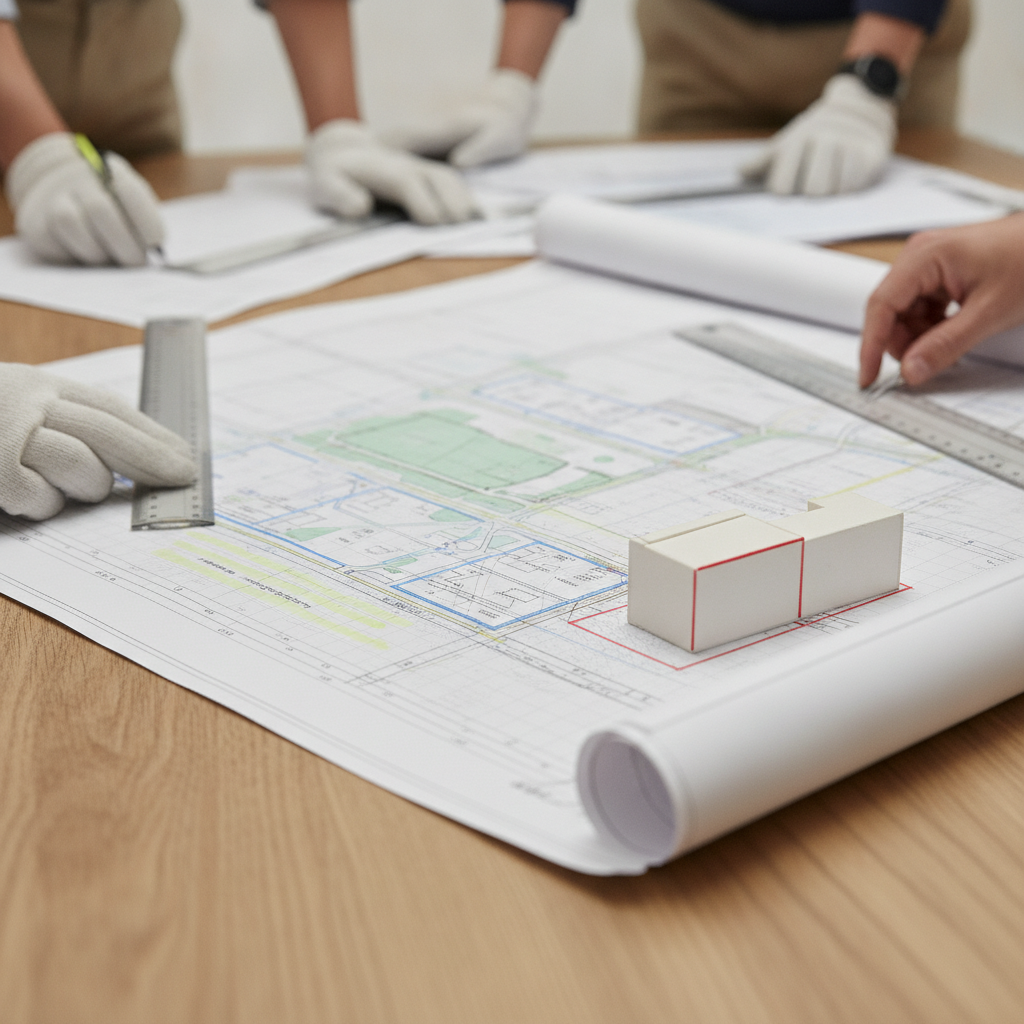
Choose approaches that fit the parcel: corner‑lot fuel layouts with rear parking, shared‑access retail pads, contextual residential massing, and green infrastructure. The right choice balances safe access, clear sight lines, resilient drainage, and a look that fits the block.
There is no one‑size‑fits‑all site plan in Texas. Traffic volumes, frontage, floodplain constraints, and neighbors all shape viable options. We evaluate multiple schemes quickly—then develop the best performer so you’re not betting the project on a single early guess.
Corner‑lot fuel retail (C‑stores)
- Access and egress: align driveways with access‑management best practices; keep turning radii clear of pedestrian paths.
- Throughput: canopy column spacing, dispenser placement, and stacking lanes to reduce conflicts.
- Safety: visible emergency shutoffs, fire‑lane geometry, and clear signage zones for inspection ease.
Shared‑access retail pads
- Cross‑easements: shared drives and parking improve land efficiency and support phased development.
- Sight lines: maintain safe views at internal intersections; place landscape for shade without blocking visibility.
- Deliveries: set truck docks and loading areas away from peak customer flows.
Contextual residential infill
- Massing and setbacks: respect block rhythm; step forms near neighbors; manage privacy with window placement.
- Resilience: detail for heat and storms; specify durable exterior systems suited to Texas climates.
- Access: align driveways with pedestrian comfort, drainage, and local standards.
For practical C‑store planning insights, see our convenience store building guide and our statewide gasoline station construction overview.
Best Practices We Recommend in Texas
Start with early agency touchpoints, milestone design reviews, and context‑sensitive details for heat, wind, and rain. Keep drawings clean, coordinate utilities and drainage, and stage work to protect neighbors. These habits reduce comments, RFIs, and rework.
After hundreds of submittals and field inspections, a few patterns consistently save time:
- Right‑sized detention: compute detention and conveyance with realistic storm assumptions; plan maintenance access.
- Access first: align curb cuts with traffic patterns; keep stacking off public streets; validate turning radii with delivery truck templates.
- Materials that last: corrosion‑resistant fasteners and canopy systems in coastal zones; UV‑tough finishes in high‑sun areas.
- Utility clarity: separate wet and dry utilities; maintain minimum clearances; simplify meter and shutoff access.
- Inspection‑ready docs: legible details, consistent symbols, and cross‑referenced sheets speed reviewers and inspectors.
- Neighbor protections: dust control, fencing, haul routes, and quiet hours reduce complaints and lost time.
We fold these checks into our construction management rhythm. If you’re exploring a development, our planning and development playbook shows how to stage decisions to avoid dead ends.
Tools and Resources We Actually Use
Use GIS for parcels and floodplains, traffic data for access, hydrology models for detention, and BIM for clash‑free builds. Field data loops back into models, cutting RFIs and smoothing inspections.
Good tools compress timelines by improving each decision. We combine mapping, analytics, and constructability checks long before mobilization. That way, the first shovel doesn’t reveal a second round of design.
- GIS platforms: parcel lines, zoning overlays, floodplain and wetlands awareness, utility corridors.
- Traffic studies: counts, turn‑lane warrants, stacking analysis, truck templates for fuel deliveries.
- Hydrology calculations: culvert sizing, detention/retention models, overflow routing.
- BIM coordination: structure/MEP fit, canopy frame interfaces, shop drawing integration.
- Safety/quality checklists: pre‑pour, pre‑backfill, canopy set, and closeout verification.
For a high‑level refresher on planning discipline, this brief on effective project planning illustrates why phasing and checkpoints matter—concepts we apply on every Texas build.
Case Studies and Examples from Texas
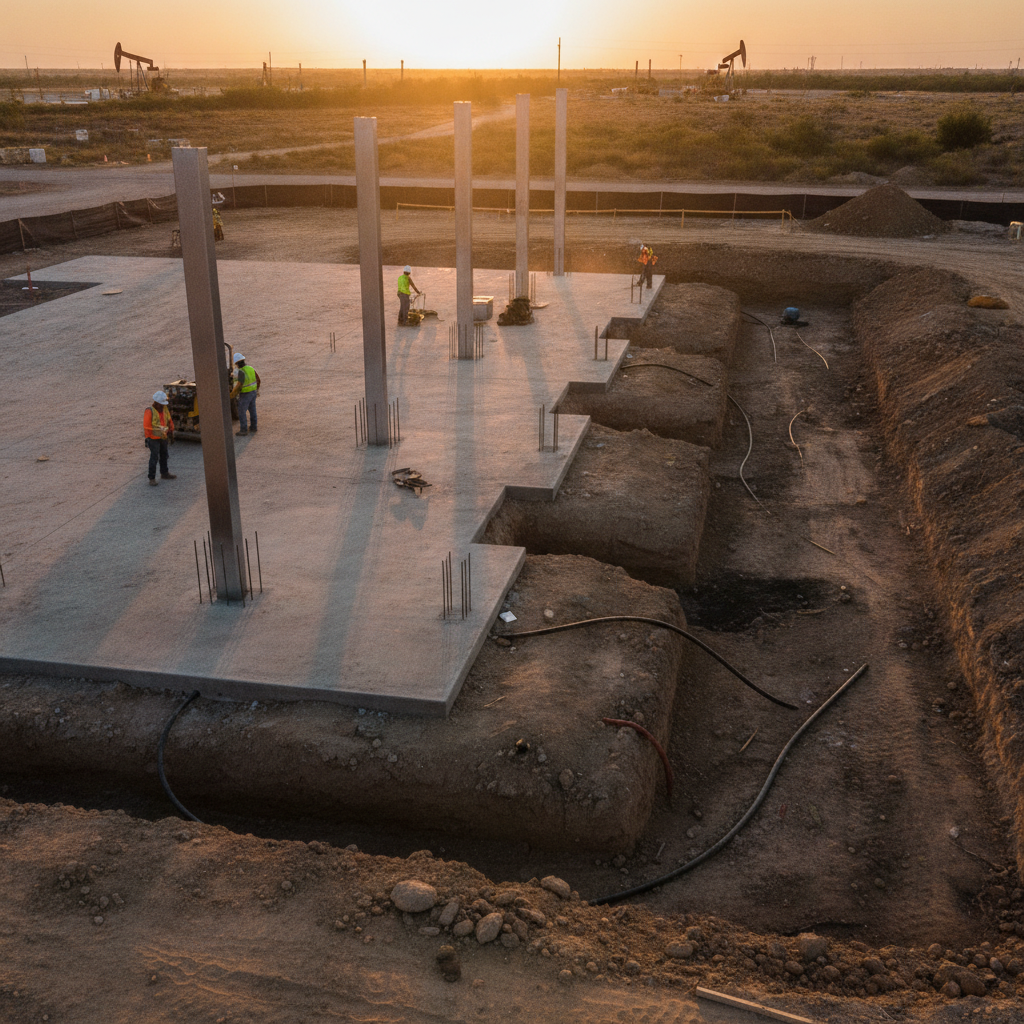
Across Texas, we apply one land‑to‑opening playbook to fuel retail, commercial pads, and homes. The constant: early alignment on access, drainage, utilities, and inspections—so construction stays predictable and the opening date holds.
Here are condensed, anonymized snapshots that match our portfolio cities and project types. They show how integrated planning translates into schedule confidence and smoother reviews.
Corner‑lot C‑store in a growing corridor
- Challenge: tight frontage with high turning volumes and peak‑hour congestion.
- Action: shifted access points, added internal stacking, tuned canopy spacing for delivery trucks.
- Outcome: cleaner fire‑lane geometry, fewer conflict points, and a straightforward inspection path.
Shared‑access retail pad with cross‑parking
- Challenge: multiple tenants, phased construction, and visibility needs.
- Action: documented cross‑easements, protected internal sight lines, staged utility tie‑ins.
- Outcome: approvals without redesign cycles, plus expansion capacity baked into utilities.
Coastal residential infill on a constrained lot
- Challenge: setback limits, wind exposure, and neighbor privacy.
- Action: stepped massing, durable cladding, and drainage tuned for heavy rain events.
- Outcome: a home that fits the block, passes inspections smoothly, and stands up to weather.
If you’re mapping similar goals, our commercial construction guide outlines coordination steps from design through closeout, and our fuel‑retail delivery page shows how we stage canopy, tanks, and store build‑out.
Why Teams Choose Tip Top Builders
We specialize in gas stations and C‑stores and bring the same rigor to commercial and residential projects. From site selection through handover, our end‑to‑end model emphasizes safety, quality, sustainability, and schedule reliability across Texas.
What most people don’t realize is how many moving parts converge between a concept sketch and the day you open. We keep them coordinated through dedicated project oversight, clear submittal tracking, and a drawing set that speaks for itself.
- Specialized fuel‑retail expertise: from raw land to canopy set and store opening.
- Turnkey delivery: site selection, permitting, environmental, design, and construction management under one roof.
- Texas footprint: recent and ongoing work in Galveston and cities statewide.
- Safety and sustainability: build for heat, wind, and storms using durable systems and responsible practices.
Ready to discuss your site? Our architecture & design team can review blueprints and outline the right next steps.
How to Apply This Guide on Your Next Site
Start with due diligence, validate access and drainage, and schedule pre‑application talks. Sequence design at 30/60/90 percent with clear decision logs, then carry that clarity into procurement and construction management.
- Define success: throughput, parking counts, canopy capacity, and neighbor impacts.
- Map constraints: survey, geotech, floodplain, utilities, and zoning notes.
- Pick a winning scheme: test two or three viable layouts and pressure‑test the best.
- Meet agencies early: confirm must‑haves, sequence permits, and flag inspections.
- Document decisions: keep a visible log so design and field teams stay aligned.
- Stage procurement: order long‑lead items early; lock delivery windows to milestones.
- Track field quality: use checklists for pre‑pour, trench backfill, canopy set, and closeout.
As you align stakeholders, it helps to share plain‑language visuals. For site programming inspiration, a landscaping perspective on outdoor space planning shows how simple diagrams clarify user flows—equally useful in retail pads and residential lots.
Frequently Asked Questions
These short answers address common planning and design questions we hear from Texas developers, operators, and homeowners. Each response is practical and direct so you can move your project forward with confidence.
What comes first—architecture or urban planning?
Start with planning inputs (zoning, access, utilities, drainage), then develop architecture in parallel. When site constraints and building design inform each other early, you avoid redesigns and keep permitting and construction on schedule.
How can I speed up permitting without cutting corners?
Use pre‑application meetings, milestone submittals (30/60/90 percent), and clear responses to comments. Coordinate fire lanes, access, drainage, and utilities in one consistent plan set. Clean drawings get faster reviews and smoother inspections.
What’s unique about gas station and C‑store sites?
Throughput and safety drive layout. Canopy spans, dispenser placement, stacking lanes, and delivery truck paths must work together. Clear fire‑lane geometry, emergency shutoffs, and inspection‑ready documents keep approvals predictable.
Do you coordinate environmental and fire reviews?
Yes. We align civil, architectural, and life‑safety requirements in one plan set and sequence meetings with planning, fire, and public works. That coordination reduces back‑and‑forth and helps you clear inspections on schedule.
Conclusion and Next Steps
Great sites result from aligned architecture and urban planning. When access, drainage, utilities, and life‑safety move together, approvals and inspections follow. The payoff is schedule confidence and a site that works on day one.
Here’s how to turn this guide into action:
- Set your goals: throughput, safety, and neighborhood fit.
- Run due diligence: survey, soils, utilities, and zoning notes.
- Pick a scheme and validate: traffic, drainage, and constructability.
- Plan milestone submittals and pre‑application check‑ins.
- Carry the same clarity into procurement and field QA/QC.
Soft CTA: If you’re planning a gas station, commercial pad, or home in Texas, our team in Galveston can help—from site selection to handover. Explore our architecture and design services or commercial construction guide and book a discovery call.
Related Topics We Cover
These adjacent topics deepen your plan‑to‑build workflow: preconstruction planning, site preparation and excavation, fuel‑retail construction, and safety and compliance. Each connects back to architecture and urban planning decisions.
- Construction planning and scheduling that supports milestone reviews
- Site preparation and excavation: from clearing to utilities and pads
- Gas station construction: canopy, tanks, and store build‑out sequencing
- Convenience store construction: operations‑first layouts
- Safety and compliance in construction across Texas jurisdictions
You can continue with our planning and design guide or jump to fuel‑retail delivery to see how we stage each phase.
Key takeaways
- Architecture and urban planning work best as one process that balances code, access, drainage, and operations.
- Texas context matters: plan for heat, storms, and fast‑moving corridors.
- Milestone design and early agency touchpoints cut review cycles.
- Clear drawings and QA/QC habits reduce RFIs and rework in the field.