
Commercial construction in Texas is the end-to-end planning, permitting, and building of retail, mixed-use, and fuel retail facilities to state and local codes. It spans site selection, civil work, structures, MEP systems, inspections, and commissioning. In Galveston, Tip Top Builders delivers land-to-opening execution so owners can open on schedule with confidence.
By Aftab Ali, Manager at Tip Top Builders
Last updated: 2026-06-05
Texas commercial construction at a glance
Texas commercial construction succeeds when owners align site selection, permitting, and build delivery under one accountable partner. A clear preconstruction roadmap, rigorous safety and quality controls, and proactive inspections reduce change orders and schedule risk—so projects open faster and operate reliably from day one.
Here’s the thing: most schedule slips start long before anyone pours concrete. This quick overview shows how to frame your project the right way—so coordination, compliance, and construction all move in lockstep.
- Who this is for: Texas developers, retailers, fuel/C-store operators, and community stakeholders.
- What you’ll learn: How projects flow in Texas, key approvals, delivery methods, best practices, and pitfalls to avoid.
- Why Tip Top Builders: We specialize in fuel retail (gas station/C-store), retail, and mixed-use—managing land-to-opening across Texas.
Overview
- Scope: Commercial sites, convenience stores with fueling, retail shells, and mixed-use cores.
- Delivery: Planning & design, site preparation and excavation, and full-scope construction management.
- Result: On-time, code-compliant openings with durable, modern elevations.
Table of contents
- What is commercial construction in Texas?
- Why commercial construction matters
- How Texas projects work (land to opening)
- Types, methods, and approaches
- Best practices for Texas builds
- Tools and resources
- Case studies and examples
- Frequently asked questions
- Key takeaways
- Conclusion and next steps
What is commercial construction in Texas?
Commercial construction in Texas refers to planning, designing, permitting, and building non-residential facilities—retail, mixed-use, office, and fuel/C-store—under state and local codes. Projects integrate civil works, structures, MEP systems, safety, environmental compliance, and inspections from site selection through final handover.
In our experience, definitions are only useful if they drive action. For Texas owners, “commercial construction” means orchestrating every decision—from land acquisition to opening day—around schedule certainty, safety, and compliance. That’s why Tip Top Builders integrates planning & design, site preparation and excavation, and construction management under one accountable team.
- Core activities: Site selection, surveying, geotech, environmental reviews, architectural design, structural and MEP engineering, permitting, sitework, utilities, superstructure, enclosure, interiors, and inspections.
- Primary stakeholders: Owner/developer, architect/engineer, general contractor, trades, authorities having jurisdiction (AHJs), utility providers, lenders, and insurers.
- Compliance layers: Zoning, building and fire codes, accessibility, fuel-system regulations for gas stations, stormwater and environmental measures, and life-safety certifications.
Local considerations for Galveston
- Coastal resilience: Plan wind-rated assemblies, corrosion-resistant materials, and robust drainage. Scheduling exterior work around storm season reduces rework and protects crews.
- Inspection cadence: Build in time for city and utility inspections. Grouping inspections strategically can eliminate repeat mobilizations.
- Fuel projects: For C-store builds with fueling, coordinate tank installation sequencing, environmental safeguards, and fire-protection reviews early to avoid last-minute redesigns.
Tip Top Builders runs projects from Galveston statewide, with a portfolio spanning Beaumont, Port Neches, Nederland, Caldwell, College Station, Austin, Sugar Land, and Port Arthur. That footprint helps us anticipate local submittal preferences, common plan comments, and field conditions across Texas.
Why commercial construction matters
Commercial construction matters because it converts site potential into durable revenue. When planning, permits, and build delivery align, owners reduce change orders, accelerate openings, and protect safety—turning capital plans into reliable, compliant assets.
Owners don’t invest in buildings; they invest in outcomes—predictable openings, safe operations, and facilities that attract customers. When decisions are sequenced well, change orders decline, field productivity improves, and inspections clear faster. We’ve found that early, realistic scheduling paired with disciplined quality control drives those outcomes.
- Revenue timing: Opening a month sooner can unlock an entire season of sales for retailers and C-store operators.
- Risk reduction: Sequenced approvals lower the likelihood of rework in civil, structural, and MEP scopes.
- Brand and community value: Durable, modern elevations and accessible site layouts improve customer experience and neighborhood fit.
For fuel retail in particular, code coordination is non-negotiable. Integrating environmental safeguards and fire protection from day one keeps reviews smooth and avoids redesigns late in the game. For a deeper dive on retail fuel builds, see our Texas C-store construction guide.
How Texas projects work (land to opening)
Texas projects move fastest when owners front-load due diligence: align site viability, permitting strategy, and delivery method before design locks. A phased plan—due diligence, design, permits, sitework, shell, MEP/interiors, inspections, and commissioning—keeps crews productive and inspections predictable.
Here’s the practical flow we use to keep schedules tight and field teams productive. While every site is unique, the gating steps below apply to most commercial and C-store developments across Texas.
- Site selection and due diligence: Traffic patterns, access, utilities, zoning fit, floodplain, and environmental constraints.
- Concept and entitlements: Test-fit layouts, preliminary elevations, and early authority feedback to confirm path to permit.
- Design and engineering: Architecture, civil, structural, MEP. Freeze critical dimensions and equipment early.
- Permitting and approvals: Submittals to AHJs and utilities. Expect review cycles and comment resolution.
- Site preparation and excavation: Clearing, grading, soil stabilization, utilities, stormwater controls, and foundations.
- Superstructure and enclosure: Steel or CMU, roofing, facades, canopies for fueling projects.
- MEP rough-in to finish: Electrical gear, mechanical equipment, plumbing systems, life-safety integration.
- Interiors and equipment: Framing, finishes, millwork, and owner-furnished equipment install (dispensers, coolers, POS).
- Inspections and commissioning: Life safety, utilities, special inspections, and punchlist closure.
- Handover: Closeout, O&M manuals, warranties, as-builts, and training.
Tip Top Builders manages this sequence as a single, accountable partner—covering planning & design, construction management services, and self-performed site preparation and excavation when appropriate. That trims handoffs and keeps the field focused on production milestones.
| Method | Best when | Owner involvement | Schedule impact | Notes |
|---|---|---|---|---|
| Design–Bid–Build (DBB) | Scope is fully defined; competitive trade pricing is priority | Moderate | Linear; longer overall duration | Clear separation of design and build; fewer early overlaps |
| Design–Build (DB) | Speed to market is critical; one-point accountability desired | Low to moderate | Overlapped; faster path to sitework and shell | Tip Top Builders often operates in a DB-style turnkey role |
| CM at Risk (CMAR) | Complex programs requiring precon input and cost control | Moderate to high | Parallel design/construction; strong cost visibility | Preconstruction services shape phasing and procurement |
Field reality: small coordination wins compound. For example, sequencing utility locates and early submittals improves crew flow for sitework and foundations. Likewise, locking fuel-dispensing layouts during design reviews prevents canopy and conduit clashes later.
Types, methods, and approaches
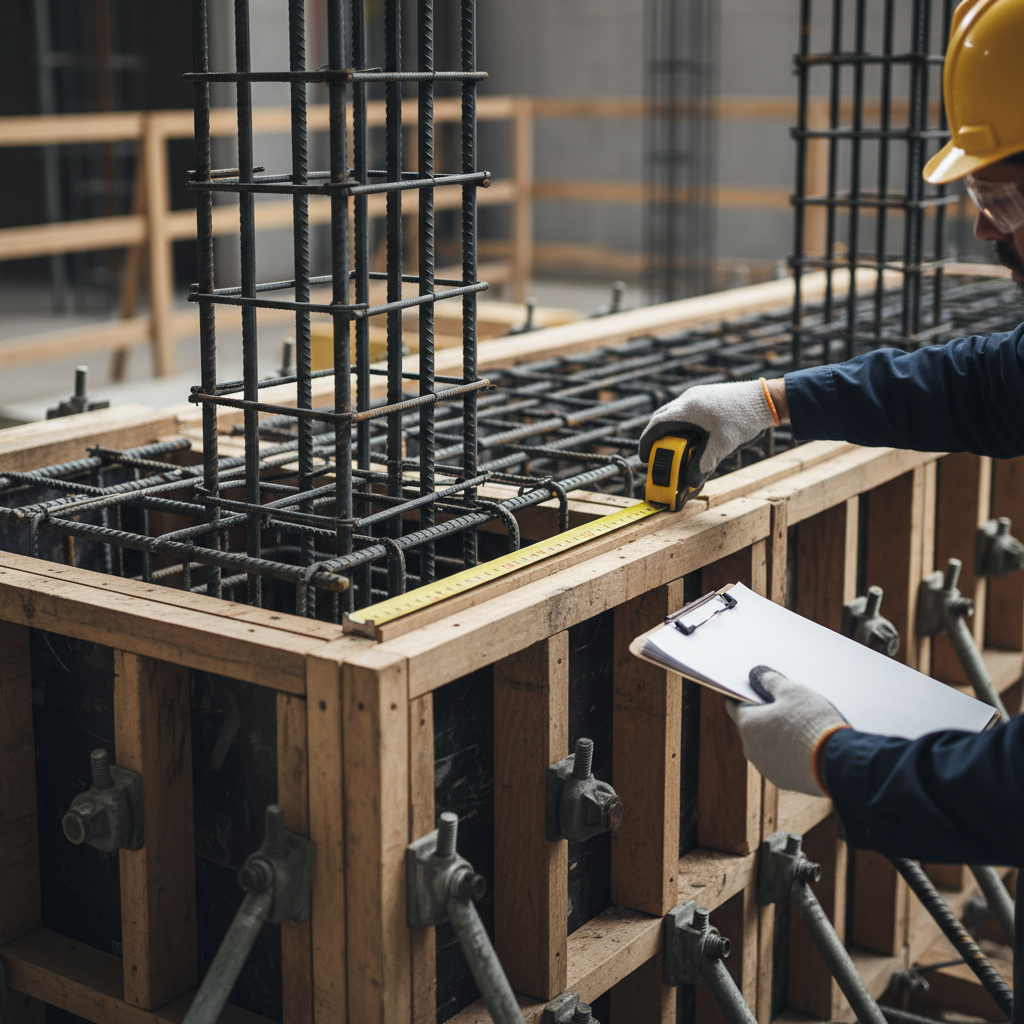
Texas commercial construction spans retail shells, tenant build-outs, mixed-use cores, and fuel/C-store developments. Effective approaches pair the right delivery method with early entitlements, realistic phasing, and supply-chain planning—so field crews work without stops and starts.
Tip Top Builders focuses on three areas: fuel retail (gas station/C-store), commercial retail and mixed-use, and residential communities. Each demands different sequencing and risk controls.
Common project types
- Retail shells and build-outs: Core and shell with future tenant improvements; precise storefront coordination speeds openings.
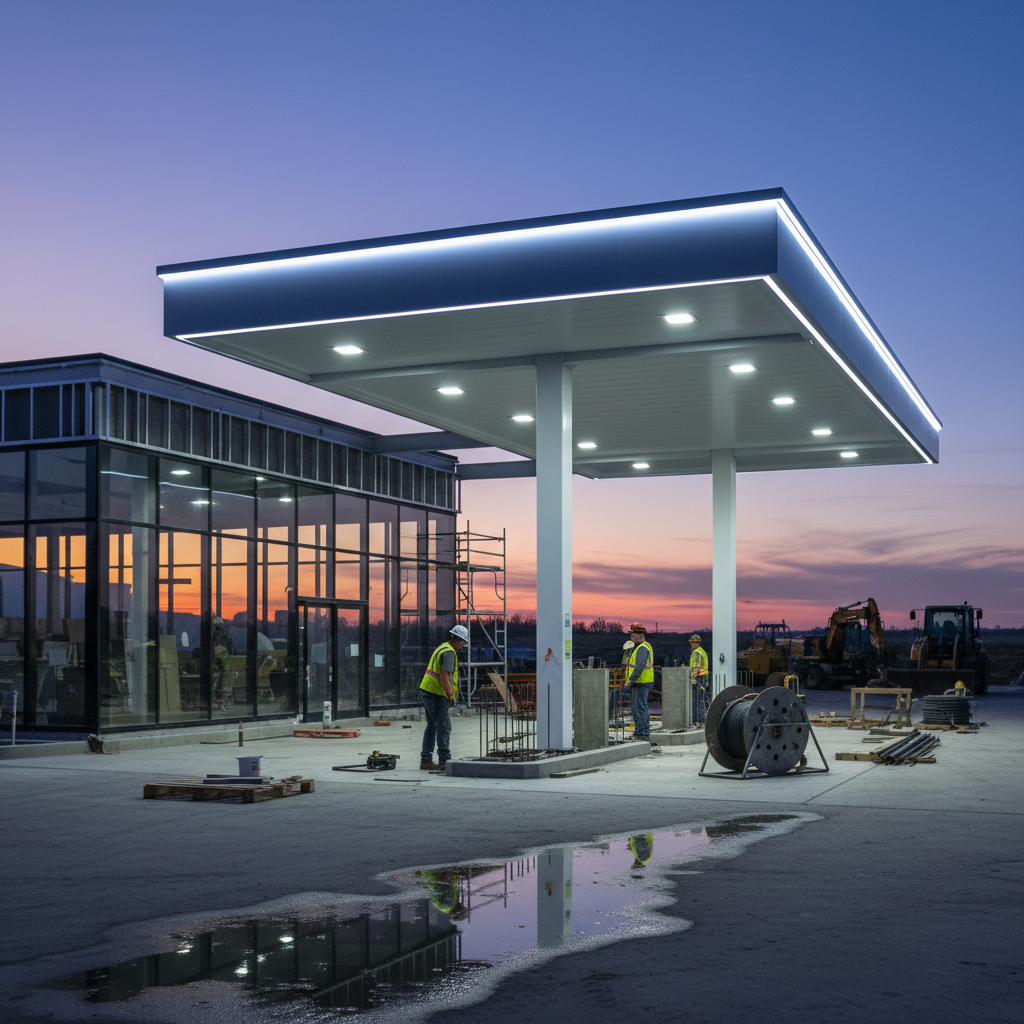
- C-store with fueling: Canopies, tanks, dispensers, and integrated life-safety systems; environmental and fire reviews drive timelines.
- Neighborhood commercial: Smaller pads with drive lanes and shared utilities; phasing reduces traffic conflicts.
- Mixed-use cores: Retail at grade with additional uses above; structural and MEP planning prevent crossover clashes.
Approaches we use to de-risk delivery
- Entitlement-first reviews: Engage AHJs early to validate setbacks, access, drainage, and fueling layouts before full design spend.
- Targeted preconstruction: Submittal logs, long-lead tracking, and phased procurement keep critical-path items moving.
- Safety and QA/QC plans: Task-specific hazard analyses and inspection checklists reduce rework and speed approvals.
- One-team coordination: Our planning & design and field teams work from the same milestones, shrinking handoffs.
Want a second set of eyes on your Texas plan?
We’ll review your site test-fit, early elevations, and permitting path to spot schedule risks and sequencing gaps. Our design consulting approach is outlined in this Texas design guide.
Best practices for Texas builds
The best Texas projects front-load due diligence, lock critical decisions early, and run disciplined safety and quality programs. Clear procurement plans and inspection-ready documentation keep field work productive and approvals smooth.
Across Texas, we see consistent patterns on successful retail and C-store jobs. The following practices compress timelines and tame coordination risk.
Permitting and entitlements
- Confirm zoning, access, drainage, and fueling allowances before deep design.
- Bundle submittals where possible and pre-coordinate utility demands to avoid redesigns.
- Track review cycles and anticipated comments; plan owner responses the same week.
Site preparation and excavation
- Stabilize soils early and verify compaction; foundation performance starts with ground truth.
- Stagger locates, rough utilities, and stormwater controls to keep crews in continuous motion.
- Document underground work with photos and as-builts to simplify closeout.
Safety and quality management
- Use activity hazard analyses (AHAs) for high-risk tasks; brief crews at start-of-shift.
- Run checklists for slab, steel, MEP rough, and enclosure; catch defects while fixes are cheap.
- Hold weekly coordination walks with trade leads to surface clashes before they hit production.
Weather and coastal considerations
- In coastal metros, sequence exterior work around storm windows; stock critical materials ahead of time.
- Select corrosion-resistant hardware and verify sealants at canopies and parapets.
- Maintain temporary power and dewatering plans; they’re your insurance during heavy rain.
For a planning lens on walkability, traffic, and neighborhood fit, our urban design guide outlines patterns that make retail sites operate better on day one.
Tools and resources
Owners gain speed by pairing simple roadmaps—checklists, submittal logs, and inspection matrices—with supplier insights on materials and constructability. Keep tools lightweight, visible, and tied to milestone decisions.
Tools exist to serve decisions, not the other way around. We keep artifacts simple and action-oriented.
- Preconstruction checklist: Site fit, AHJ feedback, traffic/access notes, drainage requirements, and fuel-system constraints.
- Submittal and long-lead log: Track equipment and materials that can stall critical path (electrical gear, canopies, dispensers, storefronts).
- Inspection matrix: Map required inspections to dates and responsible parties; group where possible.
- Supplier perspectives: Industry roundups on commercial building components, like this supplier overview of commercial construction, can inform specifications and lead-time expectations.
- Trade readiness: Material availability notes from rebar and concrete suppliers—see this rebar supplier resource—help set realistic pour dates.
- Permitting primers: While jurisdictions vary, a permit application primer can help owners visualize review cycles and comments.
We provide owners a right-sized package: a two-page roadmap to decisions, a living submittal log, and an inspection calendar that crews can actually use in the field.
Case studies and examples
Real Texas projects win by sequencing. When sitework, utilities, and inspections move in step, openings come sooner with fewer surprises. The following mini case notes show how we apply that playbook across Texas metros.
We manage projects statewide from Galveston and have delivered work in Beaumont, Port Neches, Nederland, Caldwell, College Station, Austin, Sugar Land, and Port Arthur. Here are brief, anonymized snapshots that mirror common scenarios we encounter.
Fuel + convenience: Coastal metro build
- Challenge: Coordinating canopy, underground tanks, and stormwater during a tight inspection window ahead of storm season.
- Action: Locked dispenser island geometry in design; pre-scheduled special inspections; staged tank delivery and canopy steel to avoid cranes idling.
- Result: Smooth inspections and on-time canopy set; no rework at conduits or sumps.
Retail shell: Growth corridor site
- Challenge: Utility lead times threatened the critical path to enclosure.
- Action: Advanced storefront, roofing, and switchgear submittals; coordinated temporary power strategy.
- Result: Maintained continuous enclosure progress while permanent power lagged; kept trades productive.
Neighborhood commercial pad
- Challenge: Conflicting traffic flows and tight access.
- Action: Phased drive lanes and clearly signed crew routes; coordinated delivery windows with adjacent tenants.
- Result: No lost-time incidents and predictable deliveries; inspectors complimented housekeeping and signage.
Frequently asked questions
Texas owners ask about permits, timelines, fueling-system rules, and how to reduce change orders. The best answer is a practical roadmap: validate the site, lock key decisions early, and run disciplined safety and quality checks from day one.
What approvals do commercial projects in Texas typically need?
Most projects require zoning or planning approvals, building permits, utility coordination, and life-safety reviews. Fuel retail adds tank, piping, canopy, and fire-protection reviews. Grouping submittals where possible and responding quickly to comments keeps timelines predictable.
How can I speed up my Texas C-store or retail build without cutting corners?
Front-load due diligence, confirm AHJ preferences early, and choose a delivery method that supports overlapping phases. Keep submittal and inspection calendars visible to the whole team. Lock long-lead items first (electrical gear, canopies, dispensers, storefronts) to protect the critical path.
What’s different about fuel retail compared to a standard retail shell?
Fuel retail adds environmental safeguards, fire-protection coordination, canopy and dispenser integration, and specialized inspections. Sequencing tanks, conduits, and canopy steel is essential. Early decisions on equipment layouts avoid clashes and redesigns later.
Do I need a single partner or multiple firms to deliver land-to-opening?
One accountable partner reduces handoffs and speeds decisions. At Tip Top Builders, we integrate planning & design, site preparation and excavation, and construction management so owners have one team aligning schedules, quality, and safety from concept through handover.
Key takeaways
Successful Texas commercial builds align decisions early, keep crews productive, and clear inspections on the first pass. A single accountable partner from land through opening helps owners reduce risk and open sooner.
- Validate site, traffic, utilities, zoning, and fueling constraints before deep design.
- Choose a delivery method that supports overlapping phases and clear accountability.
- Lock long-lead gear and storefronts early; protect the critical path.
- Run safety and QA/QC as daily habits, not paperwork.
- Document undergrounds and inspections; make closeout easy on future you.
Conclusion and next steps
The fastest path to opening is a simple one: confirm viability, lock decisions, and keep field work moving. With integrated planning, sitework, and construction management, owners gain schedule certainty and reliable, code-compliant operations on day one.
Commercial construction in Texas rewards owners who plan realistically and partner with teams that manage risk, quality, and safety as one system. If you’re evaluating a site in Galveston or anywhere in Texas, we’re ready to review your test-fit, permitting path, and sequencing plan—so your project opens on time and operates smoothly.
Let’s talk: Share your blueprint set and city with us. We’ll outline a practical sequence for permitting, sitework, shell, and interiors, and highlight where long-lead procurement can protect your critical path.