
Quality control in construction projects is the systematic planning, verification, and documentation that prove materials and workmanship meet defined standards from preconstruction through handover. In Galveston, rigorous controls reduce rework, prevent schedule drift, and protect compliance so owners open on time with assets that perform as designed.
By Aftab Ali, Manager — Tip Top Builders
Last updated: 2026-06-24
Hero Section
Tip Top Builders integrates quality assurance and control into every project phase—planning and design, site preparation and excavation, and construction management—so problems are prevented, not patched. Our Texas team specializes in fuel retail (gas station and C-store), commercial, and residential builds, delivering safe, code-compliant results across Galveston and beyond.
We deliver land-to-opening execution for gas stations (C-stores), commercial properties, and homes. Our crews and partners follow clear hold points, inspection checklists, and testing protocols to validate each phase before moving on. That discipline keeps work predictable, inspections smooth, and openings on schedule.
Summary
Effective construction quality control aligns drawings, specs, and field work with testable checkpoints. Owners benefit from fewer defects, faster inspections, and reliable building performance. Tip Top Builders formalizes this into a documented workflow that fits Galveston’s coastal conditions and Texas code requirements.
- What you’ll learn: How QA/QC works, where risks hide, and how we control them.
- Why it matters: Rework can add weeks; proactive verification prevents it.
- Who we serve: Fuel retailers, commercial developers, and homeowners across Texas.
- How we prove it: Submittal logs, test reports, inspection sign-offs, and closeout binders.
Local considerations for Galveston
- Coastal exposure: We verify corrosion-resistant materials and protective coatings, and we document anchor and uplift details to suit coastal wind loads.
- Soils and drainage: We require compaction testing (often targeting 95% Standard Proctor), positive drainage, and stormwater controls to handle heavy rain events.
- Scheduling windows: We plan weather-aware concrete pours and inspections to avoid delays from humidity, wind, and surprise showers typical along the coast.
Introduction
Quality control in construction projects is a repeatable system: plan, verify, and document. It starts at site selection and continues through commissioning. Our Galveston team builds control points into every scope so materials, methods, and safety align with drawings, specs, and inspection requirements.
In our experience managing projects across Texas, QA/QC is the difference between predictable openings and lingering punch lists. We pair design reviews with field verification and third-party testing. That means subgrades meet density, concrete cures as specified, MEP systems pass pressure and function tests, and life-safety features are ready for inspection without last-minute surprises.
- Three pillars: Requirements clarity, field validation, and traceable documentation.
- Common metrics: Compaction density, concrete slump/strength, weld/NDT checks, pressure testing, air balance, and startup checklists.
- Outcome: Fewer RFIs and change orders, stable schedules, and performance that matches design intent.
For a deeper planning overview, see our construction planning and scheduling guide and our construction management approach.
Services Offered
Our QA/QC services cover submittal control, material verification, soil and concrete testing oversight, underground storage tank (UST) installation checks, MEP inspection coordination, life-safety verification, punchlist management, and closeout documentation tailored to Texas projects.
Quality planning and submittals
- Project Quality Plan (PQP): We define hold points, inspection responsibilities, and test frequency aligned to the schedule.
- Submittal and shop drawing review: We verify materials and assemblies match specs before procurement and install.
- Mockups and first-work inspections: Establish acceptance criteria early to prevent downstream rework.
Earthwork and concrete controls
- Compaction verification: Field density tests to meet project-specified targets (commonly 95% of Standard Proctor) before slab or paving.
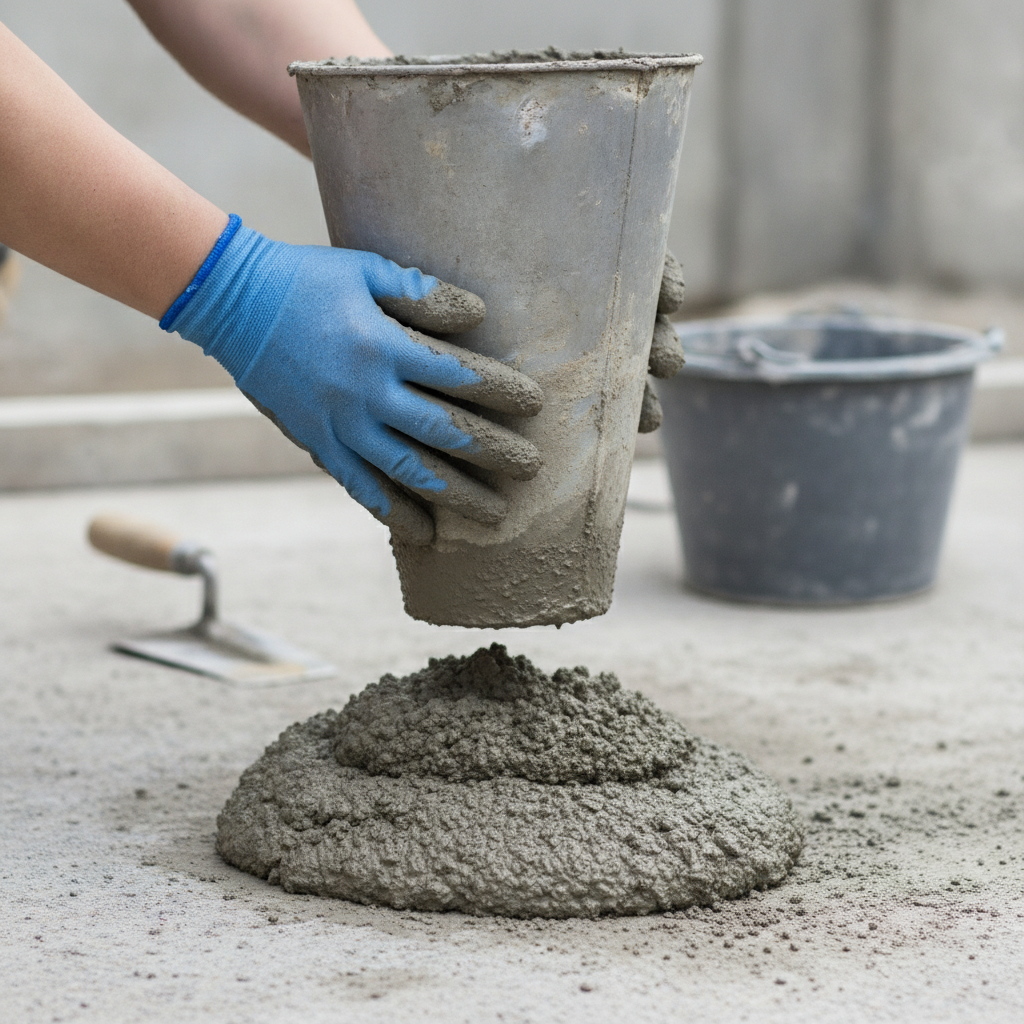
- Concrete QA: Slump checks, temperature, cylinders for break tests, and curing protection with weather-aware pours.
- Reinforcement and embeds: Placement checks, cover, and anchor bolt locations verified before pour.
Fuel retail and siteworks
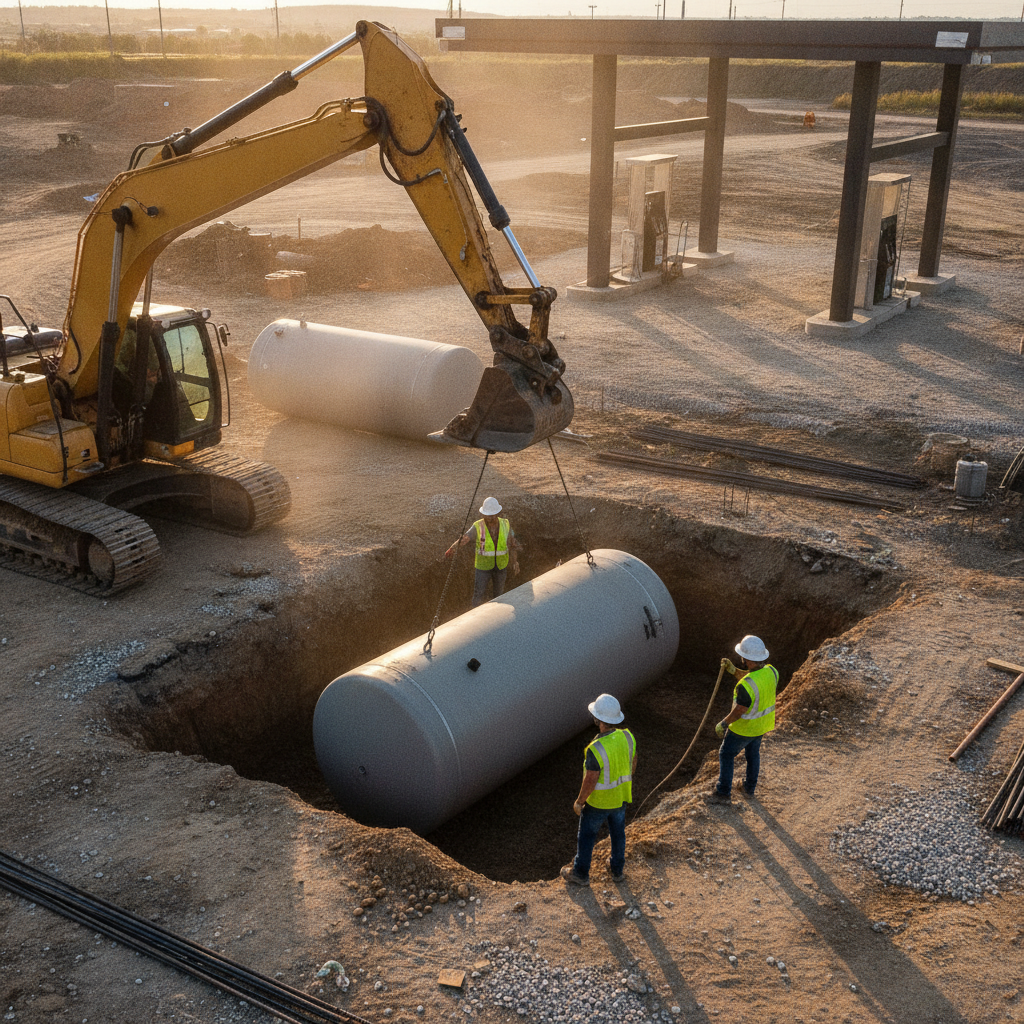
- UST and piping installation quality: Bedding, backfill, slope, containment, and pressure/vacuum tests documented at each step.
- Forecourt systems: Canopies, dispensers, bollards, islands, traffic and drainage coordination verified to plan.
- Pavements and striping: Base prep, jointing, surface tolerances, and final layout checks.
MEP, life-safety, and interiors
- MEP rough-in: Penetrations, clearances, labeling, and pressure tests documented before cover-up.
- Life-safety: Egress, emergency lighting, signage installation checks, and device testing coordinated for inspection.
- Finishes: Substrate prep, adhesion tests, mockups, and clean handoffs between trades.
Explore how we organize drawings and scopes in our architecture and design services overview and this building design and construction resource.
The Process
We run a nine-part workflow: preconstruction requirements, earthwork, structure, enclosure, MEP rough-in, interiors, siteworks, startup/commissioning, and handover. Each phase includes defined hold points, test reports, and sign-offs to keep schedule and quality aligned.
- Preconstruction: Clarify specs, coordinate submittals, map inspection cadence, and align stakeholders.
- Earthwork: Verify clearing, grading, and compaction with density reports before foundations.
- Structure: Rebar, anchors, steel erection bolting/welding checks, and concrete break documentation.
- Enclosure: Flashings, air/water barriers, roofing underlayment, and sealants validated before close-in.
- MEP rough-in: Pressure, continuity, and insulation checks; device layout and clearances.
- Interiors: Substrate prep, moisture testing, finish mockups, and progressive punch.
- Siteworks: Paving tolerances, drainage verification, lighting aiming, and striping layout.
- Startup/commissioning: Equipment startup, TAB (test, adjust, balance), and functional checks.
- Handover: O&M manuals, training, warranties, as-builts, and AHJ closeouts.
| QA/QC Stage | What we verify | Documentation |
|---|---|---|
| Earthwork | Compaction density, subgrade elevation, moisture | Field density reports, survey logs |
| Concrete | Slump, temperature, reinforcement placement | Cylinder breaks, pour cards, photos |
| UST install | Bedding, slope, containment, pressure/vacuum | Leak test records, inspector sign-offs |
| MEP | Pressure tests, labeling, clearances | Test certificates, checklists |
| Life-safety | Egress, emergency lighting, devices | Inspection tags, punchlist closeouts |
For an end-to-end perspective on schedule control, see our Texas construction management page and our land construction guide.
Quality control in construction projects: services we deliver
Our quality control system blends design reviews, field inspections, and third-party testing to confirm each scope meets Texas standards. We document acceptance criteria, verify installation quality, and create a traceable paper trail owners and inspectors can trust.
- Documented checkpoints: From compaction to commissioning, each hold point is logged and signed.
- Third-party testing: Independent labs for soils, concrete, and specialty systems improve confidence.
- Issue tracking: Observations are coded by priority with due dates for closure.
- Delivery-ready records: Owners receive O&M data, warranties, and as-builts organized for operations.
Want a refresher on how quality planning fits the bigger picture? Our Texas quality control overview explains how early decisions affect schedule, risk, and the overall cost to build.
Pricing
We scope QA/QC within construction management after reviewing your drawings, permits, and schedule. Every project is unique, so we align effort with risk—prioritizing areas that drive safety, inspections, and operational performance without adding unnecessary steps.
Here’s the thing: quality is an investment in predictability. We tailor the plan to your project instead of applying a one-size-fits-all template. That may mean more frequent concrete testing during hot, humid weeks in Galveston, or added electrical device checks before ceiling cover-up on a retail build-out.
- Blueprint-driven scope: We propose QA/QC tasks based on your design and AHJ requirements.
- Risk-weighted focus: We concentrate on scopes with higher failure impact (e.g., USTs, structure, life-safety).
- Transparent cadence: You’ll see the inspection/testing schedule mapped to milestones.
Why Choose Tip Top Builders
We specialize in fuel retail and commercial projects across Texas, pairing proactive field verification with clear reporting. Our Galveston-based team understands coastal conditions and Texas authorities, helping owners avoid delays and open with confidence.
- Fuel retail specialization: UST/piping QA, canopy and dispenser coordination, forecourt performance we can measure.
- Texas experience: We coordinate with local authorities having jurisdiction (AHJs) statewide and understand inspection preferences.
- End-to-end delivery: Planning, permitting support, site prep, and build—so quality is continuous, not fragmented.
- Safety and compliance: We integrate safety checks with quality checks to protect people and progress.
Our approach aligns with proven project-quality principles found in resources like this overview of project quality planning. We then adapt those ideas to the realities of Texas construction sites and Galveston’s climate.
Service Area
We operate from Galveston and deliver projects across Texas. Active or recent work includes Beaumont, Port Neches, Nederland, Caldwell, College Station, Austin, Sugar Land, and Port Arthur. We support both new builds and remodels for fuel retail, commercial, and residential.
- Headquartered in: Galveston, Texas
- Serving: Beaumont, Port Neches, Nederland, Caldwell, College Station, Austin, Sugar Land, Port Arthur
- Sectors: Gas stations and C-stores, commercial retail/mixed-use, and residential homes
Considering the cost to build relative to quality outcomes? Our building construction guide connects scope, schedule, and finish quality to lifecycle value.
Testimonials
Owners tell us they get fewer surprises, faster inspections, and clean handovers. They value our proactive communication and the way we translate technical details into simple next steps everyone can follow.
- “Tip Top caught a grading variance early and coordinated a quick fix. We poured on time and avoided a ripple effect on schedules.”
- “Their UST documentation was airtight—testing, photos, sign-offs. Inspectors appreciated the organization, and we opened as planned.”
- “Weekly quality huddles kept subs aligned. Punch list at the end was small and closed quickly.”
Request a quality planning session
If you’re developing a gas station, retail space, or home in or near Galveston, schedule a quality planning session with our team. We’ll review drawings, identify risk hot spots, and map a practical QA/QC cadence that protects schedule and performance.
Start by reviewing our construction management framework. Then contact our team to align quality controls with your milestones.
Risk controls and real-world examples
Quality risks hide at interfaces—soil to slab, tank bedding to backfill, envelope flashings to wall systems, and MEP penetrations. We manage these with first-work inspections, mockups, and photographed hold points that create clear acceptance criteria everyone can follow.
- Soils to concrete: We require density reports before forms, confirm rebar cover and anchor locations, and log pour data (slump, temp, start/stop).
- UST bedding/backfill: We photograph bedding, verify slope, and record pressure/vacuum tests before cover.
- Envelope transitions: We document flashings, sealants, and penetrations with checklists and sign-offs before cladding.
- MEP penetrations: We check firestopping details and label systems for inspection and maintenance clarity.
Independent testing strengthens credibility. For example, concrete cylinder breaks at 7 and 28 days validate mix performance, while TAB results confirm HVAC operation. For context on testing roles in construction, see this short overview of quality control testing.
Security and safety integration
Quality and safety are interlinked. Clear access paths, protected edges, and staged materials reduce damage and rework. We coordinate site security and safety checks so the job stays orderly and inspection-ready.
- Protected work: Temporary barriers and covers prevent early-phase damage that becomes hidden defects.
- Access and housekeeping: Organized laydown and clean aisles cut trip hazards and protect installed work.
- Security coordination: Fencing, access control, and lighting deter theft and protect stored materials and equipment.
For a high-level look at why site security supports quality and schedule, here’s a brief primer on construction site security. We adapt those ideas to Texas jobsite realities and owner expectations.
Frequently Asked Questions
These concise answers address how we design, run, and document quality control in Texas construction projects. They’re based on our field experience with fuel retail, commercial, and residential builds around Galveston.
What does a Project Quality Plan include?
A Project Quality Plan outlines responsibilities, hold points, inspection frequency, and test methods tied to the schedule. It also defines submittal processes, acceptance criteria, and closeout documentation. We tailor each plan to your drawings, AHJ requirements, and risk profile.
How often do you perform inspections and tests?
We map inspections to milestones. Earthwork may require multiple density checks per lift; concrete pours include slump and cylinder sampling; MEP rough-in triggers pressure tests and labeling checks. Cadence adjusts for weather, scope complexity, and AHJ preferences.
Do you coordinate with third-party labs and inspectors?
Yes. We schedule independent testing agencies for soils, concrete, and specialty systems, integrate their reports into our logs, and prepare packages for AHJ review. This independent validation increases confidence and streamlines inspections.
How does QA/QC reduce rework?
By preventing cover-up until acceptance criteria are met. First-work inspections, mockups, photo documentation, and sign-offs catch issues where they start. That keeps small problems from becoming costly, hidden defects later.
Can you help during preconstruction?
Absolutely. We review drawings for constructability, build submittal logs, and define hold points aligned with your schedule. Early involvement reduces RFIs and clarifies responsibilities before crews mobilize.
Final CTA
Ready to formalize quality control for your next Texas build? Book a discovery session in Galveston. We’ll map a right-sized QA/QC plan that protects your schedule, supports inspections, and delivers a clean, confident handover.
Start here: review our construction quality control overview and construction management in Texas, then connect with our team.
Key Takeaways
Quality control is a system, not a single inspection. Define requirements, verify in the field, and document each hold point. Do this consistently in Galveston, and you’ll reduce rework, pass inspections sooner, and open with confidence.
- Quality control in construction projects protects schedule and performance.
- Hold points, testing, and sign-offs create a reliable paper trail.
- Fuel retail scopes (USTs, forecourt) demand specialized QA.
- Coastal conditions in Galveston require corrosion and drainage attention.
- End-to-end delivery keeps quality continuous from planning to handover.