
Construction management is the disciplined planning, coordination, and control of a project from concept through closeout to meet scope, schedule, quality, safety, and compliance goals. In Galveston and across Texas, Tip Top Builders applies this framework to gas stations, commercial spaces, and homes so projects open on time and operate reliably.
By Aftab Ali, Manager — Tip Top Builders
Last updated: June 10, 2026
Overview and Table of Contents
This guide shows how professional construction management reduces delays, change orders, and rework. You’ll learn the phases, delivery methods, tools, and Texas-specific nuances we use to finish projects faster with fewer surprises. Use the checklists and templates to standardize decisions and keep stakeholders aligned.
Here’s what you’ll find below. Skim and jump to the section you need.
- What is construction management?
- Why construction management matters
- How construction management works
- Delivery methods (Agency CM, CMAR, Design-Build, DBB)
- Best practices that keep schedules on track
- Tools, templates, and resources
- Case studies and Texas examples
- Budgeting and pricing considerations
- FAQ
- Key takeaways
- Conclusion and next steps
What Is Construction Management?
Construction management is the integrated practice of planning, coordinating, and controlling a project’s scope, schedule, quality, safety, and compliance from preconstruction through closeout. It aligns owners, designers, and builders with clear milestones, documented decisions, and proactive risk management to deliver predictable outcomes.
At Tip Top Builders, construction management connects our planning and design services, site preparation and excavation, and field operations into one coordinated plan. The objective is simple: deliver what we promised, when we promised, with no surprises. That requires disciplined communication and measurable checkpoints.
Core objectives of construction management
- Scope clarity: Define what’s in and out, with drawings and specifications that remove ambiguity.
- Schedule reliability: Build a baseline, create 2-week look-aheads, and maintain daily huddles (10–15 minutes) to resolve blockers fast.
- Quality assurance: Establish inspection and test plans (ITPs) with hold points at critical activities.
- Safety leadership: Start-of-shift toolbox talks, task hazard analyses, and visible leadership walkdowns each week.
- Regulatory compliance: Coordinate permitting, environmental assessments, fuel system certifications, and closeout documentation.
In our experience, projects that commit to these five objectives from day one see fewer RFIs and change directives, and punch lists shrink by 30–50 items compared to ad‑hoc builds. The reason is straightforward: clarity early prevents rework later.
Why Construction Management Matters in Texas
Construction management matters because Texas projects face high regulatory, environmental, and operational complexity. Coordinated planning reduces permitting delays, weather risks, supply chain volatility, and rework—so owners open sooner, crews stay safe, and assets perform as designed.
Texas development moves quickly, but code and environmental requirements are substantial—especially for gas stations and C‑stores. Our team manages work in Galveston, Beaumont, Port Neches, Nederland, Sugar Land, Port Arthur, Austin, and College Station, and we see consistent patterns: schedules improve when decisions are sequenced and documented.
What’s at stake for owners and developers
- Time to open: Every additional week of delay pushes back operations. A disciplined critical path and 14‑day look-aheads protect milestones.
- Compliance risk: Fuel systems require rigorous inspections. Early submittal logs and permit tracking reduce review cycles by weeks.
- Quality and brand standards: Consistent elevations, materials, and equipment specs simplify maintenance and procurement.
- Community and safety: Good traffic flow, lighting, and ADA access improve customer experience and reduce incidents.
We’ve found that owners who engage CM leadership during site selection speed decisions on access, utilities, and stormwater. That alignment in month one can save several coordination meetings later and keep permitting on a single review cycle instead of two or three.
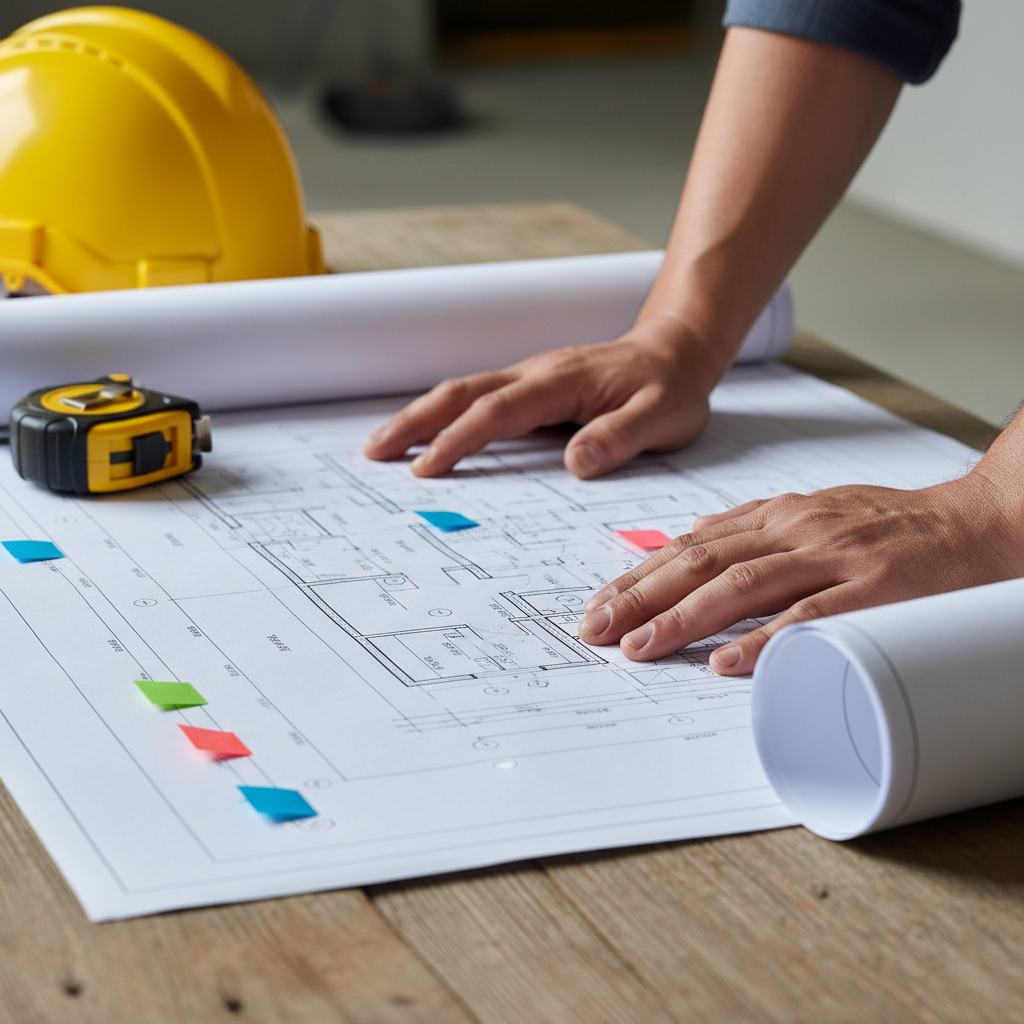
How Construction Management Works (End-to-End)
The construction management workflow spans seven phases: discovery, due diligence, design coordination, procurement, field execution, commissioning, and closeout. Each phase has defined deliverables, gates, and reviews that convert owner goals into buildable plans and high‑quality assets.
Seven-phase CM workflow we run on Texas projects
- Discovery and goals (week 0–2): Confirm business case, brand standards, operational hours, and success criteria.
- Due diligence (week 1–6): Site selection inputs, environmental assessments, utilities, access, geotech, survey, and zoning.
- Design coordination (week 4–12): 30/60/90 design reviews; value engineering; code and AHJ alignment.
- Procurement (week 8–16): Long-lead equipment, qualified vendors, submittals, and fabrication releases.
- Field execution (week 12+): Mobilization, safety orientation, daily huddles, QA/QC inspections, and look-ahead scheduling.
- Commissioning (final 10–20%): Equipment start-up, training, signage, and brand compliance checks.
- Closeout and handover: As-builts, warranties, O&M manuals, punch completion, and post-occupancy check.
Owner-side deliverables that keep momentum
- Design decisions by gate: Approve finish schedules and equipment lists at 60% so procurement can proceed.
- Submittal priorities: Release long‑lead items (e.g., canopies, dispensers, RTUs) 8–12 weeks ahead.
- Permit packet completeness: One comprehensive packet reduces resubmissions.
- Weekly decisions: 30–45 minute steering meetings prevent drift and lock the next two weeks.
When the team holds firm to these gates, tasks flow with fewer critical-path impacts. A 15‑minute daily stand‑up can prevent an entire day of field delay—a 1:30 efficiency trade that scales over a 20‑week build.
Delivery Methods: Agency CM vs CMAR vs Design-Build vs DBB
Choose a delivery method based on risk, speed, and collaboration needs. Agency CM prioritizes oversight; CMAR aligns builder input early; Design‑Build speeds decisions with one contract; Design‑Bid‑Build separates design and construction but requires tighter coordination.
Different projects warrant different structures. Our team executes Agency CM for oversight-centric owners, CMAR for early builder input, and Design‑Build when speed and single‑point accountability are top priorities. Below is a quick comparison to guide selection.
| Method | Contracts | Speed | Risk Allocation | Best For |
|---|---|---|---|---|
| Agency CM | Owner with CM advisor; trades separate | Moderate | Owner retains more | Oversight, complex compliance |
| CM at Risk (CMAR) | Owner–CM; CM holds trades | Fast | Shared with CM | Early builder input, schedule certainty |
| Design‑Build | Single owner contract | Fastest | With design‑builder | Speed, single‑point accountability |
| Design‑Bid‑Build (DBB) | Owner–designer, owner–builder | Slower | Owner during design; builder during build | Clear scope, competitive trade pricing |
For many fuel/C‑store projects where equipment lead times and inspections drive the critical path, CMAR or Design‑Build compresses weeks by overlapping design coordination and procurement, while still maintaining rigorous quality reviews at the 30/60/90 checkpoints.
Best Practices That Keep Schedules On Track
Strong construction management relies on short feedback loops, visual planning, and proactive risk control. Daily huddles, 2‑week look‑aheads, clear submittal logs, and quality hold points reduce rework and keep the critical path protected.
Scheduling and coordination
- Visual plans: Use 6–8 swimlanes (civil, structural, MEP, fuel, finishes, inspections, signage, commissioning) so everyone sees dependencies.
- 2‑week look‑aheads: Lock next 10 working days and assign owners for each task.
- Constraint removal: Track top 5 constraints weekly (permits, materials, access, inspections, decisions).
- Coordination windows: Book 30‑minute design/field syncs twice weekly during critical trades.
Quality and safety
- ITPs with hold points: For concrete, steel, underground tanks, canopy, and electrical tie‑ins.
- First‑work inspections: Inspect the first 5–10% of repetitive work to set quality benchmarks.
- Phase hazard analyses: Update THAs when conditions change; run 5‑minute tailboards for high‑risk tasks.
- Leadership presence: Supervisors walk the site at least 3 times per day during critical path activities.
Documentation and communication
- Submittal log discipline: Prioritize long‑lead items; target 3–5 day review cycles where feasible.
- RFI hygiene: Clear titles, one issue per RFI, and same‑day logging.
- Decision registry: Track who decided what, when, and why—reduce backtracking.
- Progress photos: 20–30 geo‑tagged photos per week accelerate approvals and reduce disputes.
These practices turn ambiguity into trackable work. We routinely see schedule gains when crews can visualize the next 10 days and resolve two constraints before they hit the field.
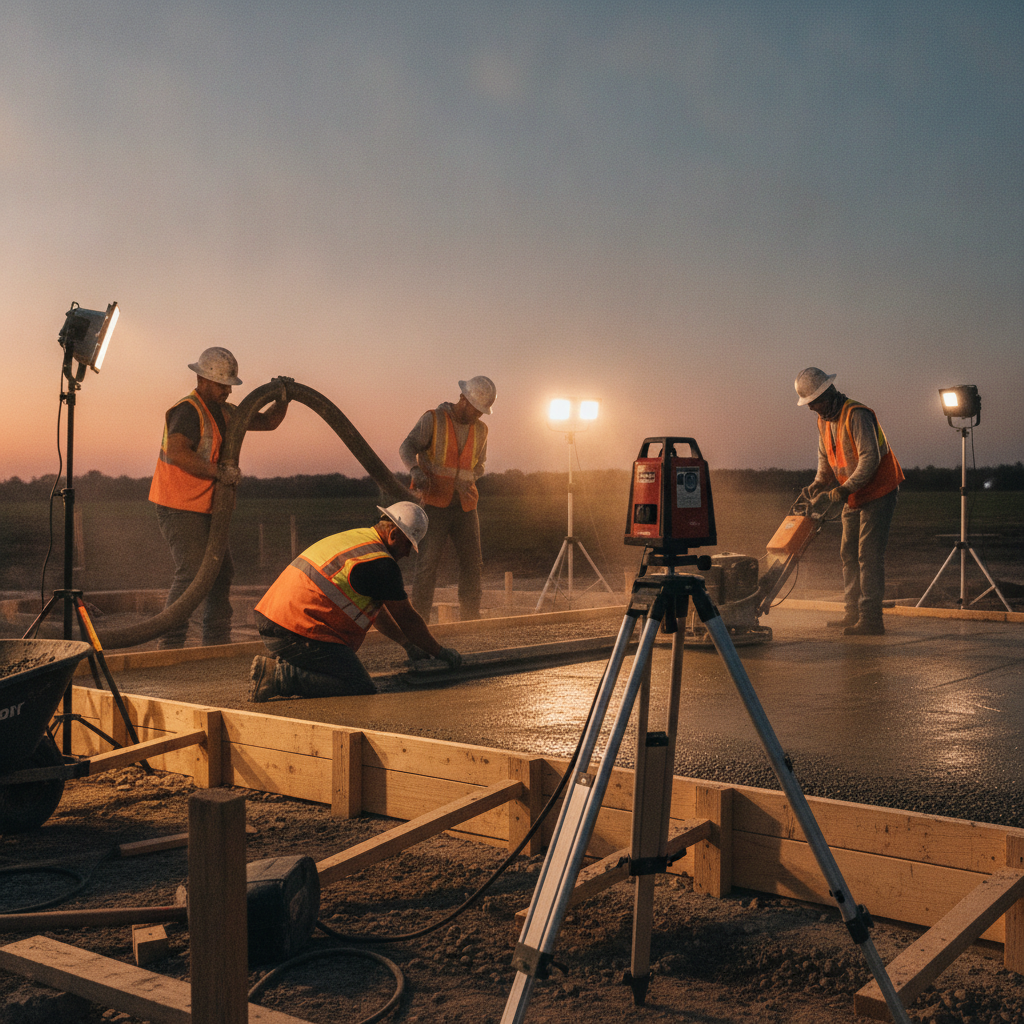
Tools, Templates, and Resources We Use
We standardize execution with scheduling software, collaborative document control, and field apps. Templates for submittals, RFIs, ITPs, and commissioning checklists keep teams aligned, while short, recurring meetings sustain momentum.
Typical tool stack
- Scheduling: CPM tools with weekly 2‑week look‑ahead exports.
- Document control: Centralized submittal/RFI logs and drawing control.
- Field management: Mobile punch lists, photo logs, and safety inspections.
- Commissioning: Startup checklists for dispensers, canopy lighting, HVAC, and life safety.
Process rhythms
- Daily: 10–15 minute huddle; safety focus; remove a top constraint.
- Weekly: 30–45 minute steering meeting; update the decision register; photo review.
- Milestones: 30/60/90 design reviews; pre‑pour, pre‑install, and pre‑energization meetings.
For broader industry context on adapting project strategies, see these perspectives on modifying project management strategy. For trade‑specific coordination, a practical overview of electrical construction sequencing can help align inspections and energization windows.
Case Studies and Texas Examples
Real projects show how disciplined CM unlocks speed: aligning permits early, sequencing long‑lead equipment, and documenting decisions. The following mini‑cases highlight fuel retail, commercial, and residential projects run by a Texas team with statewide experience.
Fuel/C‑store build: Southeast Texas
- Challenge: Overlapping inspections for tanks, canopy, and electrical service risked 2–3 weeks of idle time.
- Approach: CMAR delivery, 2‑week look‑aheads, and a single coordinated submittal package for fuel and electrical.
- Result: Inspection windows aligned; commissioning completed within the target 10–20% finish window.
To see how we approach fuel projects end‑to‑end, review our internal guide on gas station building in Texas, which connects site selection, permitting, and construction into one plan.
Commercial retail build‑out: Greater Houston
- Challenge: Tenant changes at 60% design threatened the opening date.
- Approach: Fast 30/60/90 reviews, decision registry updates, and targeted value engineering on lighting and finishes.
- Result: Critical path preserved by resequencing two trades and locking submittals within a 5‑day review window.
We detail the front‑end components in our planning and design guide for Texas, including brand standards and elevation decisions that prevent rework.
Residential construction: Central Texas
- Challenge: Weather and access constraints required flexible sequencing during framing and MEP rough‑in.
- Approach: Visual production planning with 6–8 swimlanes and daily 10‑minute huddles to reassign crews.
- Result: Field productivity stabilized; punch list items reduced by several dozen compared to similar builds.
Learn how early due diligence reduces surprises in our planning and development overview, which maps utilities, access, and environmental steps onto early design choices.
C‑store construction insights
- Common pitfall: Treating canopy, fuel, and electrical submittals as separate lines creates serial delays.
- Fix: Submit as one coordinated package; pre‑schedule inspections; photo‑document underground work.
- Outcome: Fewer resubmissions and a smoother commissioning window.
For more on scope and sequencing specific to C‑stores, see our convenience store construction guide.
Budgeting and Pricing Considerations (No Dollar Amounts)
Smart budgeting is about decisions, not just numbers. Lock scope early, prioritize long‑lead equipment, and standardize materials. Short feedback loops reduce change directives, while a single coordinated permit packet cuts review cycles and keeps teams focused on the critical path.
Owner decisions that stabilize budgets
- Standardize finishes: Reduce SKUs to 1–2 preferred options for flooring, lighting, and casework.
- Sequence long‑lead items: Release canopy steel, dispensers, and RTUs 8–12 weeks ahead.
- Consolidate submittals: One coordinated package for fuel, canopy, electrical, and life safety.
- Protect the schedule: 2‑week look‑aheads and daily huddles prevent cascading delays that inflate soft costs.
If you’re navigating permit complexity, it helps to understand the typical submittal components and review cycles. For context, here’s a practical overview of a construction permit application guide that mirrors how thorough packets speed approvals.
Local considerations for Galveston
- Plan for coastal wind loads and floodplain elevations on fuel canopies and structures; align early with AHJ guidance.
- Build weather flexibility into schedules during hurricane season; maintain 14‑day look‑aheads with alternative work plans.
- Account for soil and groundwater conditions common to coastal Texas; integrate geotech and environmental assessments early.
Frequently Asked Questions
These short answers address the questions owners ask most about construction management in Texas—how we work, when to engage, and how we protect your schedule, quality, and compliance goals.
When should I bring a construction manager onto my project?
Engage construction management at site selection or early design. Early involvement aligns permitting, utilities, and long‑lead equipment so the build phase runs without avoidable gaps. Waiting until mobilization often forces resequencing and adds risk to the critical path.
What delivery method is best for a gas station or C‑store?
CMAR or Design‑Build typically suits fuel retail because it brings builder input into design and compresses schedules. Agency CM works well when you need an advisor separate from trade contracts. We’ll help you weigh speed, risk, and collaboration needs.
How do you keep quality high without slowing the project?
We set inspection and test plans with hold points, run first‑work inspections on repetitive tasks, and photo‑document progress weekly. This front‑loads clarity, reduces rework, and accelerates approvals—so quality rises while the schedule stays intact.
What meetings should I expect during construction?
Expect a brief daily huddle (10–15 minutes) for field coordination, a weekly steering meeting (30–45 minutes) to lock the next two weeks, and milestone reviews at 30/60/90 design checkpoints and pre‑install meetings. Short, regular rhythms keep decisions flowing.
Key Takeaways
Finish faster by deciding early, visualizing the next two weeks, and coordinating permits, submittals, and inspections as one plan. Short meetings, clear logs, and photo documentation reduce rework and keep the critical path intact.
- Construction management aligns scope, schedule, quality, safety, and compliance into one plan.
- 2‑week look‑aheads, daily huddles, and constraint logs prevent schedule slips.
- Coordinated permit and submittal packages compress review cycles and inspections.
- Standardized materials and decisions reduce rework and simplify procurement.
- Choose CMAR or Design‑Build to accelerate fuel/C‑store projects with long‑lead equipment.
Conclusion and Next Steps
Effective construction management turns complex Texas projects into predictable outcomes. If you align decisions early, sequence long‑lead items, and maintain short feedback loops, you’ll protect your opening date and your brand experience.
Here’s the path we recommend:
- Define success in 3–5 measurable terms (opening date, inspection passes, punch items, brand checks).
- Choose a delivery approach (Agency CM, CMAR, or Design‑Build) that fits speed and risk goals.
- Map a seven‑phase plan with gates and a 2‑week look‑ahead rhythm.
- Consolidate permit and submittal packages to reduce review cycles.
- Photo‑document progress weekly and close with clean as‑builts and O&M.
If you’re planning a gas station, C‑store, commercial space, or a Texas home, our team in Galveston manages the full journey—from site selection and permitting to excavation and final handover. Book a discovery session for your Texas project today. For extra context on renovation planning cadence, this brief planning checklist shows how tight checklists keep work moving.
Let’s plan your opening date. Share your goals, city, and desired timeline. We’ll outline a practical sequence for permits, long‑lead equipment, and field execution so you can open with confidence.