
Commercial excavation is the controlled removal, movement, and stabilization of soil and rock to prepare land for development. It sets elevations, utilities, drainage, and subgrades that determine how every building element fits and performs. In Galveston, Texas, Tip Top Builders uses commercial excavation to launch fuel, retail, and residential projects on solid, compliant ground.
By Aftab Ali — Manager, Tip Top Builders • Last updated: June 15, 2026
At a Glance: Summary
Commercial excavation clears, grades, trenches, and stabilizes a site so construction starts cleanly and finishes on schedule. The fastest projects align due diligence, permitting, erosion control, mass grading, trench safety, utility installation, and quality assurance from day one—with one accountable team coordinating each step.
This complete guide explains what commercial excavation is, why it matters in Texas, and how to run it right—especially for gas station and convenience store builds.
- What you’ll learn: Scope, methods, sequencing, QA, and regulatory checkpoints.
- Who it’s for: Texas developers, C‑store operators, and commercial owners.
- Why Tip Top Builders: End‑to‑end delivery—from planning and design to site prep, excavation, and construction management based in Galveston.
Local considerations for Galveston
- Plan for coastal soils and drainage. Allow time for dewatering, stormwater controls, and proof-rolling after heavy rain common to the Gulf Coast.
- Schedule earthwork around hurricane season. Stabilize slopes, secure stockpiles, and maintain silt fence and inlet protection during peak storms.
- Account for local permitting reviews. Fuel, UST, and driveway access approvals can add steps; coordinate early to avoid idle equipment.
What Is Commercial Excavation?
Commercial excavation is professional earthmoving that prepares a site for commercial uses—retail pads, fuel systems, utilities, parking, and structures. It includes surveying, clearing, stripping, cut/fill, trenching, shoring, dewatering, and compaction to target densities that protect pavements, tanks, and foundations.
In our projects across Texas, excavation connects planning and design to build-ready land. It translates surveys and civil plans into final grades, drainage paths, and utility corridors. Done right, it prevents settlement, water intrusion, and schedule drift.
- Typical outputs: Finished subgrade, stabilized pads, utility trenches, backfilled and compacted zones, and stormwater features.
- Key inputs: Geotech report, civil drawings, survey control, and permit conditions.
- Quality gates: Compaction tests, trench safety checks, proof-rolls, and photo documentation.
Tip Top Builders integrates site selection, environmental assessments, and permit and zoning approvals with excavation so developers move from raw land to vertical construction without surprises.
Why Commercial Excavation Matters in Texas
Excavation determines safety, compliance, and lifecycle performance. In Texas, variable soils, intense rain events, and fuel-system regulations demand precise grading, trench protection, and stormwater controls. The right approach avoids rework, delays, and future maintenance headaches.
The reality is simple: a site built on well-compacted, well-drained subgrades lasts longer and handles traffic loads better. That’s crucial for high-turnover C-stores and retail where pavement failures and ponding quickly affect operations.
- Soils vary widely from sands to expansive clays; density targets (often 95% of standard Proctor per plan) reduce settlement and rutting.
- Stormwater capacity and positive drainage protect structures and pavements during Gulf Coast downpours.
- Regulated systems like USTs require exact bedding, backfill, and monitoring to meet environmental conditions.
We align excavation methods with Texas-specific requirements so subgrades meet engineering intent and inspection milestones—keeping schedules predictable.
How Commercial Excavation Works (Step-by-Step)
Successful projects follow a defined sequence: due diligence, permitting, controls, clearing, stripping, rough grading, trenching with protection, dewatering, utility installation, backfill and compaction, proof-rolling, and final grading. Each step is verified with tests, photos, and daily reports.
Here’s a practical sequence we use on fuel, retail, and mixed-use sites throughout Texas.
- Preconstruction due diligence: review survey, geotech, utility locates, and permit conditions; finalize haul routes and staging.
- Permits and submittals: erosion control plan, trench safety plan, traffic control, and material submittals.
- Layout and controls: set benchmarks and staking; calibrate GPS grade control to survey datum.
- Erosion and sediment controls: install silt fence, stabilized exits, inlet protection, and check-dams.
- Clearing and stripping: remove vegetation; strip and stockpile topsoil as specified.
- Cut/fill and mass grading: balance earthwork volumes; build pads to design elevations with moisture conditioning.
- Trenching and shoring: excavate utilities; apply protective systems appropriate for soil and depth.
- Dewatering: pump or wellpoint to keep trenches and subgrades dry; monitor discharge points.
- Utilities installation: place pipe, bedding, and warning tape; maintain slopes and cover depths.
- Backfill and compaction: lift thickness, density verification, and moisture control per specs.
- Proof-roll and proof-test: identify soft spots; remediate with undercut or stabilization as needed.
- Final grading and stabilization: fine-grade, seed/mulch or pave; close out erosion controls after stabilization.
Coordinated daily logs, density tests, and photo evidence keep stakeholders aligned and inspections moving quickly.
Types and Methods of Commercial Excavation
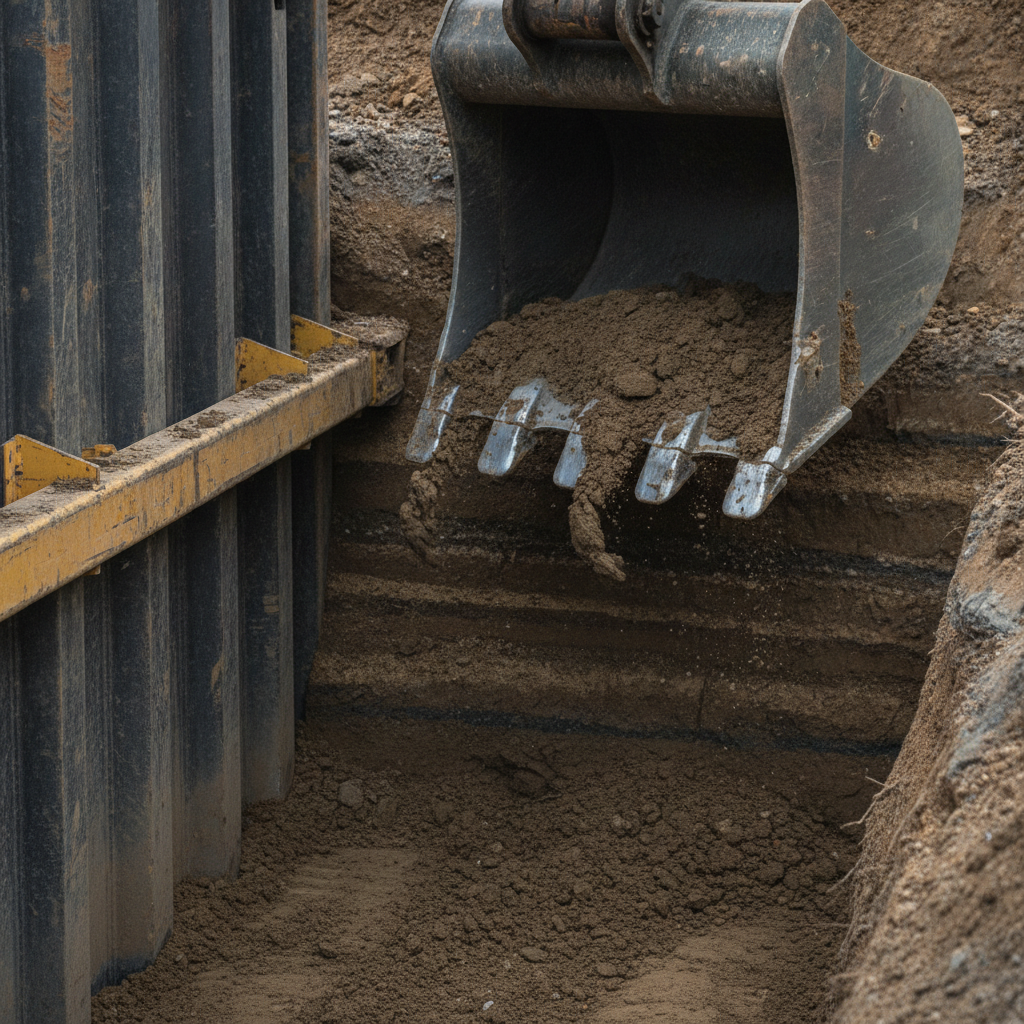
Projects combine methods—mass grading for pads and parking, trenching for utilities, shoring for safety, dewatering to work dry, and stabilization to strengthen weak soils. Selecting the right mix reduces rework and helps pass inspections the first time.
Core excavation methods
- Mass grading: Move large volumes to reach design grades; GPS dozers and excavators improve accuracy and speed.
- Trenching: Create utility corridors with proper slopes and cover; coordinate crossings to avoid conflicts.
- Shoring and shielding: Use trench boxes, sloping, or benching based on soil classification and trench depth.
- Dewatering: Sumps, wellpoints, or eductor systems to control groundwater and rainfall impacts.
- Soil stabilization: Lime, cement, or geogrids to increase bearing capacity and reduce plasticity or pumping.
- Rock excavation: Ripping, hoe-ramming, or controlled blasting where required; verify vibration limits.
Where each method shines
- Fuel and C-store pads: Mass grading with tight finish tolerances and stabilized subgrades under tank fields and canopies.
- Retail/mixed-use: Balanced cut/fill to minimize export/import; coordinated trenching for power, water, and telecom.
- Residential streets: Trench safety and compaction discipline to protect future pavements and utilities.
When methods are selected early, material submittals and inspections flow faster. Our planning and design framework sets those choices before the first bucket hits the ground.
12 Commercial Excavation Mistakes That Delay Work
Delays usually trace back to a dozen preventable issues: incomplete due diligence, missing permits, poor erosion control, wrong haul sequencing, shallow or unsafe trenches, dewatering missteps, utility conflicts, bad compaction, undocumented work, and late inspections. Fix these upstream, and schedules hold.
- Skipping geotechnical verification: Building on assumptions leads to undercut surprises. Action: verify boring data against exposed soils and adjust stabilization plans early.
- Incomplete utility locates: Strikes stop work and trigger redesigns. Action: combine 811, record drawings, and test holes before trenching.
- Permit gaps: Missing erosion, traffic, or UST submittals creates inspection holds. Action: stage approvals in a permit roadmap.
- Poor stormwater setup: Inlets silt up, pads pond. Action: overbuild controls on Gulf Coast sites; maintain after every rain event.
- Unplanned haul routes: Rutting and rework waste days. Action: stabilize entrances and designate one-way haul paths on the logistics plan.
- Unsafe trenches: Collapses halt projects and risk lives. Action: use protective systems matched to soil and depth; inspect daily.
- Dewatering too late: Water undermines bedding and density. Action: mobilize pumps or wellpoints before deep utilities and tank pits.
- Utility conflicts: Crossings clash at wrong elevations. Action: clash-detect civil and MEP layouts; sequence trenches to avoid rework.
- Wrong backfill or lifts: Mixed materials and thick lifts fail density. Action: follow specified aggregates and lift thickness with frequent tests.
- Thin documentation: No photos, no tests, no pay. Action: daily logs with stationing, compaction results, and as-built photos.
- Late inspections: Covered work without inspection forces re-excavation. Action: pre-book inspections and hold points with inspectors.
- No turnover package: Future maintenance suffers. Action: compile as-builts, test results, and O&M into a clean closeout set.
We organize these controls inside our excavation playbook so field teams always know the next best action.
Considering a new fuel, retail, or residential site? Our Galveston-based team coordinates permits, earthwork, utilities, and QA so you can break ground with confidence. Start with a quick discovery call at Tip Top Builders.
Best Practices for QA, Safety, and Compliance
The best commercial excavation teams lock in density, drainage, and documentation. They calibrate GPS, verify soils against geotech, maintain erosion controls, protect trenches, and test every lift—then capture evidence in daily reports that speed approvals and payments.
- Compaction discipline: Target densities and moisture ranges per plan; run tests at a logical frequency based on risk and traffic loading.
- Drainage first mindset: Cut temporary swales and keep working surfaces crowned to shed water away from pads and trenches.
- Protective systems: Choose trench boxes, sloping, or benching suitable for soil and depth; inspect for tension cracks and water.
- Material control: Submittals for bedding, backfill, and stabilization mix design prevent downstream disputes.
- Inspection readiness: Define hold points; clear access to witness density tests, bedding placement, and pipe joints.
- Photo-first documentation: Stationed photos of each phase reduce RFIs and accelerate pay apps.
For owners needing a broader plan from site choice through turnover, our planning approach connects preconstruction decisions to in-field results.
Tools, People, and Resources You’ll Use
Earthwork success blends the right machines, measurements, and people. GPS dozers, 3D model checks, moisture/density testing, trench boxes, pumps, and drones speed accurate work. A superintendent, safety lead, and QA tech keep sequencing tight and inspections on time.
Equipment and technology
- GPS grade control on dozers/excavators for accurate cuts and fills.
- Moisture/density gauges and nuclear or sand-cone testing to confirm compaction.
- Trench shields and shoring for safe, efficient utility installation.
- Pumps and wellpoints to manage groundwater and rainfall.
- Drones and stockpile tracking to validate quantities and progress.
Field roles that reduce risk
- Superintendent: controls daily sequencing and coordination.
- Foreman and operators: execute grade, trench, and backfill plans.
- Safety lead: inspects trenches, access, and traffic routes.
- QA technician: plans and records tests; works with inspectors.
Looking for broader commercial context? See this primer on commercial construction topics for additional perspective on materials and envelopes.
Gas Station and C‑Store Excavation: What’s Different
Fuel sites add specialized steps—tank pit excavation, bedding and backfill controls, dispenser islands, and leak detection layouts—plus strict inspections. Early coordination with environmental and fire authorities keeps tank setting and backfill on schedule.
- Underground storage tanks (USTs): Precise pit depth, base prep, bedding stone, and backfill lifts protect tanks and lines.
- Piping and sumps: Maintain slopes and tracer wire; protect during backfill to prevent damage.
- Canopy and driveway subgrades: Heavier load paths need stiffer subgrades and consistent densities.
- Stormwater and spill control: Grade to keep water away from dispensers and sensitive areas.
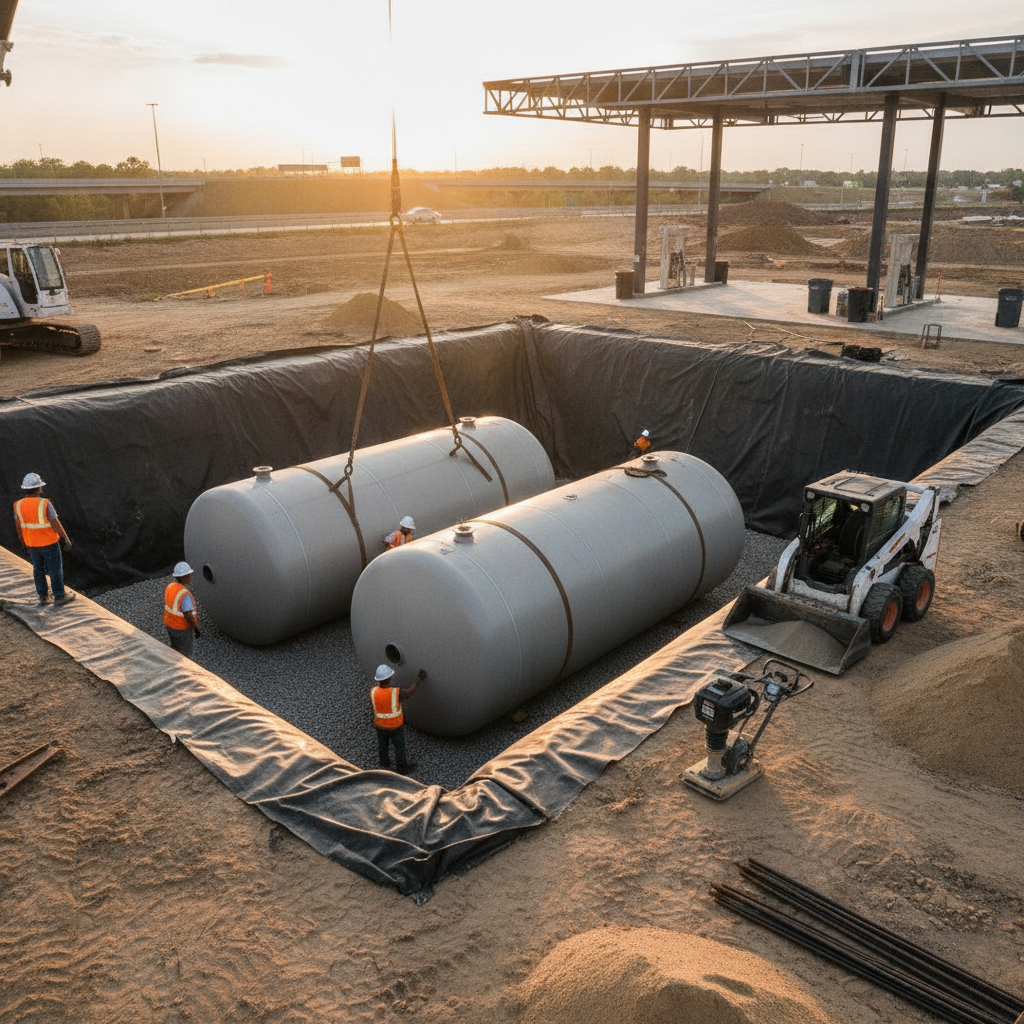
Our gas station construction guide walks through tank setting, dispenser islands, and inspections so your opening day stays on track.
Process Checklist and Typical Hold Points
This checklist maps the standard excavation sequence to typical inspection or documentation hold points. Use it to plan crew sequencing, testing, and inspector availability so you never cover work prematurely or wait on approvals.
| Phase | Primary Actions | Typical Hold Point | Evidence |
|---|---|---|---|
| Controls & EC | Stakeout, install silt fence, stabilized exits | Pre-grading walk | Photos, inspector sign-off |
| Mass grading | Cut/fill, moisture condition | Proof-roll | Deflection notes, remediation record |
| Trenching | Excavate, shore/box, bed | Open trench inspection | Soil classification, safety check |
| Utilities | Lay pipe, set cover | Joint/bedding check | Photos, measurements |
| Backfill | Lifts and density tests | Compaction verification | Test results, locations |
| UST pits | Excavate, bed, set tanks | Pre-backfill inspection | Tank logs, bedding photos |
| Final grading | Fine grade, stabilize | Closeout EC | Stabilization photos |
Case Studies and Texas Examples
Small choices upstream prevent big delays. These brief examples show how aligning design, excavation, and inspections avoided rework and kept turnover dates intact across Texas fuel and retail sites.
Fuel site near Port Neches
- Challenge: High groundwater slowed trenching.
- Action: Staged wellpoints before UST excavation; pre-booked inspections.
- Result: Tank set and backfill completed as scheduled despite rainfall.
Retail pad in College Station
- Challenge: Expansive soils under parking areas.
- Action: Lime stabilization and strict density testing.
- Result: Pavement subgrade passed proof-roll on first attempt.
Urban infill in Austin
- Challenge: Tight site with heavy utility congestion.
- Action: Model-based clash detection and phased trench sequencing.
- Result: Zero utility conflicts and no re-excavation.
For a wider development view—from due diligence to vertical build—see our Texas commercial construction guide.
Helpful Checklists and Reading
Pair your excavation plan with practical field checklists and credible background reading. Field teams move faster when everyone shares the same visual standards for trench safety, bedding, backfill, density targets, and drainage controls.
- Use a pre-dig checklist covering survey control, locates, permits, and erosion controls.
- Standardize trench photos: stationing, depth, bedding, pipe, and warning tape all visible.
- Align on material submittals and lift thickness before work starts.
- For context on site construction topics, skim a general aggregates and sand overview.
- Need basic building services perspective? This commercial drain rough‑in explainer offers a quick primer on below‑grade service routing.
Frequently Asked Questions
These quick answers address common excavation questions from Texas owners and operators. For project‑specific guidance, our Galveston team can review drawings and help plan sequencing, safety, and QA before you mobilize.
What does commercial excavation include?
It includes clearing and stripping, mass grading, trenching with protective systems, dewatering as needed, utility installation, backfill and compaction, proof‑rolling, and final grading. Deliverables are a stable subgrade, correct elevations, and documented tests ready for inspections.
How do you prevent trench collapses?
Match the protective system to soil type and trench depth, use trench boxes or sloping/benching where required, inspect for water and tension cracks, and restrict access. A safety lead should verify conditions daily and after any weather event.
What makes fuel-site excavation different?
Underground storage tanks and dispenser islands add specialized excavation, bedding, and backfill requirements. Leak detection, monitoring lines, and environmental inspections add hold points that must be scheduled and documented carefully.
When should density tests be performed?
Test each lift where risk is highest—under pavements, tank fields, and structures—and increase frequency with poor soils or wet conditions. Verify both moisture and density to reach the plan’s specified compaction targets.
Key Takeaways
Plan early, protect trenches, control water, and test every lift. Align permits, inspections, and documentation from day one. With the right sequencing and evidence, commercial excavation stays safe, compliant, and on schedule.
- Excavation quality sets the foundation for schedule, safety, and performance.
- Most delays are avoidable with better preconstruction, stormwater setup, and trench protection.
- Testing, photos, and clean submittals accelerate approvals and payments.
- Fuel sites add UST‑specific steps and inspections—plan them early.
- One accountable team from planning to construction reduces handoff risk.
Conclusion: Start Strong to Finish on Time
Commercial excavation succeeds when planning, safety, water control, and QA move together. For Texas fuel and retail sites, coordinating these from Galveston keeps dirt work predictable and inspections smooth—so vertical construction starts on time.
Tip Top Builders delivers land‑to‑opening execution for gas stations, convenience stores, commercial pads, and residential projects throughout Texas. Our team manages site selection, permitting, environmental assessments, design, site preparation and excavation, and full construction management. If you’re evaluating a location in Galveston or anywhere across our Texas footprint, we’ll help you validate soils, lay out haul routes, schedule inspections, and build the documentation trail that keeps work moving.
Ready to review drawings or discuss sequencing? Reach out through our company website and we’ll set up a project assessment with our field and preconstruction leads.