
Commercial construction cost is the total investment required to plan, permit, prepare, and build a commercial facility. For Galveston-area projects, it reflects design choices, site conditions, codes, and delivery method. Tip Top Builders uses a land-to-opening approach to manage scope, schedule, quality, and risk so budgets stay predictable.
By Aftab Ali, Manager — Tip Top Builders (Galveston, Texas)
Last updated: June 16, 2026
At a Glance
Commercial construction cost is driven by design scope, site conditions, regulatory requirements, delivery method, and market factors. To avoid budget surprises, lock scope early, verify site risks, align with codes, and use disciplined preconstruction and change-control. A single source partner from land to opening keeps estimates and schedules synchronized.
Before we dive deep, here’s what you’ll get from this complete guide crafted by Tip Top Builders in Galveston, Texas:
- Plain-English definitions of every major cost driver and why it matters.
- A step-by-step preconstruction workflow that keeps budgets on track.
- Delivery method comparisons and how they affect contingency and risk.
- Checklists for site preparation, permitting, environmental and safety.
- Texas-focused examples across gas stations (C-stores), retail, and mixed-use.
Local considerations for Galveston
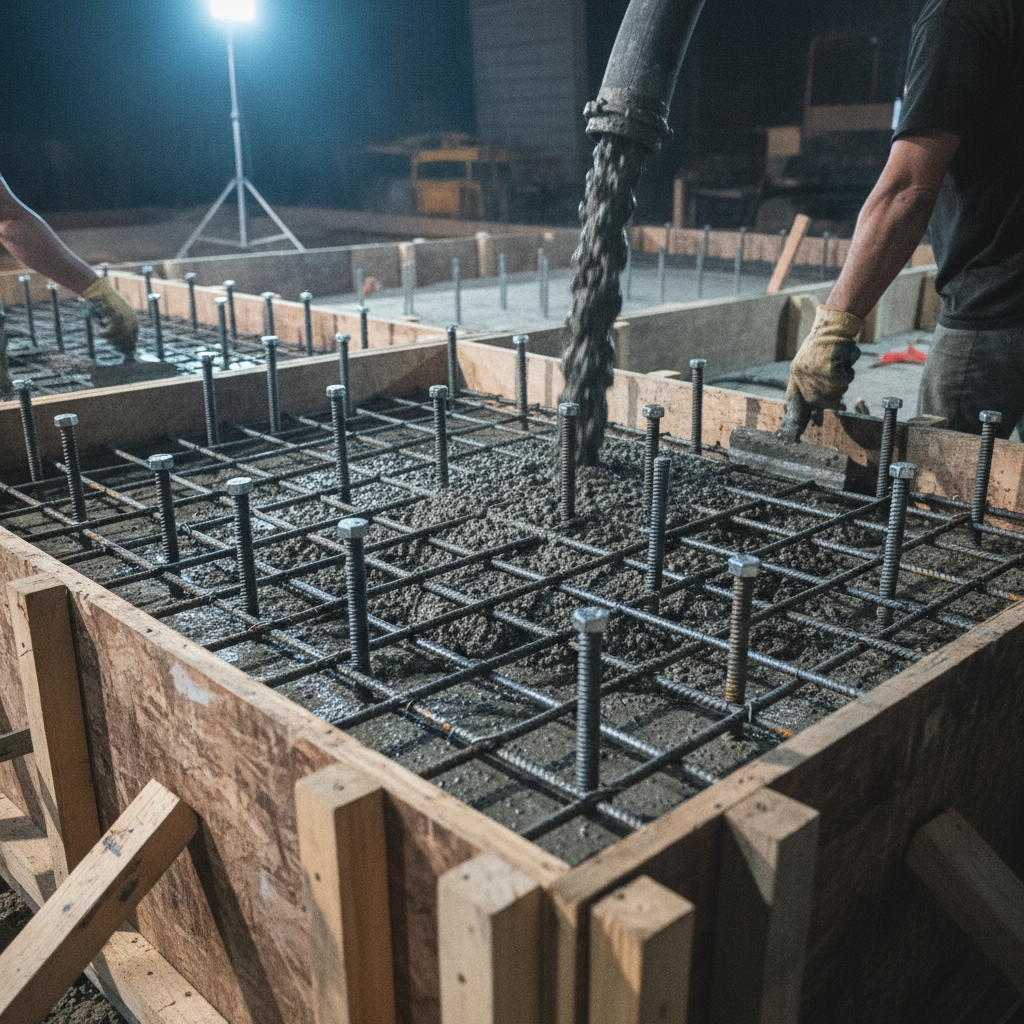
- Factor coastal weather and soil into site prep: compaction, drainage, and corrosion-resistant details reduce rework later.
- Plan schedules around storm season and material lead times; protective staging and rapid-dry strategies keep crews productive.
- For fuel retail sites, coordinate environmental reviews early; permitting and inspections can require additional sequencing near the coast.
What Is Commercial Construction Cost?
Commercial construction cost refers to all expenditures from feasibility through handover: preconstruction, permits, site preparation, structure, MEP systems, interiors, commissioning, and closeout. It excludes ongoing operations but includes the planning and compliance needed to open on time and within scope.
When owners ask “what drives my number,” we group the answer into five buckets that apply to Texas retail, mixed-use, and fuel sites:
- Scope and design: Program size, elevations, systems, and finish standards determine labor, material, and trade mix.
- Site conditions: Soil, utilities, access, and environmental factors affect earthwork, foundations, and sequencing.
- Regulatory path: Zoning, building code, life-safety, and inspections shape design decisions and timeline.
- Delivery method: Design-bid-build, design-build, and CM-at-Risk allocate risk differently and change contingency strategy.
- Market dynamics: Labor availability, material volatility, and logistics in Texas influence procurement choices.
In our experience managing land-to-opening delivery, realistic budgets emerge during preconstruction. That’s where drawings, specifications, and logistics align with permitting and constructibility—well before a shovel hits the ground.
For deeper context on delivery tradeoffs for Texas projects, see our Commercial Construction in Texas guide and our building construction playbook.
Why Commercial Construction Cost Planning Matters
Cost planning protects schedule, reduces change orders, and improves opening readiness. When budgets are built from validated scope, site data, and code pathways, teams avoid rework and delays. Strong cost discipline aligns financing, procurement, and inspections to move the project from drawings to doors-open smoothly.
Here’s why disciplined planning is a difference-maker on Texas commercial work:
- Schedule certainty: Coordinated submittals and inspections compress idle time between trades.
- Risk reduction: Early utilities mapping, soil reports, and environmental screens prevent surprises during excavation.
- Better procurement: Package long-lead items early to protect the critical path when markets tighten.
- Regulatory alignment: Designing for code requirements up front avoids scope churn during plan review.
- Operator readiness: Phased commissioning and punchlist control keep handover predictable.
Owners often ask what to do first. Start with a scope freeze and a documented basis-of-estimate. Tip Top Builders facilitates both, then ties them to permitting milestones and a living risk register so decisions remain grounded in constructible reality.
For land-to-opening projects like fuel retail, our gas station building guide shows how environmental, structural, and MEP choices interact—knowledge that keeps scope aligned with operational goals.
How Commercial Cost Planning Works (Step-by-Step)
A reliable budget forms during preconstruction: define scope, test site constraints, align with codes, choose delivery, and price in iterations. Each pass reduces uncertainty. The team then locks procurement packages, establishes change-control, and manages updates as design and permits progress.
Preconstruction workflow Tip Top Builders uses
- Discovery and goals: Clarify program, performance targets, and schedule drivers; capture them in a scope brief.
- Site due diligence: Order geotech, utility locates, drainage studies, and environmental screens; validate access and logistics.
- Regulatory path: Map zoning, life-safety, and special inspections; align submittals with review calendars.
- Concept design + basis-of-estimate: Scale systems and finish levels; translate drawings into quantity takeoffs.
- Iterative pricing: Price alternates, VE options, and sequencing strategies; pressure-test schedule assumptions.
- Delivery method decision: Select design-bid-build, design-build, or CMAR based on risk appetite and speed-to-open.
- Procurement plan: Identify long-lead items, preferred subs, and prequalification requirements.
- Construction-ready package: Finalize drawings, permits, logistics, safety, QA/QC, and commissioning plans.
Process table: phases and focus
| Phase | Primary focus | Owner action |
|---|---|---|
| Feasibility | Program + site screens | Confirm goals, authorize studies |
| Preconstruction | Design alignment + pricing loops | Freeze scope, approve alternates |
| Procurement | Long-leads + sub awards | Sign packages, set change-control |
| Build | Field execution + inspections | Participate in OAC meetings |
| Closeout | Commissioning + handover | Train staff, accept systems |
We capture every decision in a living basis-of-estimate and risk log. That discipline keeps budgets transparent as designs sharpen and permits advance.
For more on preconstruction checklists, see our internal cost-to-build guide and commercial construction management overview.
Delivery Methods and Their Budget Impact
Delivery method changes who owns risk and when pricing locks. Design-build can shorten timelines through single-team coordination. Design-bid-build can maximize bid competition but lengthen pre-bid phases. CM-at-Risk adds preconstruction partnership with a guaranteed maximum structure.
Budget behavior varies by approach:
- Design-Bid-Build (DBB): Complete design, then solicit bids. Pros: bid transparency. Watchouts: longer cycle before mobilization; change-control must be strict.
- Design-Build (DB): One team drives design and construction. Pros: earlier price visibility, faster decisions. Watchouts: align performance specs clearly to protect outcomes.
- Construction Manager at Risk (CMAR): CM partners early, offering precon services and a GMP later. Pros: collaboration and constructibility. Watchouts: define allowances and alternates early.
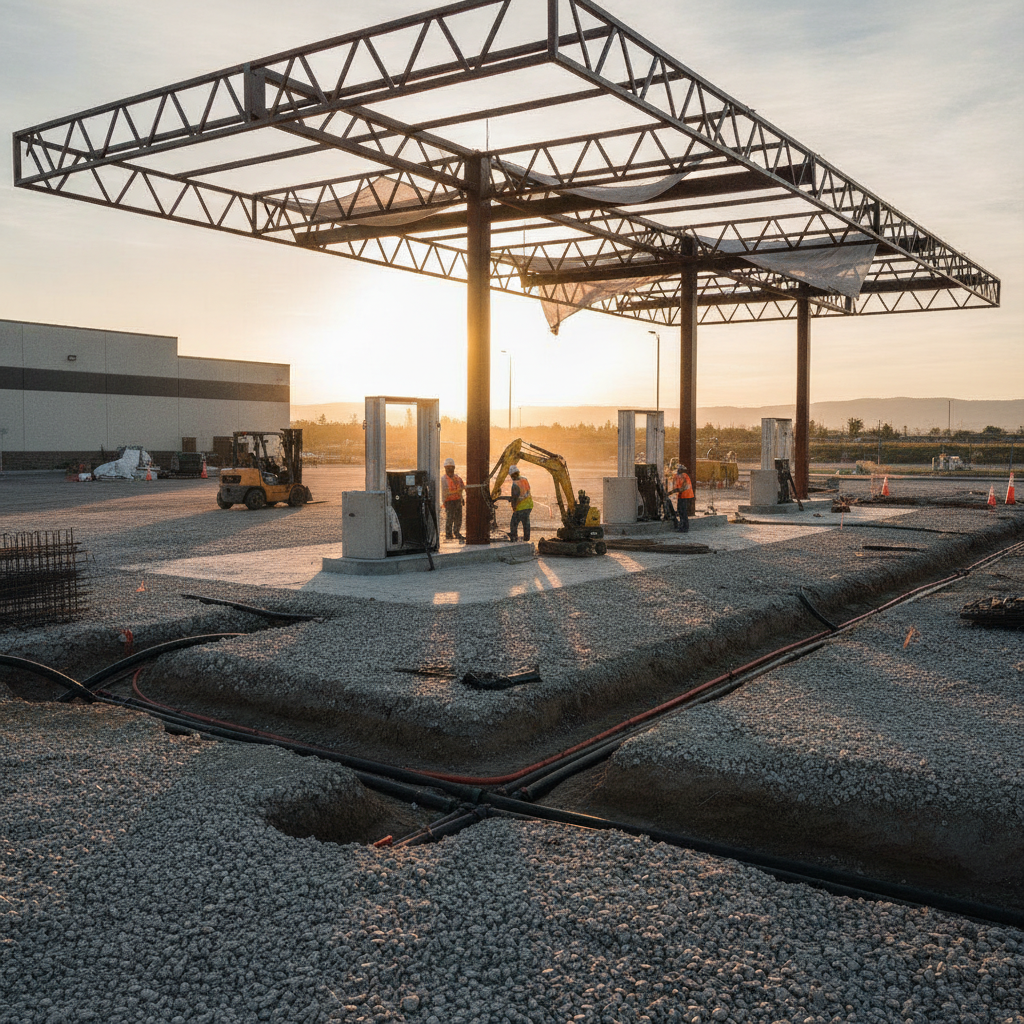
For Texas gas station and C-store builds, we often recommend design-build or CMAR to synchronize environmental, civil, canopy, and MEP workstreams. See our focused convenience store construction guide for how integrated delivery protects opening dates.
Best Practices to Control Budget (Without Cutting Corners)
The best way to control commercial construction cost is to define scope early, validate site risks, lock delivery method, and maintain tight change-control. Bundle long-lead items, sequence inspections, and keep QA/QC and safety plans integrated with schedule.
Our go-to playbook
- Freeze scope in writing: Document program, alternates, and exclusions so everyone prices the same work.
- Front-load due diligence: Geotech, utility locates, drainage, and environmental screens inform foundations and earthwork.
- Package procurement: Release canopy, structural steel, and switchgear early to guard the critical path.
- Right-size contingency: Tie contingency bands to known risks; update as unknowns become known through design.
- Change-control rigor: Route all changes through a single log with design, schedule, and safety impacts noted.
- Field-first schedule: Sequence inspections and MEP rough-in to eliminate idle handoffs.
- QA/QC with safety: Integrate checklists so quality and safety close out simultaneously.
Here’s the thing: most “overruns” trace back to late scope changes or unverified site assumptions. Our team in Galveston pairs design coordination with constructibility reviews so details work on paper and in the dirt.
Need a deeper dive on excavation risk? Scan our note on common excavation mistakes that delay projects.
Free consult (soft ask): If you’re planning a retail, mixed-use, or C-store project in Texas, we can review your concept drawings and permitting plan to spot risk early. Reach out via our site to start a no-obligation conversation.
Tools and Resources for Accurate Budgeting
Use a living basis-of-estimate, quantity takeoffs tied to current market inputs, and a risk register. Align these with permitting calendars and procurement logs. Centralized documents keep teams synchronized as drawings advance and conditions change.
- Basis-of-Estimate (BOE): One document summarizing assumptions, inclusions, exclusions, and alternates.
- Quantity takeoffs: System-by-system counts for structure, MEP, envelope, and interiors.
- Risk register: Tracks site, regulatory, market, and logistics risks with owners and mitigations.
- Permitting tracker: Milestones, submissions, and expected review windows to plan mobilization.
- Procurement log: Long-lead items, submittal dates, fabrication slots, and delivery targets.
- Commissioning plan: Functional tests, training, and documentation needed for handover.
For broader context on commercial build topics, this overview from an established publisher covers envelope material choices: commercial construction cladding notes. While materials vary by market, organized procurement remains the constant.
Budget Drivers and Allowances (Pricing Factors)
Key budget drivers include program size, structure type, MEP intensity, sitework, and finish standards. Allowances cover items not fully designed yet—like specialty fixtures or signage. Update allowances as drawings mature to prevent late-stage scope creep.
- Program and elevations: Larger footprints and complex facades influence structural and envelope choices.
- Sitework: Clearing, grading, utilities, and paving dominate early spend; verify soils and drainage early.
- Structure: Steel vs. tilt-wall vs. conventional framing impact crane time, labor mix, and lead times.
- MEP systems: HVAC tonnage, electrical service, and plumbing fixture counts scale with occupancy and use.
- Interiors and casework: Durability and brand standards shape finish selections and install time.
- Specialty scopes: For fuel retail, tanks, piping, and canopy systems add regulated components and inspections.
- General conditions: Supervision, temp utilities, safety, and logistics keep the site productive.
Our turnkey delivery coordinates these packages so allowances convert into defined scopes at the right time. That’s how budgets stay aligned while designs sharpen.
Case Studies: Texas Scenarios from Tip Top Builders
Real-world Texas scenarios show how early due diligence and integrated delivery stabilize budgets. When geotech, drainage, and environmental reviews happen before design freezes, foundations, utilities, and sequencing fall into place—shrinking change orders later.
Scenario 1: Fuel + C-store on a coastal site
- Challenge: Shallow utilities and variable soils near the coast.
- Actions: Early geotech, utility locates, and corrosion-resistant details; staged canopy and trench inspections.
- Outcome: Sequenced pours and inspections prevented rework; opening preparation remained on track.
Scenario 2: Retail shell with phased build-outs
- Challenge: Tenants with different MEP loads and finishes.
- Actions: Core-and-shell standards, metered services, and neutral finishes for flexible TI.
- Outcome: Faster tenant onboarding and less reconfiguration during lease-up.
Scenario 3: Mixed-use pad with tight access
- Challenge: Limited laydown and truck routing during peak traffic.
- Actions: Off-hour deliveries, just-in-time steel, and crane windows coordinated with inspections.
- Outcome: Smooth trade handoffs and compressed idle time between critical activities.
For more real-world tips, explore our gasoline station construction primer and our commercial construction services page.
Frequently Asked Questions
Commercial construction cost questions center on scope, site, delivery, and compliance. Define what you’re building, verify the ground, choose a delivery method, and align design with codes. That sequence creates predictable budgets and timelines without cutting corners.
What drives commercial construction budgets the most?
Scope and sitework lead the way. Program size, structure type, and MEP intensity set baseline needs. Then soils, utilities, drainage, and access shape foundations and paving. Delivery method and market conditions round out the picture by affecting procurement timing and trade availability.
How can I avoid change orders?
Freeze scope in writing, confirm site constraints with studies, and route any design updates through a single change log. Align MEP rough-ins with inspections and coordinate submittals early. Most late changes trace back to incomplete information during preconstruction.
Which delivery method is best for speed-to-open?
Design-build and CM-at-Risk often accelerate decisions by pairing preconstruction with field execution. The right choice depends on your risk appetite, design maturity, and need for price certainty. A brief feasibility review helps select the best fit for your site and goals.
Do environmental reviews affect my timeline?
Yes. On fuel retail and coastal sites, environmental reviews and inspections can add steps. Plan them early, sequence trench, tank, and canopy inspections, and keep documentation ready for plan reviewers. Early coordination prevents stop-start cycles later.
Conclusion and Key Takeaways
Control commercial construction cost by locking scope, verifying site risks, aligning with codes, and choosing the right delivery method. Use a living basis-of-estimate, rigorous change-control, and proactive procurement to keep schedules—and budgets—predictable.
- Define early: Scope and performance criteria drive every downstream choice.
- Verify the ground: Geotech and drainage data prevent foundation surprises.
- Align with reviewers: Zoning and life-safety decisions should inform design, not chase it.
- Pick the method: Delivery models allocate risk; choose one that fits your goals.
- Keep one source of truth: BOE, risk log, and procurement tracker keep teams synchronized.
Planning a project in Galveston or anywhere in Texas? Let’s talk through your concept and permitting map so you can open with confidence. Connect with Tip Top Builders to start your land-to-opening plan.