
Gas station builders are specialized contractors who plan, permit, and construct fuel stations and convenience stores from raw land to opening day. They coordinate site selection, environmental reviews, underground tanks, canopies, and C-store build-outs. In Galveston, Texas, Tip Top Builders delivers this end-to-end process with a safety-first, compliant approach for reliable openings.
By Tip Top Builders — Managed by Aftab Ali, Manager
Last updated: 2026-06-18
Overview and table of contents
This guide shows developers how professional gas station builders deliver compliant, on-time fuel and C-store projects in Texas. You’ll learn the full process, common mistakes to avoid, delivery methods, tools and resources, and real Texas examples—so you can plan confidently and reduce risk from day one.
Building a fuel station involves tight sequencing, strict compliance, and dozens of stakeholders. Use this playbook to move from concept to opening with fewer surprises and stronger oversight.
- What gas station builders do—and where they add value
- Why specialized fuel retail expertise matters for Texas sites
- Step-by-step project flow from land to opening
- Station types, delivery methods, and design considerations
- Best practices for safety, quality, and sustainability
- Permits, inspections, and key project tools
- Texas case insights from Tip Top Builders
What are gas station builders?
Gas station builders are contractors who manage end-to-end delivery of fuel stations and C-stores—site selection, permitting, environmental assessments, excavation, underground tanks and piping, canopies, dispensers, the store, and final inspections. Their role is to sequence work safely and compliantly so the site opens smoothly.
At Tip Top Builders, we focus on fuel retail projects across Texas. Our team handles planning and design, site preparation and excavation, construction management, and C-store interiors—coordinating vendors, inspectors, and utility providers.
- Scope of responsibility: From raw land clearing to final punch and closeout documents.
- Regulatory navigation: Environmental assessments, permit submittals, and code compliance for fuel systems.
- Technical integration: Underground storage tanks (USTs), product piping, venting, spill containment, electrical, and monitoring.
- Retail operations: C-store layout, refrigeration placement, ADA access, restrooms, back-of-house, and security systems.
- Quality and safety: Inspection checkpoints, materials verification, and jobsite safety management.
Why this matters: Fuel stations are highly regulated. Sequencing errors, documentation gaps, or incorrect materials can force rework and delay opening. A specialized builder reduces those risks with proven workflows and vendor networks.
Why expertise matters in Texas
Specialized Texas experience helps you avoid permitting delays, fuel-system rework, and schedule overruns. Regional crews know local soils, drainage, storm exposure, and authority requirements—saving time and protecting your opening date.
Texas sites differ by soil conditions, stormwater behavior, and municipal processes. Our Galveston-based team has delivered projects in Beaumont, Port Neches, Nederland, Caldwell, College Station, Austin, Sugar Land, and Port Arthur. That footprint helps us anticipate inspections, coordinate utilities, and plan weather-resilient schedules.
- Local permitting rhythm: Understanding submittal cycles and review preferences reduces resubmittals.
- Coastal and inland differences: Drainage, wind exposure, and slab design vary by region.
- Vendor availability: Reliable tank installers, testers, concrete crews, and electricians accelerate milestones.
- Inspection readiness: Having checklists aligned to local reviewers streamlines approvals.
In our experience, early alignment with authorities and utility providers prevents design back-and-forth later. That’s why we begin with a focused preconstruction plan and a clear submittal roadmap.
How a gas station project works, start to finish
The project flows through preconstruction planning, permitting, sitework and utilities, fuel system installation, structural and canopy build, C-store interior, commissioning, and inspections. Each stage has gate reviews to verify safety, quality, and documentation before moving on.
Here’s the sequence we use to keep Texas fuel projects predictable and compliant.
- Site selection and due diligence
- Traffic patterns, access/egress, visibility, competitor proximity, and zoning alignment.
- Environmental screening and survey readiness to limit surprises downstream.
- Planning and design
- Concept plans, preliminary grading and drainage, canopy placement, and store adjacency.
- Fuel system design: tank sizes, piping routes, venting, and monitoring strategy.
- Permitting and coordination
- Submittals for sitework, building, mechanical/electrical/plumbing, and fuel systems.
- Utilities coordination for power, water, sewer, communications, and fuel deliveries.
- Site preparation and excavation
- Clearing, grading, compaction, and trenching for USTs and utilities with density verification.
- Erosion control and stormwater measures to protect adjacent properties.
- USTs, piping, and leak containment
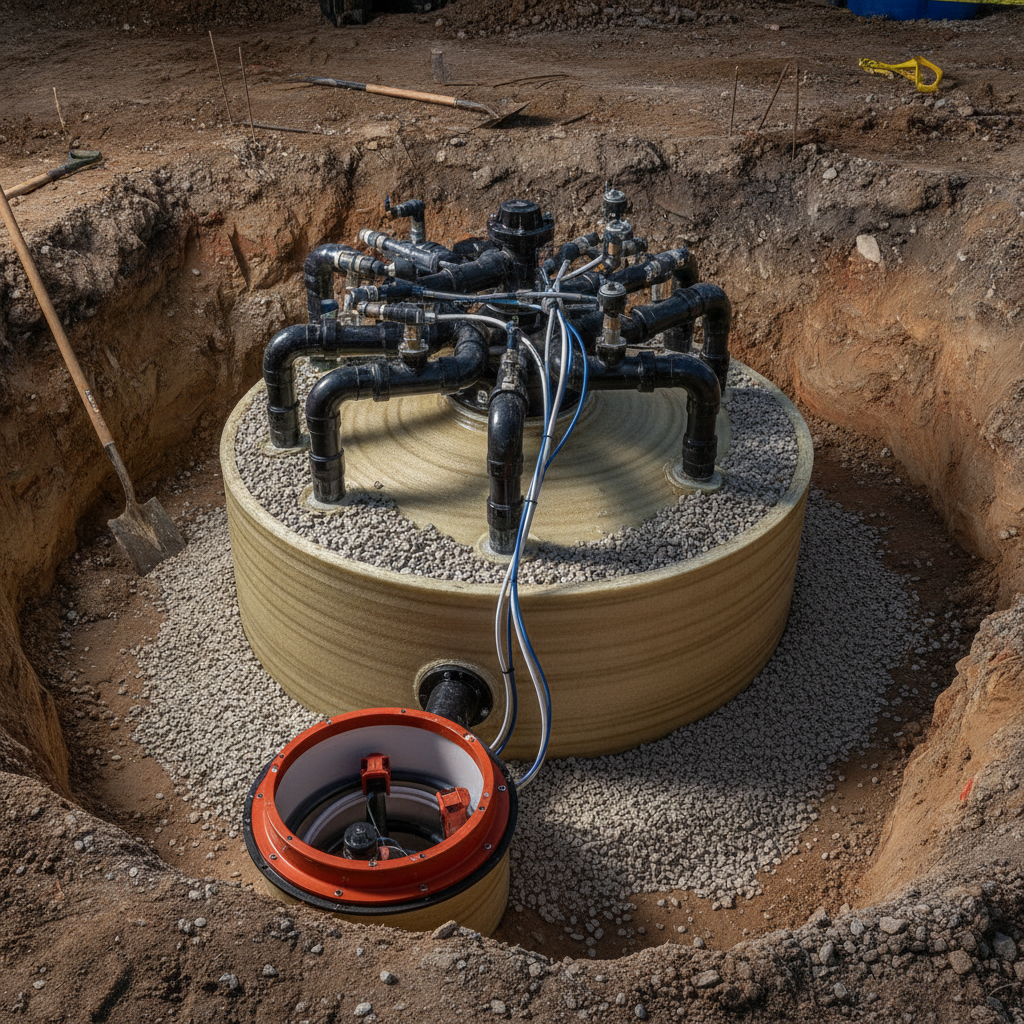
- Set double-wall tanks, install product and vent piping, and assemble sumps and spill buckets.
- Pressure testing and line monitoring verification prior to backfill.
- Slabs, islands, and canopy
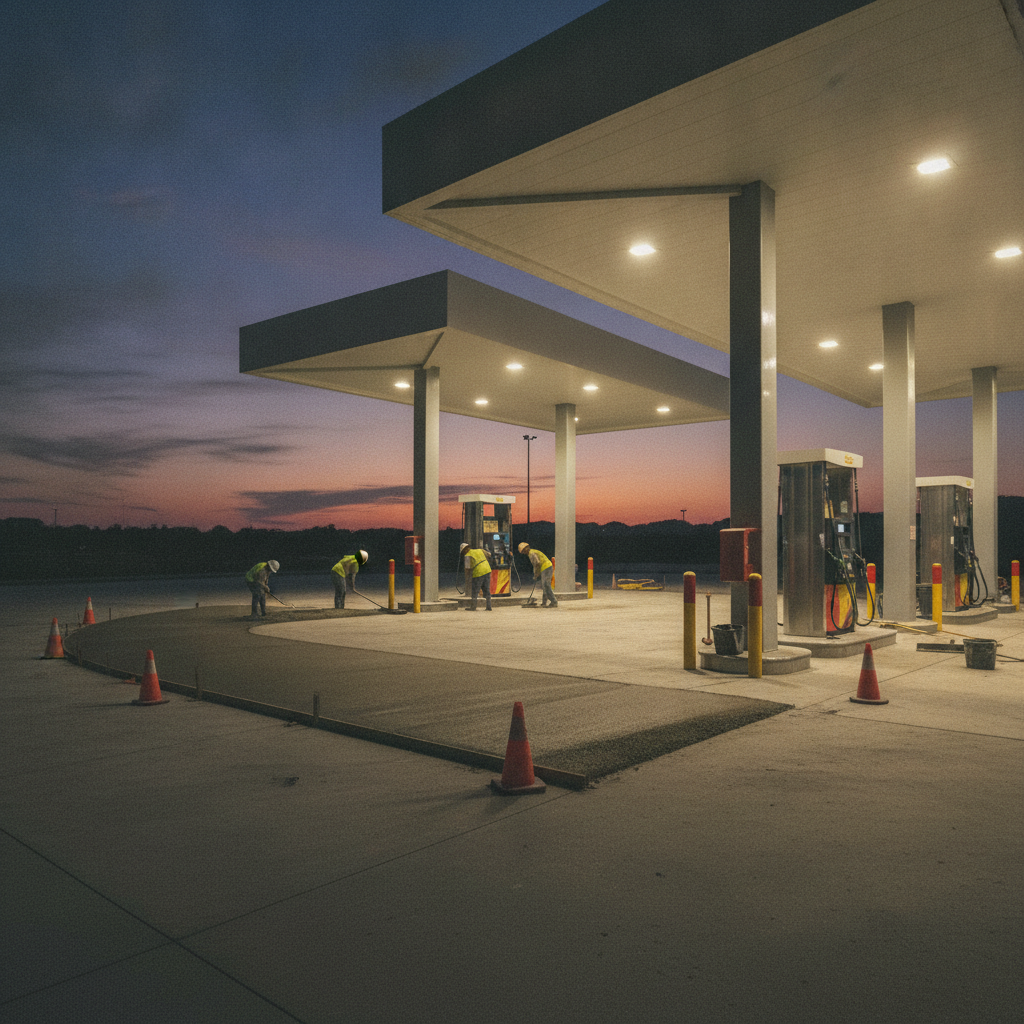
- Form and pour dispenser islands, build structural slab, and erect canopy columns and beams.
- Integrate bollards, lighting, and grounding per design.
- C-store shell and interior
- Framing, envelope, HVAC, electrical, and plumbing rough-ins.
- Finishes, refrigeration, millwork, restrooms, and equipment installation.
- Commissioning, testing, and inspections
- System startups, point-of-sale (POS) integration, signage, and punch list closeout.
- Final inspections, as-builts, and operations handoff.
Gate reviews between each stage confirm that documentation, test reports, and photographs are complete. That record protects your schedule and demonstrates compliance later.
Station types and delivery methods
Most fuel projects follow design-bid-build or design-build delivery. Station formats range from basic fuel-only sites to full-service C-stores with quick-serve food, car wash, and EV charging. Choose the combination that fits your traffic model and operations plan.
Gas station builders should help you select both a delivery method and a station format that match your goals and constraints.
Common station formats
- Fuel-only: Dispensers, canopy, small kiosk or payment enclosure.
- Fuel + C-store: Standard Texas model—multiple dispensers with a convenience store footprint.
- Fuel + QSR: Integrated quick-serve restaurant line for higher basket size and dwell time.
- Fuel + Car wash: Adds tunnel or bay; consider traffic flow and stacking space.
- Fuel + EV charging: Future-proofs the site; plan electrical service and layout early.
Delivery methods compared
| Method | Best when | Pros | Watch-outs |
|---|---|---|---|
| Design-bid-build | Clear, complete drawings; multiple bid competition desired | Market pricing, defined scope | Longer timeline between phases; potential gaps in constructability |
| Design-build | Speed and collaboration are priorities | Single point of accountability; earlier cost and schedule certainty | Owner must vet partner alignment early |
| CM-at-Risk | Complex sites needing precon services | Preconstruction insight, phased packages | Requires strong CM expertise and trust |
For C-store content specifics, see our internal resource on convenience store building. It pairs well with your fuel system plan.
Best practices for fuel and C-store builds
Lock in a disciplined preconstruction plan, verify materials and tests at every milestone, and document everything. Create jobsite rhythms—daily huddles, two-week lookaheads, and inspection checklists—to keep safety, quality, and schedule aligned.
Preconstruction and design
- Start with constraints: Utility access, drainage, fire lanes, and truck circulation inform everything else.
- Design for operations: POS line of sight, refrigeration adjacency, and back-of-house workflow reduce staffing friction.
- Coordinate vendors early: Tank installer, canopy fabricator, dispenser vendor, POS integrator, and signage require lead-time.
Sitework and fuel systems
- Compaction controls: Verify moisture and density before placing tanks and slabs.
- Materials verification: Confirm double-wall components, gaskets, and approved adhesives before installation.
- Test plans: Schedule pressure tests, continuity/grounding checks, and monitoring system validation before backfill.
Vertical construction and interiors
- Envelope sequencing: Weatherproofing details first to protect interior trades.
- MEP coordination: Electrical rough-ins accommodate dispensers, canopy lights, refrigerators, and signage.
- ADA and life safety: Verify slopes, thresholds, handrails, and egress signage during rough-in inspections.
Safety rhythms that stick
- Daily huddles: Identify high-risk tasks and confirm PPE and permits-to-work.
- Two-week lookaheads: Align deliveries, crane picks, and inspections to avoid idle time.
- Photologs and checklists: Create a record that supports approvals and closeout.
For broader commercial considerations that influence C-store finishes and schedule, review our Texas commercial construction guide.
Tools, permits, and inspections
Your permit set, inspection calendar, and test documentation are your control system. Build a shared checklist that ties each inspection to drawings, submittals, test reports, and photos—so approvals move fast and you maintain a clean compliance record.
Core project tools
- Master schedule with gate reviews: Precon, sitework, fuel install, vertical, interiors, commissioning.
- Submittal tracker: Drawings, product data, SDS, and test procedures in one place.
- RFI and decision log: Keep answers visible to prevent repeat issues.
- Quality plan: Inspection points for tanks, piping, concrete, electrical, and life safety.
Permits and inspections checklist
- Site development: Grading, drainage, erosion control measures, and driveway approvals.
- Building and trades: Structural, mechanical, electrical, plumbing, and signage.
- Fuel system install: Tank set, piping pressure tests, sump integrity, and monitoring verification.
- Finals: Certificate of occupancy, fire marshal sign-off, and utility releases.
Helpful third-party references
For materials logistics and electrical planning context, see these general industry resources:
- Material coordination tips in this construction sand delivery guide.
- Trade sequencing and safety reminders in an electrical construction guide.
- Site stabilization basics aligned with sod and erosion control practices.
Common mistakes gas station builders help you avoid
Experienced builders prevent permit resubmittals, fuel-system rework, and inspection failures by front-loading design, verifying materials, and documenting tests. They also stage crews to protect sequencing—so concrete, tanks, canopies, and interiors progress without idle time.
- Design drift: Late changes to canopy placement, dispenser counts, or store fixtures impact utilities and slab work.
- Unverified materials: Installing non-approved gaskets, adhesives, or fittings triggers rework.
- Testing gaps: Missing pressure or continuity records delay backfill and inspections.
- Drainage oversights: Poor grades around islands cause ponding and premature pavement wear.
- Vendor misalignment: Dispenser, canopy, and POS lead-times mis-sequenced against concrete and power.
- Documentation lag: Photos, test reports, and as-builts not ready at finals slow approvals.
We build preventive controls into the schedule: pre-install checklists, hold-point inspections, and weekly package reviews for submittals and RFIs.
Case insights: Texas fuel and C-store projects
Texas projects succeed when early due diligence, vendor coordination, and inspection-ready documentation are locked in. Our team’s work across coastal and inland cities shows that schedule confidence comes from preconstruction clarity and disciplined field execution.
- Coastal site example (Galveston area): We planned drainage and slab elevations to handle storm exposure, sequencing canopy steel before interiors to protect finishes. Early utility coordination reduced rework during inspections.
- Inland arterial site (College Station area): Focus on access/egress and traffic flow. Gate reviews caught a dispenser layout conflict early, preventing slab rework.
- High-visibility corner (Austin area): Vendor lead-time risk mitigated by ordering canopy and POS packages sooner, aligning with concrete pours and electrical rough-ins.
These scenarios share one theme: a documented plan that links drawings, submittals, tests, and photos to each inspection. That record keeps the path to opening clear.
How to choose gas station builders
Select a partner with Texas fuel retail experience, a documented inspection program, and end-to-end services—from planning and permitting through sitework, tanks, canopies, and store interiors. Ask for recent Texas examples and a clear preconstruction roadmap before you sign.
- Texas footprint: Delivered projects in multiple cities with local authority coordination.
- Turnkey capability: Planning & design, site prep & excavation, and construction management under one roof.
- Quality evidence: Sample checklists, test reports, and photo logs from recent jobs.
- Communication: Weekly updates, two-week lookaheads, and a single accountable PM.
Tip Top Builders offers a land-to-opening approach built for fuel retail. Our team supports site selection and land acquisition, permitting and environmental assessments, architectural design, sitework, tanks and piping, and complete C-store build-outs.
Local considerations for Galveston
- Plan for storm exposure and salt-laden air with protective coatings and rigorous envelope detailing.
- Schedule concrete, steel erection, and roofing around seasonal weather patterns to preserve quality.
- Design drainage and paving slopes to handle intense rain events, protecting islands and entrances.
Mid-article CTA: Get a buildability assessment
If you’re evaluating a Texas parcel, we can review access, drainage, utilities, and sequencing assumptions before you commit. Our preconstruction review highlights risks and opportunities so your design and schedule start on solid ground.
Frequently asked questions
Developers ask about timelines, permits, builder qualifications, and how C-store design affects operations. The answers below cover the most common questions we hear on Texas fuel and convenience store projects.
What do gas station builders handle beyond construction?
Specialized builders manage planning and design, permit coordination, site preparation, fuel-system installation, canopy and dispenser integration, and C-store interiors. They also maintain documentation for inspections and guide utilities and vendor coordination through opening day.
How can I reduce schedule risk on a Texas fuel project?
Lock the preconstruction plan early, align vendor lead-times with concrete and electrical milestones, and use gate reviews between stages. Keep test reports and photos tied to each inspection so approvals move quickly without resubmittals.
What station format fits a high-traffic corridor?
Fuel plus a well-planned C-store is the most common. Consider adding a quick-serve line or car wash if traffic stacking and egress allow it. Plan electrical capacity now if you want to integrate EV charging later.
Why choose a Texas-based builder for a Texas site?
Regional experience shortens the learning curve on permitting, inspections, and vendor coordination. Crews who understand local soils, drainage, and weather windows help you maintain quality and protect your opening date.
Conclusion and next steps
The best path to an on-time opening is a specialized Texas partner with a documented plan—planning and design, sitework, fuel systems, canopy, store interiors, and inspection-ready records. Lock these controls in early and build with confidence.
- Key takeaways
- Front-load preconstruction and vendor alignment.
- Use checklists, photo logs, and test reports for every inspection.
- Pick a delivery method that matches your priorities.
- Design for drainage, traffic, and operations from day one.
- Action steps
- Shortlist Texas-experienced gas station builders.
- Request a preconstruction roadmap and recent job examples.
- Align dispenser, canopy, and POS lead-times with concrete and power.
- Set gate reviews between each stage to protect quality.
Ready to evaluate a Texas parcel or concept? Book a discovery session with our Galveston team. We’ll help you de-risk the plan and shape a schedule you can trust.