
Gas station construction is the end-to-end process of planning, permitting, designing, and building a fuel station and attached convenience store. It includes site selection, environmental assessments, underground storage tanks, forecourt systems, and a finished C-store. For Galveston developers, Tip Top Builders delivers this turnkey scope across Texas with speed, safety, and compliance.
By Aftab Ali — Manager, Tip Top Builders
Last updated: 2026-05-25
Overview: Your Texas gas station build at a glance
A successful Texas fuel station project moves in defined stages: due diligence, permits, design, site prep, tanks/piping, structures, MEP build-out, and commissioning. Tip Top Builders coordinates each phase so developers reduce risk, compress schedules, and open faster with full regulatory compliance and C-store readiness.
Use this complete guide to map every step from raw land to grand opening. You’ll see where timelines slip, how to avoid rework, and which choices drive long-term performance.
- What you’ll learn: the full lifecycle, Texas-specific permits, environmental and safety essentials, and construction management that cuts risk.
- Why it matters: fuel projects face strict standards. Clear sequencing protects budgets, schedules, and compliance.
- How we help: Tip Top Builders manages planning and design, site preparation and excavation, and turnkey construction for C-store and fuel sites statewide.
Quick table of contents
- What is gas station construction?
- Why it matters (safety, ROI, compliance)
- How projects work in Texas
- Formats, methods, and delivery models
- Best practices that prevent delays
- Tools, permits, and resources
- Case studies and Texas examples
- Budget & schedule drivers (no pricing)
- Construction management to cut risk
- FAQ
What is gas station construction?
Gas station construction is a specialized build process integrating environmental due diligence, fuel storage and dispensing systems, forecourt canopies, and retail C-store structures. It requires precise sequencing, licensed trades, and strict regulatory coordination to deliver safe operations, uptime reliability, and fast inspections for opening.
In our experience, the winning approach blends disciplined preconstruction with field execution that anticipates inspections. For developers in Galveston and across Texas, that means stronger permitting packages, clean site logistics, and documented quality for USTs, piping, and electrical systems.
- Core scope: site selection and land acquisition support; permitting and zoning approvals; environmental assessments; design/architecture; clearing, grading, and excavation; tank, piping, and dispenser installation; canopy and forecourt; C-store build-out; commissioning.
- Specialized trades: UST installers, hazardous materials handlers, concrete and paving crews, electrical and controls, fire safety, HVAC, and refrigeration.
- Documentation focus: submittals, inspection logs, as-builts, O&M manuals, and training for safe, compliant operations from day one.
Why gas station construction quality matters
High-quality gas station construction reduces environmental risk, speeds regulatory approvals, and protects uptime revenue. Strong preconstruction and field QA/QC lower rework, pass inspections earlier, and help C-stores open with fewer change orders and call-backs.
Here’s the thing: fuel retail is unforgiving. Miss one permitting detail or inspection window and weeks can slip. Conversely, tight coordination—from civil grading to dispenser activation—keeps momentum and safeguards your opening date.
- Reliability: properly sized tanks and redundant systems reduce downtime during peak traffic.
- Safety: compliant ventilation, spill containment, electrical bonding, and fire protection are non-negotiable for public safety.
- Compliance: clean inspection history simplifies renewals and insurer requirements.
- Retail performance: thoughtful C-store planning (sightlines, adjacencies, refrigeration loads) drives basket size and repeat visits.
How gas station projects work in Texas
Texas fuel projects move through eight phases: feasibility, due diligence, permitting, design, site preparation, USTs/piping, structures/MEP, and commissioning. Tip Top Builders leads the sequence, coordinates inspectors, and maintains QA to keep schedules predictable statewide.
Below is a proven, field-tested flow we use across Galveston, Beaumont, Port Neches, and beyond. Each step builds evidence for regulators and reduces rework for your crews.
- Feasibility and site selection: traffic patterns, access, zoning fit, utilities availability, and competitor mapping.
- Due diligence: Phase I ESA, geotechnical borings, utility locates, and stormwater strategy planning.
- Permitting: zoning approvals, building permits, health department coordination for food service, stormwater and erosion controls.
- Design and architecture: modern elevations, ADA routes, dispenser layout, canopy spans, and C-store adjacencies.
- Site preparation and excavation: clearing, grading, compaction testing, and subgrade prep for paving and tanks.
- USTs and piping: double-walled tanks, secondary containment, leak detection, and line testing.
- Structures and MEP: canopy steel, foundations, CMU or light-gauge framing, roofing, electrical, lighting, HVAC, refrigeration.
- Commissioning: dispenser calibration, controls integration, inspections, staff training, punch list, and handover.
Local considerations for Galveston
- Plan for coastal weather and wind exposure with robust canopy anchoring, corrosion-resistant materials, and drainage that handles intense rainfall.
- Schedule earthwork and paving around rainy seasons to protect subgrade density; moisture swings can slow compaction and impact slab performance.
- Coordinate deliveries and inspections to avoid peak coastal travel times; predictable windows help keep inspectors and suppliers on track.
Formats, methods, and delivery models
You can deliver a fuel project as design-bid-build, design-build, or CM-at-Risk. Choose based on speed, design control, and risk tolerance. For multi-site programs, integrated design-build with strong preconstruction typically compresses timelines and simplifies inspections.
Project format drives decision speed. Our team adapts delivery to your objectives and the jurisdiction’s preferences. Here’s a quick comparison you can share with stakeholders.
| Delivery model | Best when you need | Primary risk owner | Why it fits fuel/C-store |
|---|---|---|---|
| Design-Bid-Build | Lowest initial bids; clear separation of design and build | Owner (scope gaps), contractor (means/methods) | Works for simple, repeat designs with ample schedule |
| Design-Build | Speed-to-open; single point of accountability | Design-build team | Excellent for prototyped C-stores and multi-site rollouts |
| CM-at-Risk | Precon input; guaranteed delivery parameters | CM-at-Risk (cost/schedule performance) | Strong when permitting is complex and scope may evolve |
For a deeper dive on delivery choices, see our perspective in the EPCM vs CM overview and how it shapes Texas retail builds.
Best practices that prevent delays
Front-load permits, submittals, and inspections; sequence site prep before tank delivery; and lock MEP rough-ins before finishes. Document QA/QC daily and align stakeholders weekly. These habits cut change orders, pass inspections faster, and protect your opening date.
Preconstruction wins
- One coordinated submittal log: track tanks, piping, dispensers, canopy steel, lighting, HVAC, and refrigeration in a single dashboard.
- Jurisdiction playbook: map each agency’s cadence to avoid review gaps; reserve inspection windows early.
- Prototype discipline: hold fast to brand standards unless a code or site constraint demands a variance.
Field execution
- Soil and subgrade: verify density before UST delivery; protect trenches from water intrusion to preserve compaction.
- MEP-first thinking: coordinate conduits, sleeves, and drains prior to slabs and pave lifts.
- Inspection packets: keep test results, photos, and as-builts binder-ready to accelerate approvals.
When we manage fuel projects, we embed these routines into the weekly rhythm so foremen and inspectors stay in sync.
Tools, permits, and resources you’ll use
Expect environmental reviews, stormwater controls, tank registrations, and health coordination for the C-store. Field tools include compaction testing, laser levels, leak detection systems, and commissioning checklists. Organize these early to shorten review cycles.
Fuel projects intersect with environmental, building, fire, and health regulations. While requirements vary by jurisdiction, your checklist will look familiar across Texas.
- Environmental due diligence: Phase I ESA, geotech, groundwater and soil considerations.
- Stormwater and erosion: SWPPP planning, silt controls, stabilized entrances, and inspections through paving.
- UST administration: double-wall tanks, secondary containment, release detection, interstitial monitoring, and tightness tests.
- Fire and life safety: canopy grounding, emergency shutoffs, extinguishers, alarms, and clear egress signage in the C-store.
- Health coordination: food prep areas, restrooms, janitorial, and cold storage layouts for compliant operations.
For perspective on trade coordination, some builders discuss electrical sequencing in their electrical construction guides. Reinforcing and paving discussions often reference industry rebar best practices, and timeline expectations are sometimes compared with broader design–build schedules. Use these as general context alongside your local codes and inspector direction.
Case studies and examples from Texas
Tip Top Builders has supported fuel and C-store developments from Galveston to Austin. We apply the same disciplined playbook—due diligence, permit strategy, staged logistics, and QA—to compress schedules and pass inspections with minimal rework.
Consider these composite examples that mirror our Texas work without naming private clients.
- Coastal forecourt, Galveston: corrosion-resistant hardware, robust canopy anchoring, and drainage tuning kept the site operational through heavy rain events during commissioning.
- High-traffic arterial, Beaumont: phasing UST delivery after subgrade certification prevented rework and allowed immediate line testing and backfill.
- College town C-store, College Station: refrigeration loads and queuing design reduced congestion during peak hours, improving customer throughput and upsell opportunities.
- Program rollout, Austin/Sugar Land: a standardized submittal log and weekly inspector check-ins shaved days off each milestone across multiple sites.
These scenarios reflect how our planning and design, site preparation and excavation, and construction management services align to drive predictable openings.
Budget & schedule drivers (no pricing)
Key drivers include permits and reviews, soil conditions, utility availability, weather windows, supply lead times, and change management. Control these inputs and you control the timeline. We plan around each lever to protect your opening date—without discussing prices.
Even without quoting numbers, you can benchmark the factors that move timelines and approvals.
- Permitting cadence: review cycles, comments, and resubmittals influence start dates more than most factors.
- Subsurface conditions: poor soils, high groundwater, or unsuitable fill can trigger remediation and rework.
- Utilities: lead times for power, water, and telecom affect commissioning and POS activation.
- Material availability: long-lead canopy steel, dispensers, and refrigeration must be reserved early.
- Weather: heavy rain can stall compaction, trenching, and paving; buffer critical path tasks.
Construction management that reduces risk
Effective construction management unifies scope, schedule, safety, and quality. With one accountable partner, you align inspectors, subs, and suppliers, compress the critical path, and keep documentation turnkey for a smooth opening.
Our Texas team runs a tight management framework that fits fuel retail complexity. If you want a deeper look at our approach, review our construction management playbook.
Our risk controls
- Weekly control meetings: decisions captured with responsible parties and due dates; inspectors invited when helpful.
- QA/QC by phase: geotech and compaction tests, UST/line testing, electrical and fire inspections, and closeout binders.
- Supplier readiness: long-lead tracking and delivery staging to maintain flow through forecourt and C-store finishes.
Managing risk isn’t about more meetings—it’s about the right information at the right time. We keep that flow steady from precon through punch.
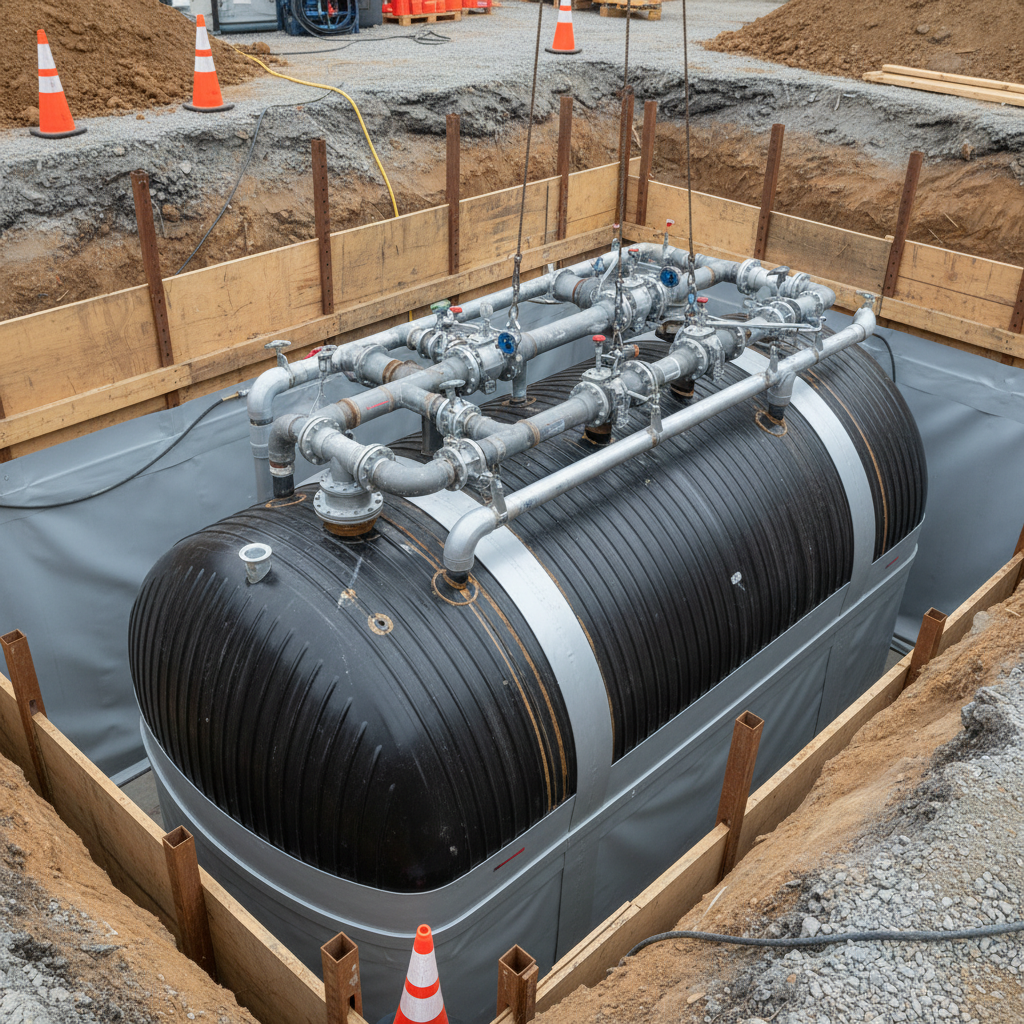
How we build the forecourt and C-store
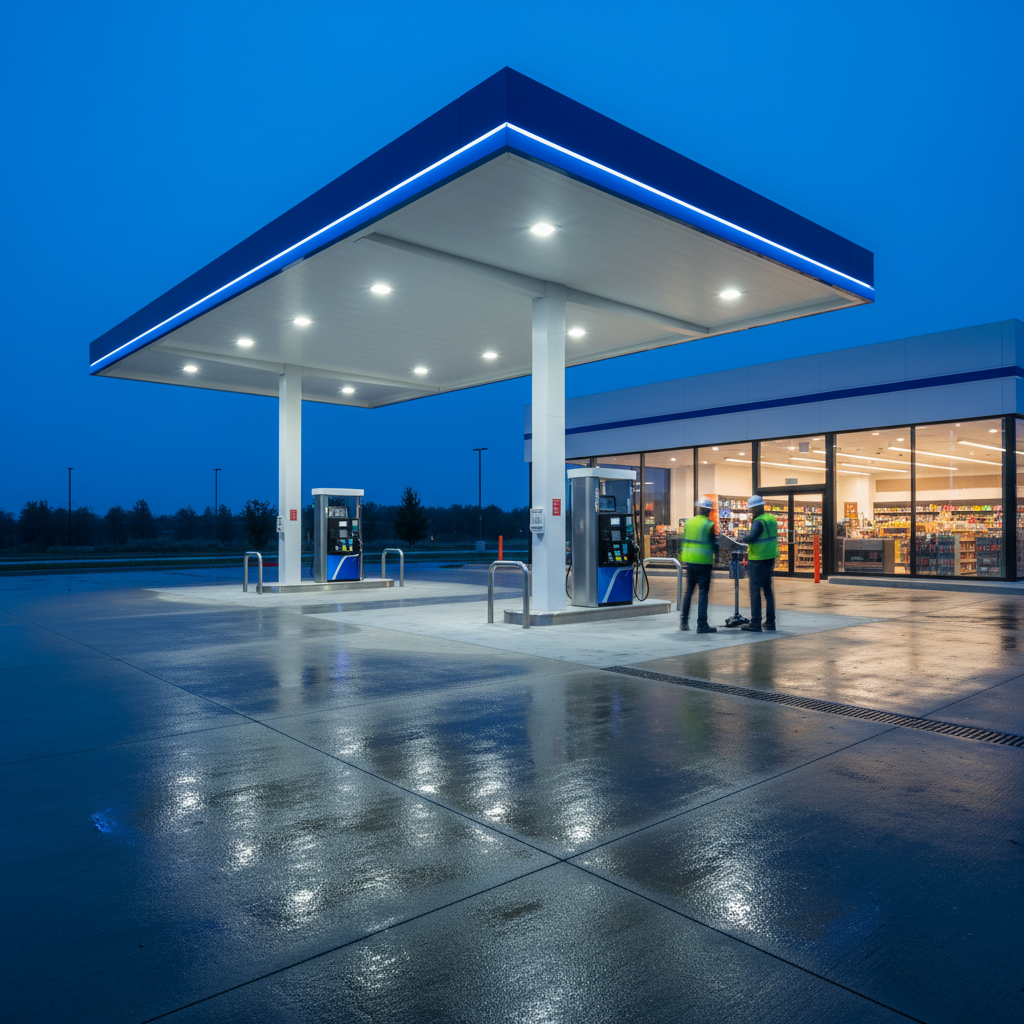
We stage the site, set tanks and piping, pour forecourt slabs, stand canopy steel, and finish the C-store with coordinated MEPs. Tight sequencing reduces rework and shortens the path to inspections and opening.
Forecourt sequence
- Trenching and tanks: certified crews install double-wall USTs with interstitial monitoring and leak detection.
- Backfill and compaction: protect tank geometry; maintain compaction specs before slabs and islands.
- Canopy and dispensers: anchor canopy steel; set dispensers; integrate controls and POS.
C-store build-out
- Shell: framing, roofing, storefront glazing, and air barriers.
- MEP rough-in: electrical, lighting, HVAC, refrigeration, and plumbing aligned to equipment schedules.
- Finishes and fixtures: millwork, gondolas, food service equipment, and checkout ergonomics for staff efficiency.
When your retail scope involves fit-outs or adjacent tenant spaces, our commercial construction team scales the same quality controls to multi-tenant build-outs.
Process checklist and roles table
Clarify who owns each step. A simple roles table aligns owners, outcomes, and inspection gates. When everyone sees the same roadmap, you avoid handoff gaps and keep the schedule honest.
| Step | Primary owner | Key output | Inspection gate | Internal resource |
|---|---|---|---|---|
| Site selection | Developer + Builder | Traffic and access study | Planning review | Planning & Design |
| Due diligence | Builder | Phase I ESA, geotech | Environmental review | Planning & Design |
| Permits | Builder | Permit set & approvals | Permit issuance | Construction Management |
| Site prep | Builder | Clearing, grading | Compaction tests | Site Preparation |
| USTs & piping | Licensed installers | Installed and tested | Leak/tightness tests | Construction Management |
| Canopy/structures | Builder | Steel and slabs | Structural sign-off | Commercial Construction |
| MEP & C-store | Trades | Rough-in complete | Trade inspections | Commercial Construction |
| Commissioning | Builder + Owner | As-builts & O&M | Final CO/health | Construction Management |
Read how we coordinate scope in our commercial construction services overview.
Frequently Asked Questions
Common fuel and C-store questions focus on permits, timeline control, environmental steps, and how to pick the right delivery model. The answers below give straight, practical guidance you can act on now.
What permits are typically required for a gas station in Texas?
Most jurisdictions require building, zoning, and fire permits, plus environmental reviews related to tanks, stormwater, and erosion control. Health departments review C-store food prep and restrooms. Your exact list varies by city and county, so align early with local reviewers.
How long does a typical project take from permits to opening?
Timelines depend on review cycles, soils, utilities, weather, and equipment lead times. With a tight submittal log, proactive inspections, and disciplined sequencing, many projects move in a predictable rhythm from groundbreaking to commissioning.
Do I need a different builder for the C-store interior?
No. A unified team streamlines schedule and inspections. We manage forecourt systems and the C-store shell, MEPs, refrigeration, and finishes under one coordinated plan so retail merchandising is ready when fuel dispensers go live.
What’s the best delivery model for a multi-site rollout?
Design-build paired with a standardized prototype often moves fastest. It compresses design decisions, centralizes accountability, and allows pre-booking of inspections and long-lead equipment across sites, which keeps momentum from city to city.
Conclusion and next steps
Deliver fuel projects with a coordinated plan: front-load approvals, stage site and UST work, align trades, and keep inspection documents ready. Tip Top Builders brings this discipline to Galveston and across Texas so you open on schedule with confidence.
- Key takeaways: sequence work, document QA/QC, and maintain one owner for scope, safety, and schedule.
- Action steps: align permits, lock long-leads, plan inspections, and engage a builder with fuel/C-store experience.
- Talk with us: share your concept or permit set and we’ll map a practical path to opening day.
Ready to move? Start a Texas-focused discovery call with our team in Galveston and get a build roadmap tailored to your site.
Related articles
Explore more construction guides that complement fuel and C-store projects. These topics deepen planning, excavation, and management fundamentals for Texas builds.
- Engineering, procurement, and construction management basics
- Site preparation and excavation sequencing for retail sites
- Commercial construction coordination for multi-tenant build-outs