
Engineering procurement and construction management (EPCM) is an owner-aligned delivery model that integrates design leadership, structured purchasing, and construction oversight under one manager. It preserves owner control while centralizing accountability for schedule, quality, safety, and compliance—an approach Tip Top Builders uses on Texas projects from Galveston to Austin.
By Aftab Ali, Manager — Tip Top Builders • Last updated: 2026-05-17
Quick Summary
Choose between EPCM and traditional construction management (CM) by mapping risk, scope clarity, and permitting complexity. EPCM centralizes engineering, procurement, and field coordination without removing owner control. CM focuses on day-to-day build delivery. The right fit depends on how fast you must open, how defined your scope is, and your permitting path.
Here’s what you’ll learn and be able to apply immediately on Texas builds:
- Clear definitions of EPCM, CM, EPC, and design-build—without jargon
- When each model cuts risk for gas stations, C-stores, commercial shells, and homes
- How procurement strategy protects your schedule and reduces rework
- Best practices Tip Top Builders uses to deliver predictable outcomes
- Texas-specific considerations owners often overlook during permitting
What Is Engineering, Procurement, and Construction Management (EPCM)?
EPCM is a delivery method where one partner plans engineering, runs procurement, and manages construction on the owner’s behalf. The EPCM firm integrates designers and trade contractors, coordinates packages, and drives quality and safety—while the owner retains decision-making power and holds most prime contracts.
At its core, engineering procurement and construction management blends three streams into one accountable plan:
- Engineering leadership: Front-end planning (concept, basis of design), permit-ready documents, and constructability.
- Procurement orchestration: Bid strategies, prequalification, scopes, and lead-time control for long-lead equipment.
- Construction management: Field coordination, safety, inspections, QA/QC, commissioning, and closeout.
Unlike turnkey EPC, the EPCM manager typically does not self-perform all trades. Instead, they quarterback architects, civil/mechanical/electrical engineers, and subcontractors to keep scope, budget drivers, and schedule aligned. For Galveston-area fuel retail projects, that means aligning canopy, forecourt, and UST work with C-store interiors and utility approvals.
Why EPCM Matters for Texas Developers and Owners
EPCM reduces opening-day risk by aligning permits, design decisions, and procurement from day one. It coordinates environmental compliance, inspection sequencing, and vendor lead times—critical for gas stations, C-stores, and retail shells operating under tight Texas timelines.
Texas fuel retail and commercial projects juggle multiple authorities and inspections. Miss a sequence and you can lose weeks. Owners choose EPCM when they need:
- Pemit-ready designs tied to local review paths to avoid design rework.
- Phased procurement to order long-lead items (e.g., switchgear, canopy steel, USTs) early.
- Integrated safety and quality so inspections pass on first attempt.
- Schedule certainty using rolling lookaheads and milestone control.
In our experience managing programs across Beaumont, College Station, Austin, Sugar Land, Nederland, Port Neches, and Port Arthur, the biggest risk isn’t field productivity—it’s late design changes and unplanned permit conditions. EPCM tackles those upstream with structured decision-making and transparent trade coordination.
Local considerations for Galveston
- Plan for coastal weather windows. Build buffer in your procurement and pour schedules to account for rain and wind that can pause slab work or canopy erection.
- Sequence site prep with stormwater controls. Install erosion and sediment measures before mass earthwork to keep inspections smooth after heavy Gulf storms.
- Coordinate utility shutdowns and tie-ins during off-peak periods to reduce service disruptions for nearby businesses and residents.
How EPCM Works: From Planning to Handover
EPCM runs in five phases: define objectives, front-end planning, procurement, construction management, and commissioning/closeout. Each phase feeds the next with documented decisions, risk registers, and lookahead schedules to protect milestones and inspection dates.
1) Define objectives and constraints
- Business case: Volume targets, fuel positions, forecourt layout, retail mix, parking counts.
- Scope and performance: Canopy span, dispenser count, UST capacity, HVAC/electrical loads, ADA access.
- Risk profile: Where are you most exposed—permits, utilities, environmental, or supply chain?
Action: Document success criteria and must-haves now. Align stakeholders on what “on time” and “ready to open” actually mean, including inspections and punch list closure.
2) Front-end planning (FEP)
- Site selection support with traffic and access inputs, land acquisition constraints, and zoning checks.
- Basis of design finalized with constructability reviews and permit submittal packages.
- Permitting roadmap built into the master schedule with inspection hold points.
Tip: Engage our planning and design team early. Front-loading FEP avoids the most expensive delays downstream.
3) Procurement strategy
- Prequalification of trades and vendors to verify capacity, safety record, and financial standing.
- Package scoping that cleanly divides site, structural, mechanical, electrical, fuel systems, and interiors.
- Lead-time control for USTs, dispensers, switchgear, HVAC rooftops, and canopy steel.
- Alternates and backups so one late component doesn’t stop your schedule.
Action: Build a procurement matrix that links each package to drawings, specs, lead time, submittals, and target install windows. This matrix becomes your schedule guardrail.
4) Construction management
- Weekly lookaheads (3–6 weeks) that coordinate trades and inspection bookings.
- QA/QC checklists for slabs, canopy, UST installation, MEP rough-in, and finishes.
- Safety programs with daily task planning and job hazard analyses.
- Issue/risk logs tracked and closed weekly with clear owners and dates.
Explore how we run field delivery in our construction management service.
5) Commissioning and closeout
- Systems testing for fuel, electrical, HVAC, and life safety devices.
- Training for operators, store staff, and maintenance vendors.
- Documentation handover (as-builts, O&M manuals, warranties) and punch list completion.
Finish strong: A complete turnover package reduces early-call service tickets and protects warranties.

Where EPCM Fits Among Delivery Models
EPCM sits between advice-only agency CM and turnkey EPC. The owner keeps control and holds prime contracts, while the EPCM partner integrates design, procurement, and site delivery. Choose EPCM for complex, permit-sensitive builds; choose CM at-Risk or design-build when scope is stable and speed-to-price is a priority.
Common models you’ll evaluate in Texas projects:
- EPCM: Owner holds trade contracts; EPCM integrates design, procurement, and field coordination.
- CM at-Risk (CMAR): Manager holds trades with a guaranteed maximum price (GMP); more cost/schedule risk shifts to CM.
- Agency CM: Advisory-only; owner holds all trade contracts; CM is not at-risk.
- Design-Build: Single contract for design and construction; fast decisions; less owner design control.
- Design-Bid-Build: Linear design then low-bid build; slower but familiar for public entities.
Side-by-side comparison
| Category | EPCM | CM at-Risk | Design-Build | EPC |
|---|---|---|---|---|
| Contracts | Owner holds primes | CM holds primes (GMP) | Single contract | Single turnkey contract |
| Owner control | High | Medium | Medium | Low |
| Flexibility | High (phased buys) | Medium | Medium | Low |
| Speed to mobilize | Fast (phase packages) | Fast after GMP | Fast | Fast |
| Best for | Permit-sensitive, complex | Defined scope, repeatable | Schedule-driven, fewer unknowns | Owner wants single point |
Need help choosing? Our planning and development guidance maps delivery models to your risk profile and milestones.
Best Practices We Use to Cut Risk and Rework
Front-load permitting, break procurement into clean packages, and manage the field with rolling lookaheads and standard QA/QC. Tie inspections to checklists and run weekly risk reviews so issues are discovered early and fixed once—before they hit your schedule’s critical path.
Plan to pass inspections on the first attempt
- Build inspection hold points into the master schedule and 3–6 week lookaheads.
- Use standardized checklists for UST bedding, canopy anchor bolts, electrical rough-in, and ADA improvements.
- Capture field photos and sign-offs; make them prerequisites to pour, backfill, or close walls.
Make procurement your schedule shield
- Place long-lead orders during FEP once design intent is frozen for that package.
- Add approved alternates for gear with volatile availability to keep crews moving.
- Track submittals and fabrication milestones in the same dashboard as site work.
Manage change transparently
- Keep a live change register. Note cause, schedule impact, and chosen mitigation.
- Review design drift weekly to prevent scope creep from bleeding into field work.
- When helpful, shift to CM at-Risk or design-build for well-defined program rollouts.
Tools and Resources Owners Can Leverage
Use a single-source dashboard that merges schedule lookaheads, procurement status, submittals, and inspection checklists. Pair it with vendor prequalification, design decision logs, and job hazard analyses so your team sees risks early and resolves them before they affect milestones.
- Scheduling: Critical path master schedule with weekly lookaheads driving trade coordination.
- Procurement: Package matrix linking drawings, lead times, submittals, and install windows.
- Quality & safety: Standard checklists and JHAs embedded in daily plans.
- Environmental readiness: Controls for excavation, dewatering, and fuel system installation.
For owners wanting a deeper dive into risk disciplines, see these concise primers from Education Edge on project risk and its overview of PMI-RMP certification. For procurement structure, their guide to a procurement management plan outlines package planning and control points.
Soft CTA: If you’re planning a fuel station, C-store, or retail shell in Texas, our team can align design, permits, procurement, and field delivery under a single plan. Start with our planning & design services or schedule a conversation through construction management.
Budgeting and Risk Allocation (No Pricing)
Focus budgeting on scope clarity, long-lead procurement, utilities, and inspection sequencing rather than line-item prices. Assign risks to the party best able to control them, and keep transparent logs for changes so decisions protect your opening date without runaway rework.
- Scope drivers: Dispenser count, UST capacity, canopy steel, switchgear specs, and HVAC tonnage.
- Utilities and sitework: Tie-in complexity, trenching, easements, and weather windows.
- Permitting: Review cycles, special inspections, and conditions of approval in the schedule.
- Procurement: Fabrication slots and delivery commitments tracked with field milestones.
- Risk assignment: Put coordination risk with the integrator; put design intent with the design lead.
Owners get better outcomes when decisions are time-bound and documented. That’s why we maintain design logs, change registers, and risk boards—simple habits that prevent surprises later in the field.
Case Studies and Texas Examples
Texas projects benefit when EPCM ties permits, procurement, and field work together. The examples below show how early decisions and packaged buys protected schedules for C-stores, fuel systems, and retail shells across College Station, Port Arthur, and Austin.
College Station – New C-store on raw land
- Challenge: Opening date tied to retail lease commitments.
- Move: Submitted phased permits so site prep and utilities started while canopy steel and switchgear fabricated.
- Result: Overlapped critical path activities; kept fit-out on track.
Port Arthur – Fuel system redevelopment
- Challenge: Unknowns around existing tanks and utilities.
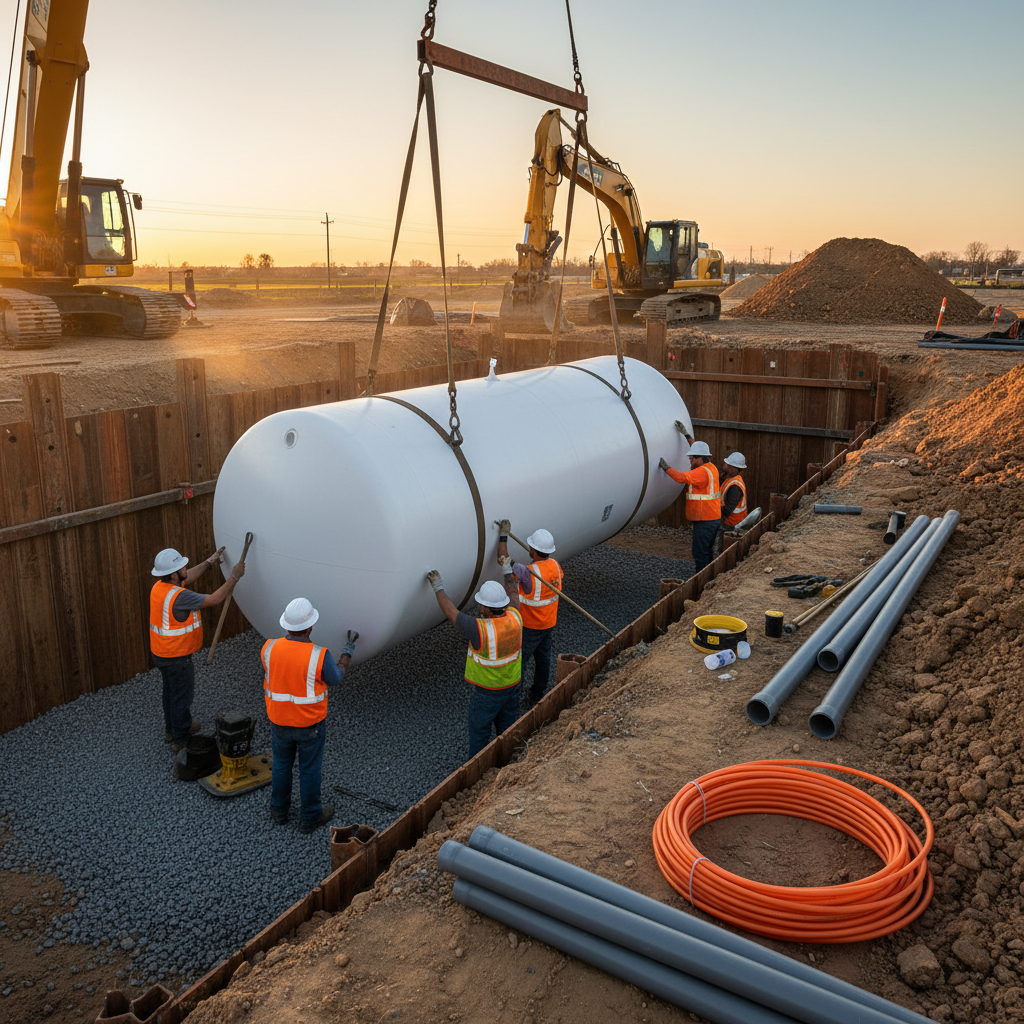
- Move: Early review of UST plan and excavation support; built QA hold points for bedding, anchoring, and testing.
- Result: Avoided rework during installation; inspections cleared in sequence.
Austin – Retail shell with tight lead times
- Challenge: Market-wide delays on switchgear and rooftop HVAC.
- Move: Approved alternates and pre-reserved fabrication slots; resequenced rough-in to match deliveries.
- Result: Maintained interior build-out pace and turnover date.
Frequently Asked Questions
EPCM and CM differ in who holds trade contracts and how risk is allocated. EPCM integrates design, procurement, and site delivery while owners keep control; CM at-Risk carries more cost/schedule risk through a GMP. The right choice depends on scope clarity and timeline pressure.
Is EPCM the same as EPC?
No. EPC is turnkey: one entity designs and builds while carrying major risk. EPCM manages engineering, procurement, and construction on the owner’s behalf, coordinating trades while the owner retains control and usually holds prime contracts.
When should I choose CM at-Risk instead of EPCM?
Pick CM at-Risk when scope is well defined and you want speed-to-price certainty under a guaranteed maximum price. It works well for repeatable program builds with stable designs and fewer unknown permitting conditions.
Does EPCM work for gas station and C-store construction in Texas?
Yes. EPCM coordinates permitting, environmental controls, UST installation, canopy and forecourt work, and C-store interiors. It reduces rework and protects inspection dates so operators can open on schedule.
How does procurement strategy affect my schedule?
Procurement drives the critical path. Ordering long-lead equipment early, approving alternates, and tracking fabrication milestones prevent idle crews. Integrating the procurement matrix into weekly lookaheads keeps field work aligned with deliveries.
Conclusion and Next Steps
EPCM centralizes design, procurement, and field management while keeping owners in control—ideal for permit-sensitive Texas projects. If your scope is defined and you want price certainty, CM at-Risk or design-build may fit. The best path aligns risk, schedule, and permitting realities.
Key takeaways:
- EPCM is owner-aligned integration of engineering, procurement, and construction oversight.
- Use EPCM when permits and long-lead items dominate risk; use CMAR when scope is stable.
- Protect the schedule with phased buys, lookaheads, and inspection-tied QA/QC.
- Document decisions and changes to avoid downstream rework.
Ready to align your Texas project? Explore our site preparation and excavation, commercial construction, and planning and design services, or talk with our urban planning group about community fit. Book a discovery session in Galveston today.